Indian Railways is set to introduce India’s first LNG-diesel dual-fuel DEMU train, marking a new step towards reducing diesel consumption and using cleaner alternative fuels for passenger services.
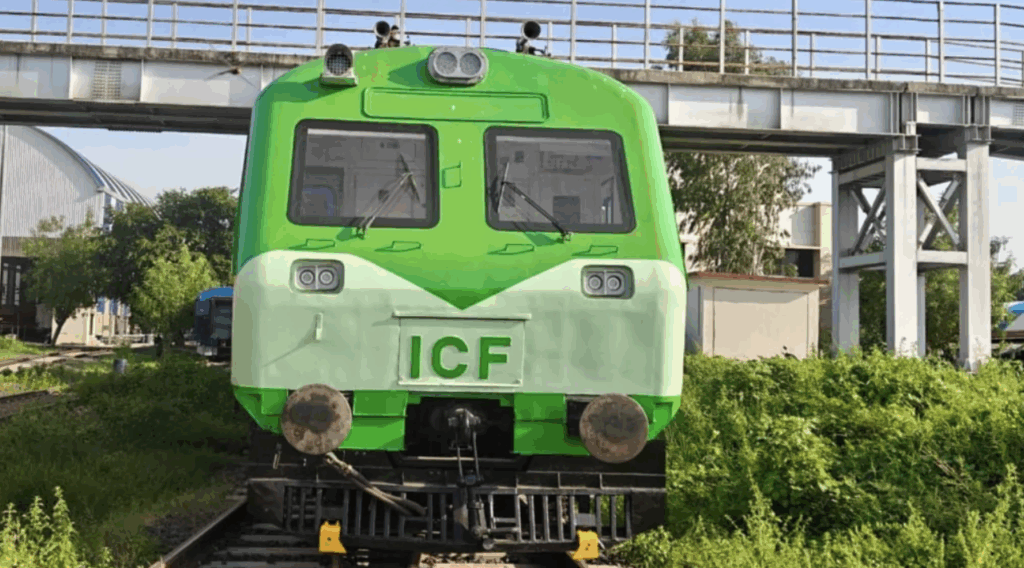
The eight-coach train is being introduced by the Ahmedabad Division of Western Railway and is designed to operate using both liquefied natural gas and diesel.
India’s First LNG-Diesel Dual-Fuel Train
The train uses a dual-fuel system that allows the same engine to operate on LNG as well as diesel.
This means the train does not have to rely entirely on LNG. If LNG is unavailable, the engine can switch to diesel, allowing normal operations to continue.
The system is designed to replace up to around 40% of diesel consumption with LNG.
Sabarmati-Mahesana Route For Inaugural Run
The train will begin its inaugural run between Sabarmati and Mahesana Junction in Gujarat.
The approximately 62-km journey is expected to take around 1 hour and 20 minutes.
The train will pass through stations including Jhulasan, Dangarwa, Ambliyasan and Jagudan.
The final regular route for the train has not yet been decided and will be announced separately by the railways.
Two 1,400 HP Power Cars Converted
As part of the project, two Driving Power Cars have been converted to operate with the LNG-diesel dual-fuel system.
Each power car has a capacity of 1,400 HP.
The converted power cars have already completed more than 2,000 km of field trials to test the performance, reliability and safety of the technology before passenger operations.
LNG Could Reduce Diesel Consumption
Indian Railways expects the technology to reduce diesel consumption and lower emissions.
The use of LNG is expected to reduce emissions including carbon dioxide, nitrogen oxides and particulate matter compared with conventional diesel operation.
The dual-fuel system also provides greater flexibility because the train can continue operating on diesel when LNG is not available.
Rs 23.9 Lakh Annual Savings
The railways estimates that one converted Driving Power Car could save around Rs 11.9 lakh in fuel costs every year.
For the eight-coach train with two converted power cars, the estimated annual saving is around Rs 23.9 lakh.
The savings will depend on the proportion of LNG used, fuel prices and actual operating conditions.
Eight-Coach Non-AC Train
The new train consists of eight non-AC chair-car coaches.
It is intended for passenger operations on short and medium-distance routes, where the dual-fuel technology could potentially be deployed more widely if the initial operation proves successful.
A New Experiment For Indian Railways
Indian Railways has been exploring alternatives to conventional diesel as part of its efforts to reduce fuel consumption and emissions.
The LNG-diesel system offers an intermediate approach because it can use cleaner LNG without completely eliminating diesel capability.
If the technology performs reliably in regular passenger service, similar systems could potentially be considered for other non-electrified routes.
Summary
Indian Railways is introducing India’s first LNG-diesel dual-fuel DEMU train on the Sabarmati-Mahesana route in Gujarat. The eight-coach non-AC train uses two converted 1,400 HP power cars and can replace up to around 40% of diesel consumption with LNG. More than 2,000 km of trials have been completed, with estimated annual fuel savings of around Rs 23.9 lakh for the full train.