Google is taking its artificial intelligence ambitions beyond Earth with Project Suncatcher, an experimental mission designed to test whether AI computing hardware can operate reliably in space.
The company is preparing to launch a small satellite carrying four of its custom Tensor Processing Units, or TPUs, into low Earth orbit. The satellite is scheduled to fly on October 1 aboard a SpaceX Falcon 9 rocket as part of the Transporter-18 rideshare mission.
Four AI Chips Will Go Into Orbit
The experimental satellite, known as MVP, is roughly the size of a refrigerator and was developed in partnership with Planet, the satellite imaging company.
Instead of building an entirely new spacecraft for the first test, Google integrated its AI hardware into an existing satellite platform. The four TPUs will allow Google to study how its AI processors behave under actual orbital conditions.
The mission is an early experiment rather than a fully operational space-based data centre.
Why Does Google Want AI In Space?
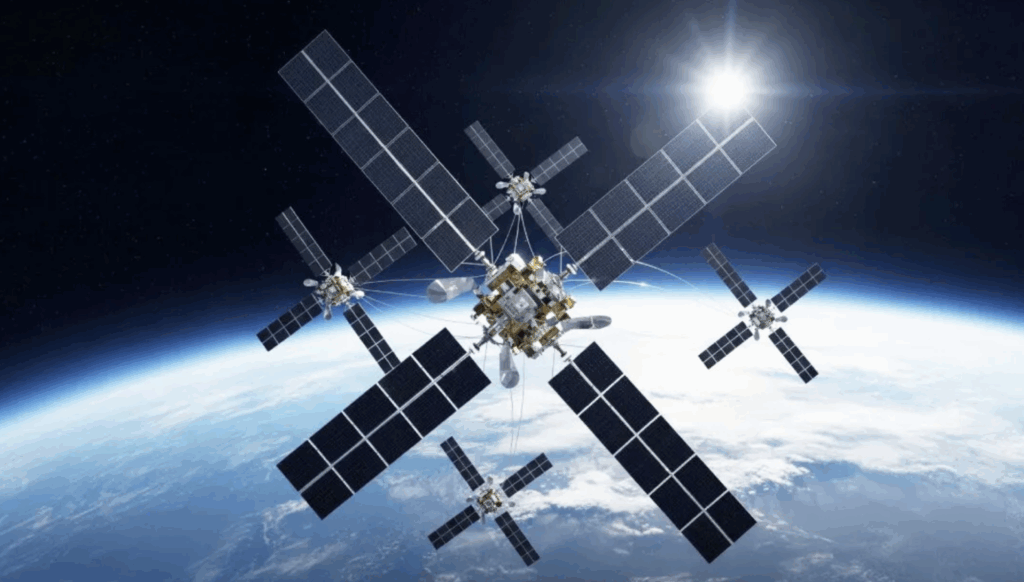
Project Suncatcher is based on a simple but ambitious idea: use solar-powered satellites as computing infrastructure for artificial intelligence.
In low Earth orbit, solar panels can receive substantially more sunlight than comparable panels on Earth because they are not affected by night, clouds or atmospheric conditions in the same way.
Google’s long-term vision involves multiple satellites working together, potentially creating large-scale AI computing infrastructure in orbit.
The company has also explored satellite formations in which AI hardware communicates through high-speed laser links.
Space Creates A Major Cooling Problem
One of the biggest challenges is not generating electricity but getting rid of the heat produced by AI chips.
On Earth, data centres can use fans, air conditioning and other cooling systems to move heat away from processors. Space has no atmosphere, so conventional airflow-based cooling is impossible.
Google is therefore testing heat pipes and radiators designed to transfer heat away from the TPUs and release it into space.
The first mission will provide real-world data on whether this approach can keep the processors within safe operating temperatures.
Radiation And Rocket Launch Are Also Challenges
AI chips must also survive the intense conditions associated with space travel.
During launch, spacecraft experience strong vibration and acceleration. Once in orbit, electronic components face radiation from the space environment that can cause errors or damage.
Google has already subjected its Trillium TPUs to radiation testing on Earth. The company says the chips survived radiation exposure equivalent to more than five years in orbit without permanent failures.
The upcoming mission will allow engineers to see how the hardware performs under actual orbital conditions.
Google Has Bigger Plans For 2027
The four-TPU satellite is only the beginning of Project Suncatcher.
Google plans to continue testing satellite-to-satellite communication, including high-bandwidth laser links. Future spacecraft could carry dozens of TPU chips and operate in coordinated groups.
The company has previously described a potential system involving large numbers of interconnected satellites, although such a network remains a long-term research project.
For now, the immediate objective is much simpler: find out whether Google’s AI chips can survive, operate and stay cool in space.
Summary
Google is preparing to send four custom AI chips into low Earth orbit as part of Project Suncatcher. The experimental satellite will launch aboard a SpaceX Falcon 9 rocket on October 1. Google will test how its TPUs handle radiation, launch stresses and cooling in space, while exploring a future in which solar-powered satellites could provide large-scale AI computing infrastructure.