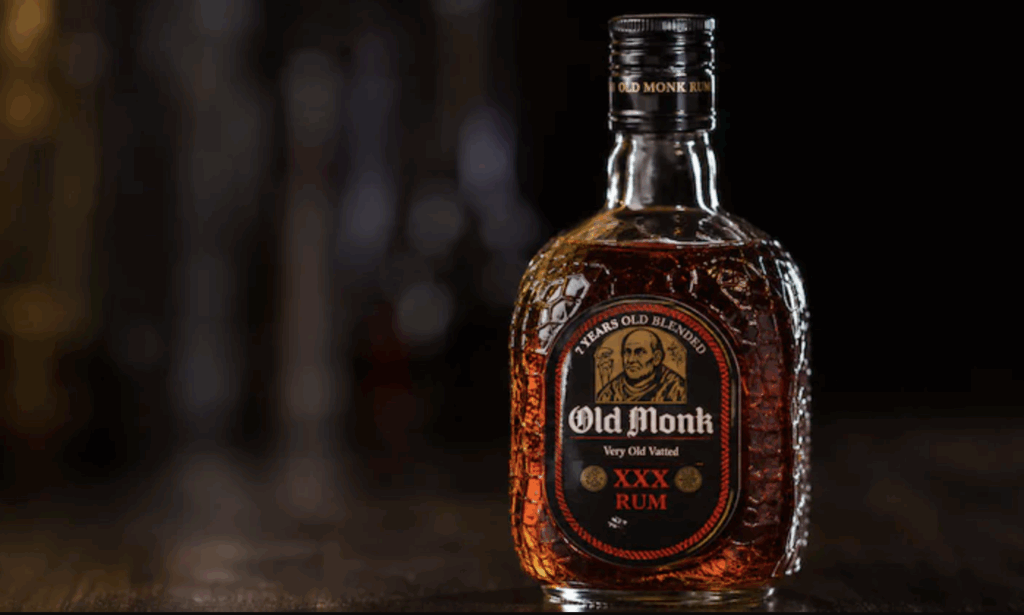
A regulatory dispute over Old Monk has sparked a much bigger conversation about what Indians have actually been drinking for decades. The Food Safety and Standards Authority of India (FSSAI) has told the Bombay High Court that Old Monk cannot be sold as “rum” in its current form, suggesting that it could instead be described as a “rum-flavoured spirit.”
The controversy has also exposed how several mass-market Indian-made foreign liquor (IMFL) products are manufactured.
Why FSSAI Objected to Old Monk
The dispute is not simply about the wording printed on the bottle. FSSAI’s position is that the underlying product does not meet the regulatory definition of rum.
The regulator has objected to the use of neutral spirit along with artificial flavouring and colouring in products marketed as rum or whisky. In Old Monk’s case, FSSAI has argued that the product cannot be sold as rum if its character is created by adding rum flavour to a neutral alcoholic base.
The Bombay High Court is expected to consider the matter again on September 11.
What Is IMFL and How Is It Made?
The controversy has brought attention to the manufacturing practices behind India’s huge IMFL market.
Globally, whisky is generally produced from fermented grains, while rum is traditionally made from sugarcane-derived material. The alcohol and flavour characteristics develop through fermentation, distillation and, in many cases, maturation.
In India’s mass-market spirits segment, however, many products use extra neutral alcohol (ENA) or grain neutral spirit (GNS) as their base. These neutral spirits can be derived largely from molasses, a by-product of sugar production.
Flavouring and colouring can then be added to create the characteristics associated with different spirit categories.
Why India Developed This Model
There is a historical and economic explanation for the widespread use of neutral spirits.
India’s large-scale alcohol industry developed around readily available molasses rather than diverting substantial quantities of food grains towards alcohol production. This helped make neutral spirit a practical base for mass-market alcoholic beverages.
Premium segments, including single malts and traditionally produced spirits, follow different production methods.
A Question of Consumer Transparency
The current dispute is therefore not simply about whether a familiar brand tastes like rum or whisky. It raises a broader question: should consumers be clearly told how their alcoholic beverage is made?
FSSAI’s stricter enforcement has already affected several well-known brands, with manufacturers working on revised labels and product descriptions.
For consumers, the issue is about transparency and whether a product’s name accurately communicates its ingredients and manufacturing process.
Old Monk’s Emotional Connection Makes the Issue Bigger
Old Monk occupies a special place in India’s drinking culture. Introduced decades ago, the brand has built an unusually strong following without relying heavily on conventional advertising.
That history explains the strong reaction to the FSSAI dispute. For many consumers, the question is not merely technical. It challenges their understanding of a drink they have associated with celebrations, friendships and personal memories for generations.
The controversy could ultimately force India’s alcohol industry to become more transparent about what is inside its bottles — while regulators and manufacturers work out how traditional Indian IMFL categories should be defined and labelled.
Summary
FSSAI has told the Bombay High Court that Old Monk cannot be sold as rum in its current form, suggesting “rum-flavoured spirit” as an alternative description. The dispute has highlighted the widespread use of neutral spirits, flavouring and colouring in India’s mass-market IMFL industry. The controversy is now raising larger questions about regulatory definitions, manufacturing practices and consumer transparency in India’s alcoholic-beverage market.