Railway Stations Fail Basic Passenger Amenity Test
A new report by the Comptroller and Auditor General of India (CAG) has raised serious concerns about passenger facilities and sanitation at railway stations across the country.
The audit found that 458 out of 512 railway stations inspected — more than 89% — were deficient in one or more Minimum Essential Amenities prescribed by the Railways.
The deficiencies included drinking water, toilets, urinals, seating, fans, water coolers, platform shelters and dustbins.
E. Coli Found In Drinking Water
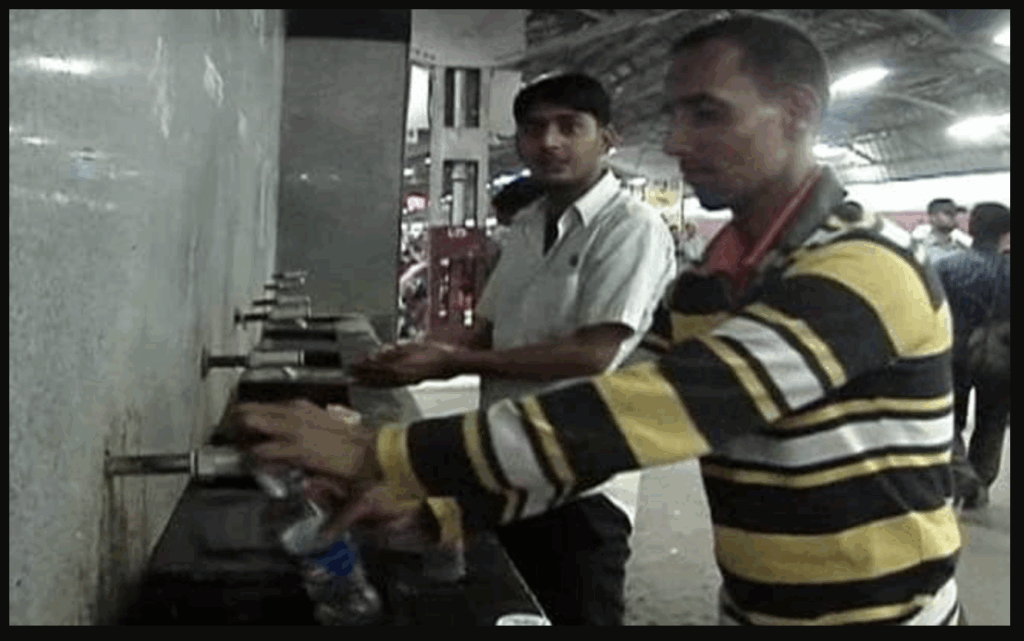
One of the most worrying findings concerns the quality of drinking water provided to passengers.
Water samples from water coolers at eight railway stations tested positive for E. coli, including Coimbatore, Palakkad Junction, Hyderabad, Chhatrapati Shivaji Maharaj Terminus, Bhiwandi Road, Kalyan, Lonavala and Madhupur.
Tests conducted at several other stations also detected total coliform bacteria, which includes E. coli.
The findings raise concerns about the safety of water available to millions of railway passengers.
Even Major Railway Stations Have Shortfalls
The deficiencies were not restricted to smaller or less busy stations.
The audit found gaps at major NSG-1 stations, including New Delhi, Mumbai Central, Chhatrapati Shivaji Maharaj Terminus, Howrah and Sealdah.
At these high-traffic stations, auditors identified shortcomings involving drinking water taps, fans, water coolers, seating arrangements, urinals, latrines and dustbins.
This means that even some of India’s most important railway terminals are not fully meeting prescribed passenger amenity standards.
Urinals Missing At 403 Stations
The scale of the sanitation problem is particularly significant.
Across the audited network, urinals were deficient at 403 stations, while latrines fell short of prescribed requirements at 201 stations.
Drinking water taps were also deficient at a large number of stations.
The CAG found that the problem was not simply a matter of poor maintenance at individual locations but pointed towards wider gaps in planning, monitoring and implementation.
Water Testing Also Found Inadequate
The audit identified shortcomings in the testing of drinking water.
Bacteriological analysis was not carried out at 59 stations across six railway zones.
The CAG also found instances where drinking water tests showed chlorine levels outside the prescribed range.
At several stations, the required comprehensive testing of water quality was either not conducted or was inadequate.
Railway Board Had Already Set Standards
The Railway Board had prescribed Minimum Essential Amenities for railway stations and directed that these facilities be provided across stations.
These include drinking water, waiting halls, seating, platform shelters, urinals, latrines, fans, foot overbridges, dustbins, clocks and public announcement systems.
Despite these requirements, the CAG found substantial gaps years after the standards were introduced.
Nearly 90% Deficient
The figure of 458 deficient stations out of 512 audited stations is perhaps the most striking finding in the report.
It means that nearly nine out of every ten stations examined had at least one significant shortfall in essential passenger amenities.
The audit covered stations across different categories and railway zones, indicating that the problem extends across the network rather than being concentrated in one particular region.
Railways Asked To Improve Water Safety
The CAG has recommended stronger compliance with prescribed procedures for inspecting railway water-supply systems.
It has also called for comprehensive testing of drinking water according to the Uniform Drinking Water Quality Protocol.
The findings are expected to put greater pressure on the Railways to improve sanitation, water quality and basic passenger infrastructure.
A Basic Question For Indian Railways
Indian Railways carries millions of passengers every day, making the availability of safe drinking water and clean sanitation facilities fundamental rather than optional.
The CAG findings show that significant gaps remain even at some of the country’s busiest railway stations.
The immediate challenge for the Railways will be to ensure that basic amenities are actually available and maintained at the standards already prescribed.
Summary
A CAG audit has found serious deficiencies in passenger amenities at Indian railway stations. Of the 512 stations inspected, 458, or more than 89%, lacked one or more prescribed basic facilities. Drinking water samples from eight stations tested positive for E. coli, while deficiencies in urinals, toilets, water taps, fans and water coolers were also reported. Even major stations such as New Delhi, Mumbai Central, CSMT, Howrah and Sealdah had significant gaps.