Claude Text Will Carry An Invisible Watermark
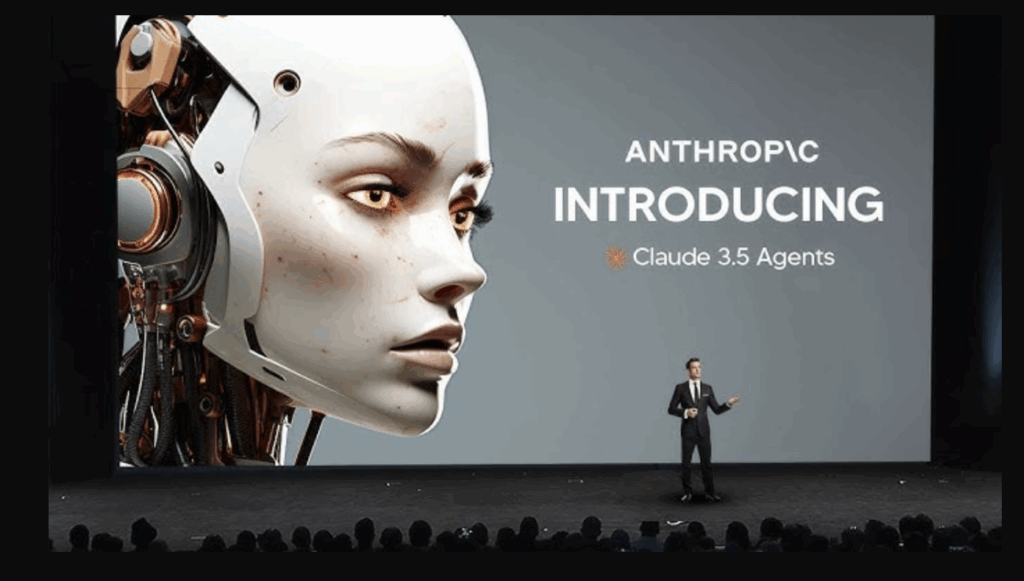
Anthropic is introducing a new watermarking system for text generated by Claude. The technology is designed to help identify whether Claude was involved in producing or editing a piece of text.
Unlike a traditional watermark, nothing visible will be added to the content. Readers will not see symbols, labels or unusual characters.
Instead, the watermark will be embedded statistically through subtle changes in Claude’s word-selection process.
How The Invisible Watermark Works
When Claude generates text, there are often several words that could naturally fit into a sentence.
Anthropic’s system can use a cryptographic key to influence which of those equally suitable words Claude selects.
Each individual choice looks completely normal.
However, across a sufficiently long passage, these choices create a statistical pattern that can potentially be recognised by a specialised detection system.
The Text Will Still Look Completely Normal
The biggest advantage of the system is that users should not notice any difference.
Anthropic says the watermark is designed to preserve the quality, creativity and readability of Claude’s responses.
It also does not add additional tokens to the response, meaning it should not significantly increase generation costs or make Claude noticeably slower.
It Won’t Reveal Who Used Claude
The watermark is designed to identify Claude’s involvement, not the identity of the person who generated the content.
It will not contain information about the user’s name, account or conversation.
A detector could potentially determine that Claude was involved in creating a passage without knowing who actually used the AI system.
Claude Detection Is Different From AI Detection
This technology is different from conventional AI detectors.
Traditional AI detection tools generally attempt to determine whether writing was produced by an AI based on statistical characteristics or writing style.
Anthropic’s watermark works at the generation stage itself.
Because the pattern is deliberately introduced by Claude, a detector with the appropriate cryptographic key can look specifically for that signal.
This could make Claude-generated content easier to identify than relying solely on general-purpose AI detection systems.
Longer Text Will Be Easier To Detect
The watermark becomes more useful as the amount of Claude-generated text increases.
A long article provides many opportunities for the system to influence word choices and create a detectable pattern.
Short responses, however, contain fewer opportunities.
This means a very small piece of text may not provide enough information for a detector to confidently identify Claude’s involvement.
Human Editing Can Make Detection Harder
The system is not designed to make Claude-generated content permanently identifiable.
A substantial rewrite can potentially remove the watermark.
If someone completely rewrites an AI-generated article, replacing most of the original words and sentence structures, the statistical signal can become too weak to detect.
Light editing, however, may leave enough of the original pattern intact.
Facts Present A Technical Challenge
Watermarking is more difficult when Claude has very little freedom over the words it can choose.
For example, when answering a factual question with a specific name, number or technical term, there may be only one correct answer.
In such situations, Claude cannot freely substitute another word simply to strengthen the watermark without risking accuracy.
This means factual content can be more difficult to watermark reliably.
Code Will Be Harder To Watermark
Programming code presents a similar problem.
Code generally has strict syntax and requires precise commands, leaving less room for alternative word choices.
As a result, Claude-generated code will contain fewer opportunities for the watermark to operate.
Comments inside code could provide more flexibility because the same explanation can often be written in several different ways.
Translations Can Carry The Watermark
Claude-generated translations are expected to be easier to watermark because the model makes word-selection decisions throughout the translated text.
This means even when the original document was entirely written by a human, a Claude-generated translation could contain detectable evidence of AI involvement.
A Detection API Is Coming
Anthropic is also developing a detection API that organisations could use to check whether Claude was likely involved in generating or editing text.
Such a system could eventually be useful for publishers, universities, businesses and online platforms.
For example, an organisation could potentially submit a document to the detection system and receive an indication of whether the text contains Claude’s watermark.
Older Claude Models Will Also Be Covered
Anthropic is working on extending the watermarking system to Claude models released before the new technology is introduced.
The company expects the rollout to take place over the coming months.
That means the system could eventually cover a much wider range of Claude-generated content rather than being limited to the newest models.
Why Anthropic Is Doing This
The move is closely connected to growing global pressure for greater transparency around AI-generated content.
Governments and regulators increasingly want users to be able to distinguish between human-created and AI-generated material.
Anthropic is therefore developing watermarking as one way to provide evidence about the origin of AI-generated content.
The technology is particularly relevant as AI-generated writing becomes increasingly difficult to distinguish from human writing.
Images Will Use A Different System
Anthropic is also working on identifying AI-generated images and files, but the approach is different.
Instead of subtly modifying the image itself, supported files can carry information in their metadata that records how they were created or processed.
This allows the origin information to remain associated with the file without visibly changing its appearance.
A New Era For AI Content Detection
Anthropic’s watermarking system could represent a significant shift in how AI-generated content is identified.
Instead of relying entirely on software trying to guess whether something “sounds like AI”, providers can embed a signal directly when content is generated.
The technology is not foolproof, particularly after extensive rewriting or when only a small amount of AI-generated text is involved.
But as AI-generated content becomes more widespread, invisible watermarking could become an increasingly important way of establishing whether an AI system was involved.
For users, the key takeaway is simple: Claude-generated text may look completely ordinary while carrying an invisible signal that can reveal Claude’s involvement.
Summary
Anthropic is introducing an invisible watermarking system for Claude-generated text. The technology subtly influences word choices when multiple alternatives are possible, creating a statistical pattern that specialised detection tools can identify. The watermark will not be visible to readers, affect the appearance of the writing or reveal the user’s identity. Longer passages will be easier to detect, while extensive rewriting can weaken or remove the signal. Anthropic is also developing a detection API and plans to extend the technology across its Claude models.