

Delhi’s air quality deteriorated sharply on Monday, November 9, following Diwali celebrations, with several monitoring stations recording Air Quality Index (AQI) levels above 400. A thick blanket of smog covered parts of the national capital, reducing visibility and pushing pollution levels into the severe category at multiple locations.
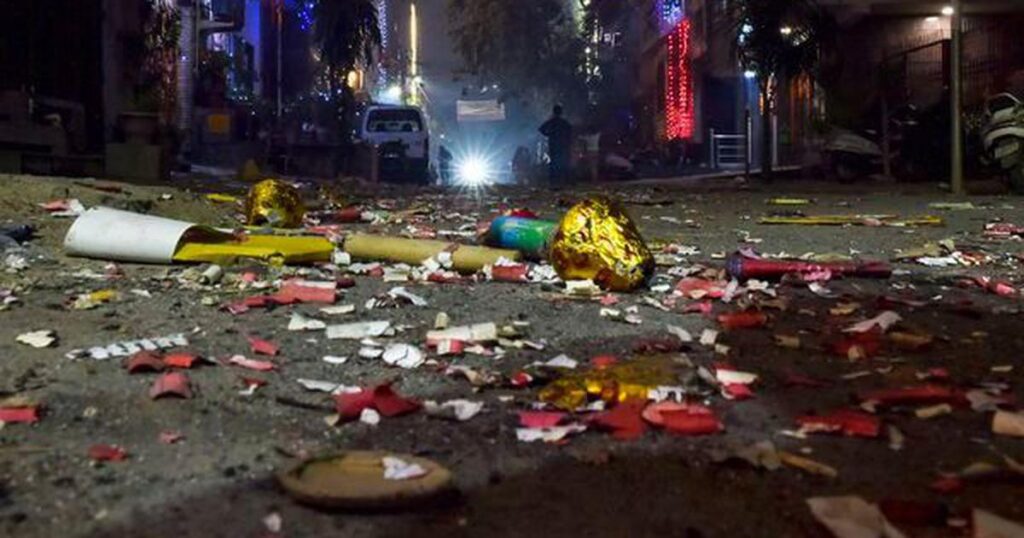
According to data from the Central Pollution Control Board (CPCB), the ITO monitoring station recorded an AQI of 406 at around 4:20 am. The reading placed the area in the severe category, highlighting the deterioration in air quality after the festival.
Several Areas Record Severe Air Pollution
The impact of rising pollution was visible across multiple parts of Delhi. Several monitoring stations reported AQI readings above 400 during the early hours of Monday.
Sonia Vihar, Burari Crossing, Vivek Vihar and Jahangirpuri were among the locations reporting particularly high pollution levels. Other areas, including North Campus, Rohini, Bawana, Chandni Chowk and Punjabi Bagh, also recorded readings in the severe category.
The CPCB classifies AQI readings between 301 and 400 as very poor, while readings between 401 and 500 fall under the severe category.
Firecracker Emissions Add to Pollution Levels
The deterioration followed widespread firecracker use during Diwali celebrations on Sunday evening, despite restrictions on their use.
Air quality had already been poor before the celebrations began. Delhi’s average AQI stood at 376 on Sunday, placing it in the very poor category.
Pollution levels increased as firecracker emissions added particulate matter to the atmosphere. PM2.5 was among the major pollutants recorded across the city.
An analysis of CPCB monitoring data also showed a sharp rise in average PM2.5 concentrations during the evening hours. The average across 39 monitoring stations increased from 190 micrograms per cubic metre at 7:45 pm to 259 micrograms per cubic metre from 8 pm.
Unfavourable Weather Conditions Worsen the Situation
Apart from firecracker emissions, weather conditions have contributed to the accumulation of pollutants.
Low wind speeds and unfavourable atmospheric conditions have restricted the dispersal of polluted air. Vehicular emissions and stubble burning in neighbouring states have also contributed to Delhi’s pollution levels.
The Air Quality Early Warning System had forecast a deterioration into the severe category from November 9, with elevated pollution levels expected to continue over the following days.
GRAP Stage III Restrictions Remain in Force
Stage III measures under the Graded Response Action Plan (GRAP) are already in force across Delhi-NCR. Authorities are continuing pollution-control measures to limit further deterioration in air quality.
The latest readings have renewed attention on the effectiveness of firecrAir acker restrictions, pollution monitoring and enforcement measures during the winter pollution season.
Summary
Delhi’s air quality deteriorated after Diwali, with several monitoring stations recording AQI levels above 400 on November 9. The ITO station registered 406, while multiple locations reported severe pollution. Firecracker emissions, vehicular pollution, stubble burning and unfavourable weather conditions contributed to the deterioration. GRAP Stage III restrictions remain in force across Delhi-NCR as authorities continue monitoring air quality.