One of India’s Largest Urban Transformation Projects
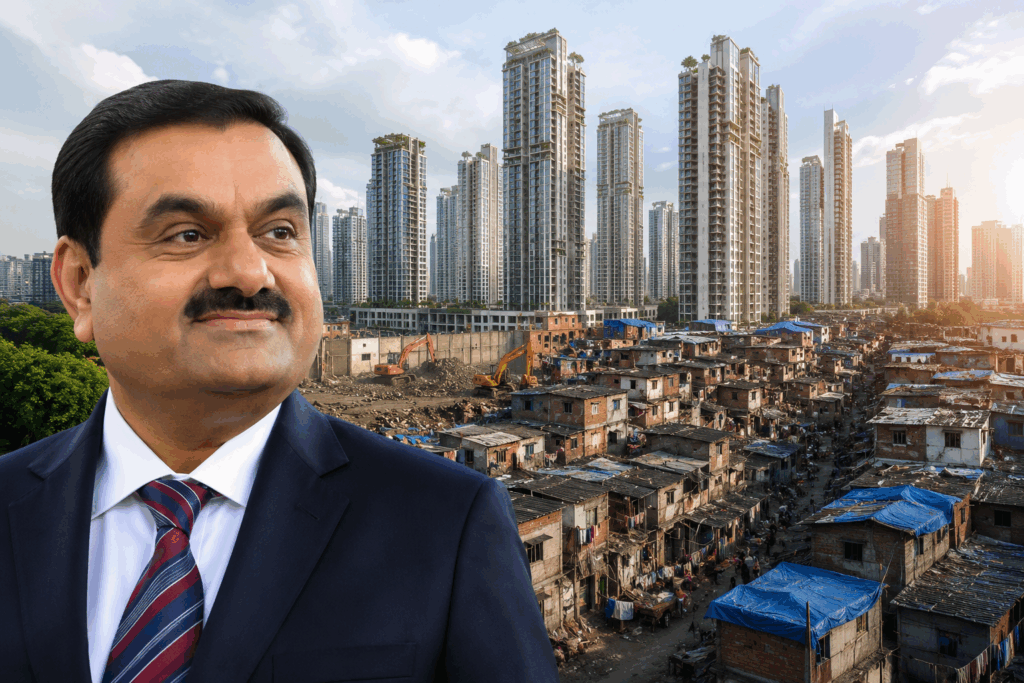
The Dharavi Redevelopment Project in Mumbai is set to become one of the biggest urban renewal initiatives in India. Backed by the Adani Group in partnership with the Maharashtra government, the project aims to rehabilitate more than one million slum dwellers while transforming Dharavi into a modern, transit-oriented urban hub. The ambitious initiative seeks to address housing shortages, improve infrastructure, and create a sustainable urban ecosystem for residents.
Massive Scale of Redevelopment
Spread across approximately 225 million square feet, the project includes 95 million square feet dedicated to rehabilitation and 130 million square feet earmarked for residential and commercial development. More than 125,000 housing units are planned as part of the rehabilitation effort. Around half of these homes will be constructed within Dharavi itself, while the remaining units will be developed across multiple locations in the Mumbai Metropolitan Region (MMR).
Public-Private Partnership Model
The redevelopment project operates through a public-private partnership structure, with the Maharashtra government holding a 20 percent stake and the Adani Group owning the remaining 80 percent. Approved in 2022, the initiative aims to relocate eligible residents into modern high-rise housing complexes equipped with better civic amenities, sanitation systems, and improved connectivity.
Economic and Infrastructure Benefits
Beyond housing, the project is expected to reshape Mumbai’s urban landscape. Dharavi’s strategic location near the Bandra-Kurla Complex (BKC), one of Mumbai’s key business districts, makes it a highly valuable redevelopment zone. Reports suggest the transformed area could include metro connectivity, schools, healthcare facilities, green spaces, and commercial hubs, creating a smart-city environment for residents and businesses alike.
Challenges Ahead
While the project promises significant benefits, experts describe it as one of India’s most complex real estate undertakings. The scale of rehabilitation, stakeholder management, legal considerations, and concerns surrounding livelihoods and relocation make execution a major challenge. Analysts believe successful completion could establish a new benchmark for large-scale urban redevelopment projects across the country.