Like sailors navigating shifting tides, today’s workforce must constantly adjust their sails to survive the storms of change.

The Shockwave: Disruption Hits Harder in India
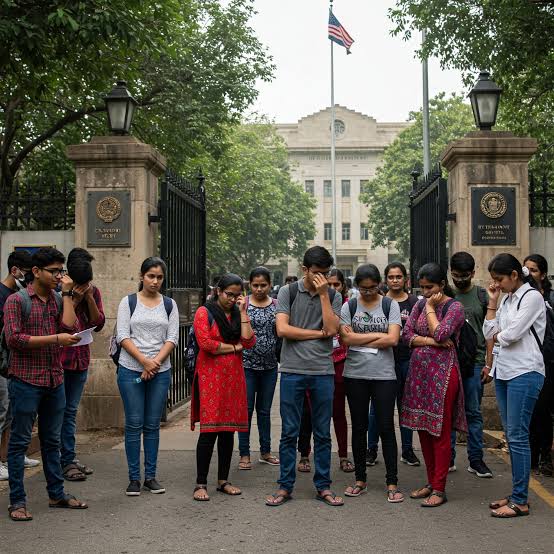
India’s workforce is experiencing sharper disruption than much of the world, with 86% of workers reporting major workplace changes in the past year—far above global levels. According to the 2026 Human Progress Report by Educational Testing Service (ETS), this signals a defining transformation: job security is no longer anchored in tenure, but in adaptability.
Globally, 67% of workers reported at least one major disruption, but India stands among the hardest-hit regions. Nearly 98% of Indian workers face at least one barrier to professional success, highlighting intense pressure to constantly evolve. Despite this, the country recorded a strong Human Progress Index score of 114.4, well above the global average of 96.7.
“In the face of a changing job landscape, workers are quickly adapting,” said Amit Sevak. “Adaptability is becoming the new ‘must have’ skill.” The report, based on over 32,000 respondents across 18 countries, underscores how uncertainty is now a constant, with workers striving to prepare for an unclear future.
The Response: Upskilling in the Age of AI
Amid this disruption, Indian workers are responding with remarkable agility. Nearly 89% are actively building new skills, and 90% believe verified credentials are essential as job demands evolve. This strong push toward continuous learning reflects a proactive approach to staying competitive.
A key driver behind this shift is the rise of AI. Indian workers estimate that over 42% of their tasks now involve AI tools—higher than the global average. Notably, 78% say they use AI primarily to remain competitive rather than by choice, indicating both reliance and pressure.
However, challenges persist globally. A 19-point gap exists between the importance of AI skills and actual proficiency. While 88% of workers expect employer support for upskilling, only 71% receive it. Access to credentials also remains uneven—73% want them, but just 45% can obtain them, due to affordability and availability constraints.
Even as disruption fuels anxiety, it is also driving transformation. Indian workers, more than most, are embracing change head-on, reshaping their skills in real time to stay afloat in an evolving job market.
In a world where the ground keeps shifting, survival belongs to those who learn to move with it.
Summary
India’s workforce faces greater disruption than global peers, with 86% reporting major workplace changes. Yet, it is adapting faster, as 89% actively upskill and embrace AI-driven roles. The ETS report highlights rising reliance on adaptability, skill credentials, and continuous learning, even as gaps in AI proficiency, employer support, and access to credentials create ongoing challenges.