A major immigration policy shift in the United States has triggered fresh uncertainty for Indian professionals and families waiting for Green Cards.
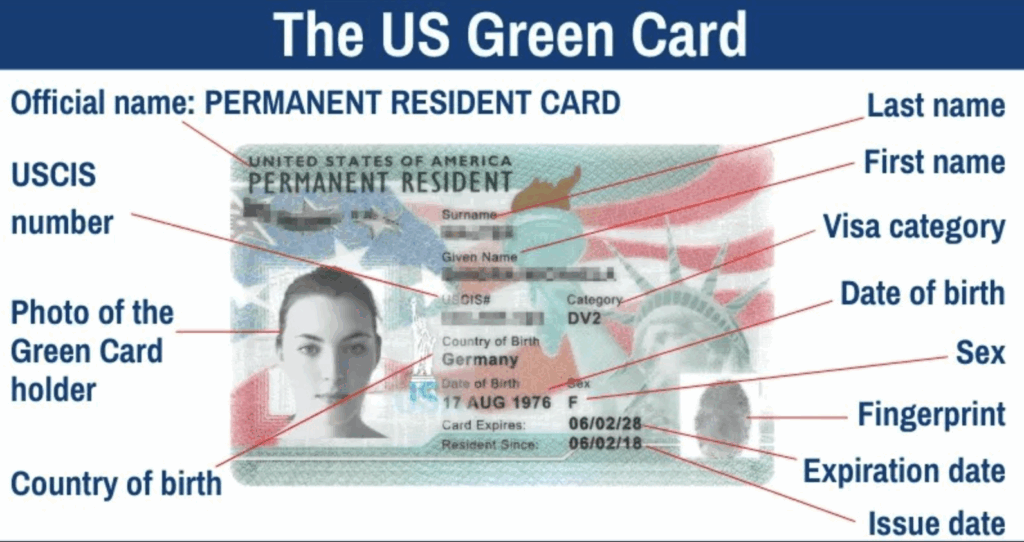
According to reports, the US administration has introduced a new rule that could require many Green Card applicants currently living in America on temporary visas to return to their home countries and complete the permanent residency process through US consulates abroad.
Earlier, many applicants were able to apply for “adjustment of status” while remaining inside the United States.
The new change could significantly affect Indian H-1B visa holders, who already face some of the world’s longest employment-based Green Card waiting periods.
Why Indians Are Most Affected
Indians form one of the largest groups of skilled professionals in the US technology and engineering sectors.
Thousands of Indian professionals work in America through:
- H-1B visas
- L-1 visas
- H-4 dependent visas
- Employment-based immigration categories
However, due to per-country Green Card caps and massive application backlogs, many Indians wait decades for permanent residency approval.
Experts estimate that over 1 million Indians are currently stuck in employment-based Green Card queues.
The new rule has intensified fears because applicants may now face:
- Forced international relocation
- Job uncertainty
- Family disruption
- Visa processing delays
- Immigration unpredictability
Many Indian-American families fear the changes could destabilize lives built over years in the United States.
What The New Rule Changes
| Earlier System | New Rule |
|---|---|
| Applicants could adjust status inside the US | Many may need to return to home country |
| Easier continuity for jobs and families | Potential disruption during processing |
| More predictable transition to Green Card | Greater uncertainty |
| Less dependence on consular interviews | Higher dependence on embassy processing |
| Lower relocation pressure | Possible temporary relocation requirement |
Immigration experts say the biggest concern is uncertainty around implementation and exceptions.
H-1B Professionals Particularly Worried
The policy has especially alarmed Indian technology professionals working in Silicon Valley and other major US tech hubs.
Many workers already spend years renewing temporary visas while waiting for permanent residency approval.
The fear now is that applicants may need to leave the US even after spending years building careers, buying homes, and raising families there.
Immigration attorneys have warned that the rule could complicate employment continuity and legal status management for highly skilled workers.
Some experts also believe the policy may face legal challenges because of its potential impact on existing applicants.
Zoho Founder Sridhar Vembu’s Remarks Trigger Debate
The issue became even more controversial after Zoho founder Sridhar Vembu publicly urged Indians in the US to consider returning to India instead of remaining dependent on uncertain immigration systems.
His comments triggered sharp reactions online.
Supporters agreed that India now offers growing opportunities in technology, startups, AI, and manufacturing. Critics, however, argued that many professionals have spent decades building lives abroad and cannot easily relocate overnight.
The debate quickly expanded into broader discussions around brain drain, immigration dependence, and India’s growing economic opportunities.
Bigger Impact On US Tech Industry Possible
Experts believe the rule could also affect the US technology sector itself.
Indian professionals play a critical role in:
- Software engineering
- Artificial intelligence
- Cloud computing
- Healthcare technology
- Financial systems
- Semiconductor research
Many American companies rely heavily on highly skilled immigrant workers.
Immigration uncertainty could potentially make global talent reconsider long-term career plans in the United States.
Families Fear Long-Term Instability
Perhaps the biggest concern is the emotional and financial uncertainty facing Indian families already waiting years for permanent residency approvals.
Many families have:
- Children studying in US schools
- Long-term mortgages
- Career commitments
- Dependent visas tied to employment status
Any disruption in immigration processing could affect entire family structures.
Former White House advisor Ajay Bhutoria warned that over 1.2 million Indian-American families could face uncertainty under the new framework.
Final Clarity Still Awaited
Despite widespread concern, immigration experts say many implementation details still remain unclear.
Questions continue around:
- Which visa categories will be affected
- Whether existing applicants get exemptions
- What qualifies as “extraordinary circumstances”
- How quickly the rule will be enforced
For now, however, the development has once again highlighted how deeply immigration policy changes in the US can impact India’s global workforce and millions of highly skilled professionals waiting for permanent residency.