




The Trump administration has proposed a major change to the US Optional Practical Training (OPT) programme that could make it significantly more expensive for international students to work in the country after graduation. Under the proposal, universities would have to pay an initial fee of $70,000 for each eligible student and an additional $30,000 for a subsequent OPT authorisation.
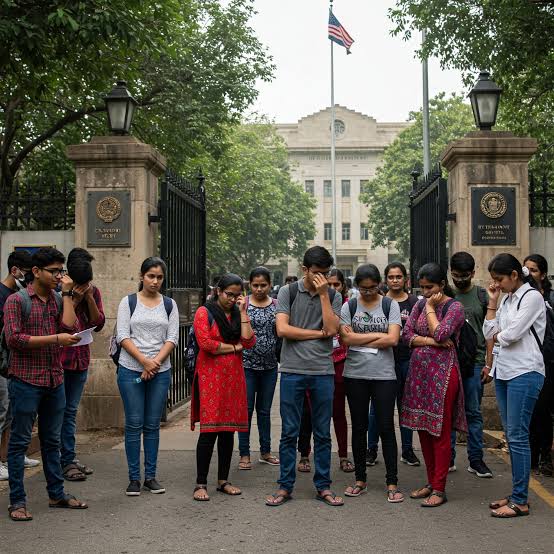
The proposal could affect thousands of international students, particularly those from India pursuing degrees in science, technology, engineering and mathematics (STEM). It has also raised concerns about university finances, tuition costs and the future availability of skilled international talent in the US.
What Is the Proposed $70,000 OPT Fee?
OPT allows eligible international students holding F-1 visas to work in the US in jobs related to their field of study. Most eligible graduates can receive up to 12 months of OPT, while qualifying STEM graduates may apply for a further 24-month extension.
Under the proposed rule, the first OPT recommendation for an F-1 student would trigger a $70,000 fee payable by the student’s university. A subsequent OPT recommendation would require an additional $30,000 payment.
This means the total proposed fee could reach $100,000 for a student using both the initial OPT period and a subsequent extension or other qualifying OPT authorisation.
The proposal is not yet a final rule. The US Department of Homeland Security says the fees are intended to strengthen immigration oversight, discourage fraud and encourage educational institutions to scrutinise OPT applications more carefully.
Universities, Not Students, Would Pay the Fee
One important distinction is that the proposed charges would formally be paid by universities certified under the Student and Exchange Visitor Programme, rather than directly by students or their employers.
However, universities could respond by increasing tuition, reducing admissions or limiting the number of international students they recommend for OPT. Smaller institutions may find it particularly difficult to absorb such large expenses.
The American Immigration Council has warned that these costs could reduce international student enrolment and weaken the financial position of universities that rely on tuition from overseas students.
Indian Students Could Face Greater Uncertainty
Indian students represent a significant share of the international student population in the US, particularly in graduate programmes related to technology and engineering.
OPT has traditionally allowed graduates to gain professional experience in the American job market and, in some cases, pursue longer-term employment opportunities.
If universities become reluctant to pay the proposed fees, graduates could find it harder to access post-study employment opportunities. Some prospective students may instead consider destinations with more predictable work and immigration policies.
The consequences could extend beyond students to US technology companies that recruit international graduates for engineering, research and other specialised roles.
Could the Proposal Increase US University Fees?
The proposed rule could create additional financial pressure on universities. Institutions might pass some costs on to students, reduce the number of places available or discontinue programmes that become financially difficult to sustain.
However, the scale of any tuition increases or job losses remains uncertain. These are potential consequences identified by critics, rather than confirmed outcomes.
The administration argues that the fees would improve programme integrity, while opponents question whether such high charges are proportionate to the stated objective.
What Happens Next?
The proposed rule was published on October 8, 2026, and the public comment period is scheduled to close on November 9, 2026. The Department of Homeland Security must review feedback before deciding whether to issue a final rule and whether to make changes.
The proposal could face legal challenges if finalised. Students planning to study or work in the US should therefore distinguish between the proposed policy and the rules currently in force.
Summary
The Trump administration has proposed charging US universities $70,000 for an international student’s initial OPT authorisation and $30,000 for a subsequent authorisation. The fees could affect international graduates, particularly STEM students from India, by making universities more selective about recommending students for post-study employment. The proposal remains under consultation, with public comments due by November 9, 2026.