A wrongful death lawsuit filed in the U.S. has revealed chilling details of a 911 call from a Tesla driver trapped inside his burning vehicle after a crash — drawing renewed scrutiny over Tesla’s door design and safety features.
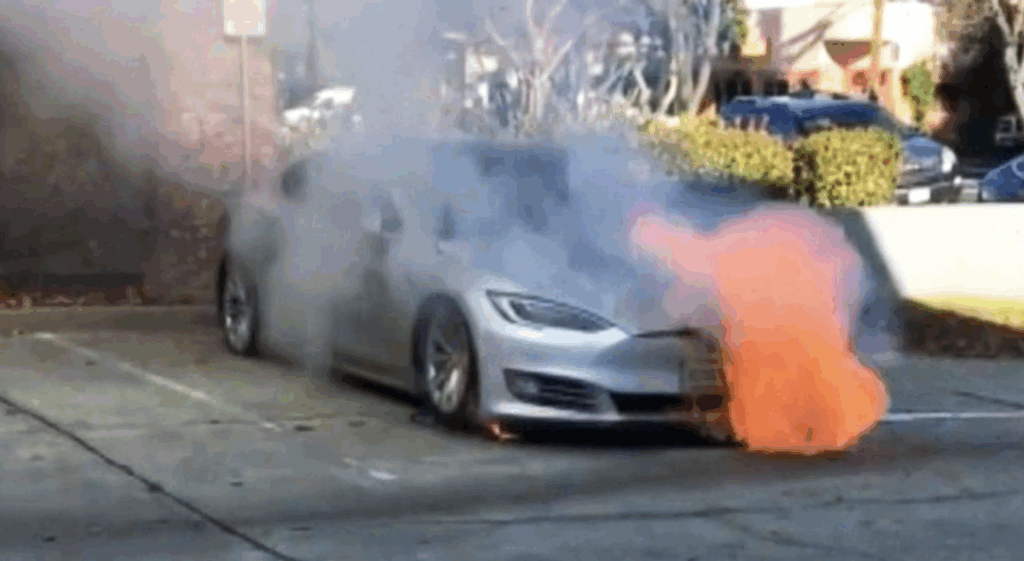
The lawsuit was brought by the family of 20-year-old Samuel Tremblett, a Syracuse University student who died in October 2025 after his 2021 Tesla Model Y collided with a tree in Easton, Massachusetts. Although Tremblett survived the impact, he later perished in the ensuing fire because he was allegedly unable to escape the vehicle.
Distressing 911 Call Exposes Moments Before Death
According to court documents included in the lawsuit, Tremblett’s desperate 911 call during the early hours after the crash captured his struggle to survive: “I’m stuck in a car crash … I can’t get out … it’s on fire … I’m going to die.”
Responding officers reportedly arrived quickly, but the intense fire with multiple explosions made it impossible to rescue him. His remains were later found in the back seat of the car.
What the Lawsuit Alleges
The legal complaint contends that Tesla’s power-dependent door handle system was defective and unreasonably dangerous, especially in emergency situations when the vehicle electrical system fails. Tesla vehicles, including the Model Y, use flush-mounted electronic exterior handles that require electrical power to operate; when the power fails after a crash, occupants can struggle to open them. Although a manual emergency release exists inside the car, the lawsuit argues it’s not easily visible or accessible during a crisis.
The filing highlights at least 15 similar deaths in Tesla vehicles since 2016 in which occupants or rescuers were unable to open doors after a crash and subsequent fire, raising safety alarms.
Regulatory & Global Scrutiny Intensifies
In response to ongoing safety concerns, U.S. auto regulators are reportedly investigating nearly 200,000 Tesla vehicles over potential door-release defects.
Internationally, safety agencies are also moving toward stricter rules. For example, China has announced a ban on automated exterior door handles due to the risk they pose in emergencies.
Tesla has not publicly responded to the latest lawsuit, which accuses the company of ignoring internal warnings about door design hazards.
What This Means for EV Safety
The case highlights a broader safety debate for electric and digital vehicle systems: as cars become more technology-centric, fail-safe mechanical systems that work without electrical power may be increasingly important in life-and-death situations.