India’s automotive industry is preparing for one of its biggest fuel transitions in decades. Following the government’s approval of regulations allowing the use of E100 fuel—ethanol-based fuel containing up to 100% ethanol—multiple automakers have begun developing and preparing flex-fuel vehicles capable of running on a wide range of ethanol-petrol blends. Among the companies leading the effort are Tata Motors, Mahindra & Mahindra, Toyota, Hyundai, Suzuki, and MG.
The development marks a major milestone in India’s strategy to reduce dependence on imported crude oil while promoting cleaner and more sustainable transportation solutions.
What Is the New E100 Framework?
The push gained momentum after Union Road Transport and Highways Minister Nitin Gadkari approved the regulatory framework for E100 fuel. The decision formally legalizes the use of 100% ethanol fuel and creates the regulatory foundation needed for vehicle manufacturers, fuel retailers, and testing agencies to bring flex-fuel vehicles to market.
Flex-fuel vehicles are designed to run on varying blends of petrol and ethanol, ranging from E20 to E100, without requiring major modifications from drivers.
Which Automakers Are Preparing Flex-Fuel Vehicles?
According to industry reports, at least 12 manufacturers are working on flex-fuel-compatible vehicles. Major players include Tata Motors, Mahindra & Mahindra, Toyota Kirloskar Motor, Hyundai, Suzuki, and MG Motor. Several companies have already showcased prototype vehicles capable of operating on high-ethanol blends.
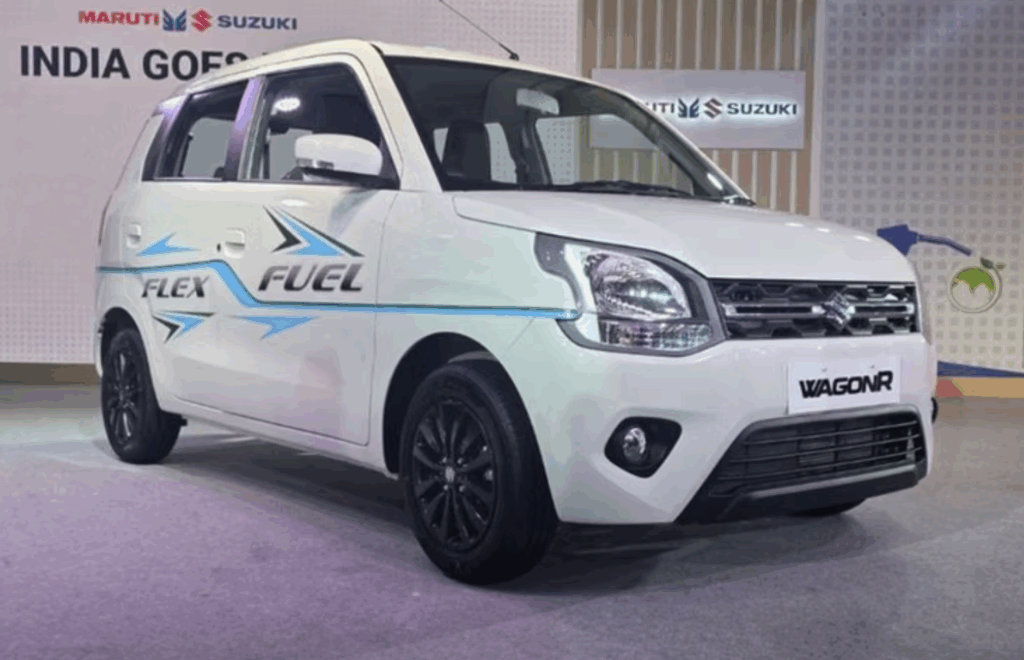
Maruti Suzuki recently unveiled India’s first mass-market flex-fuel passenger vehicle, while companies such as Tata and Toyota have already demonstrated flex-fuel versions of existing models, including the Punch and Innova Hycross.
Why India Is Betting on Ethanol
India imports a significant portion of its crude oil requirements, making fuel imports a major economic burden. Policymakers believe ethanol can play an important role in reducing import dependence while creating additional demand for agricultural products used in ethanol production.
The government has also announced plans to rapidly expand ethanol fuel availability. Petroleum Minister Hardeep Singh Puri recently said that around 500 E100 fuel stations are expected to be operational by the end of 2026, with the number projected to increase to 5,000 by 2027.
The initiative is expected to support farmers, strengthen energy security, and contribute to India’s environmental goals.
How Flex-Fuel Vehicles Work
Unlike conventional petrol vehicles, flex-fuel vehicles are equipped with specially calibrated engines, fuel systems, and electronic control units that can automatically adjust to different ethanol concentrations.
This allows drivers to use fuels ranging from standard petrol blends to nearly pure ethanol, depending on availability and pricing. Automakers have modified components such as fuel injectors, engine software, and exhaust systems to handle higher ethanol content safely and efficiently.
Challenges Ahead
Despite the enthusiasm, challenges remain. Ethanol generally delivers lower fuel efficiency than petrol because of its lower energy density. This means vehicles running on higher ethanol blends may require more fuel to travel the same distance. Industry experts believe improvements in engine technology and hybrid systems could help offset this disadvantage.
The success of the program will also depend on expanding ethanol production, building fuel distribution infrastructure, and ensuring competitive pricing for consumers.
A New Chapter for India’s Auto Industry
The approval of the E100 framework signals a major shift in India’s automotive strategy. While electric vehicles continue to receive significant attention, flex-fuel technology is emerging as another pathway toward cleaner mobility.
With multiple automakers preparing launches and ethanol infrastructure expanding nationwide, India could soon witness the emergence of a new category of vehicles designed specifically for the country’s growing biofuel ecosystem. If successful, the initiative may reduce fuel imports, support rural economies, and reshape the future of transportation in one of the world’s largest automobile markets.