The Supreme Court has urged Indian Railways to discontinue the use of the term “second-class passenger” in its official documents, observing that such terminology does not align with the constitutional values of equality and dignity. The court remarked that while railway coaches can be classified based on travel category, passengers themselves should not be identified by labels that suggest social hierarchy.
The observation was made during the hearing of a compensation case involving the death of a railway passenger who fell from a moving train in 2015.
Why the Supreme Court Raised the Issue
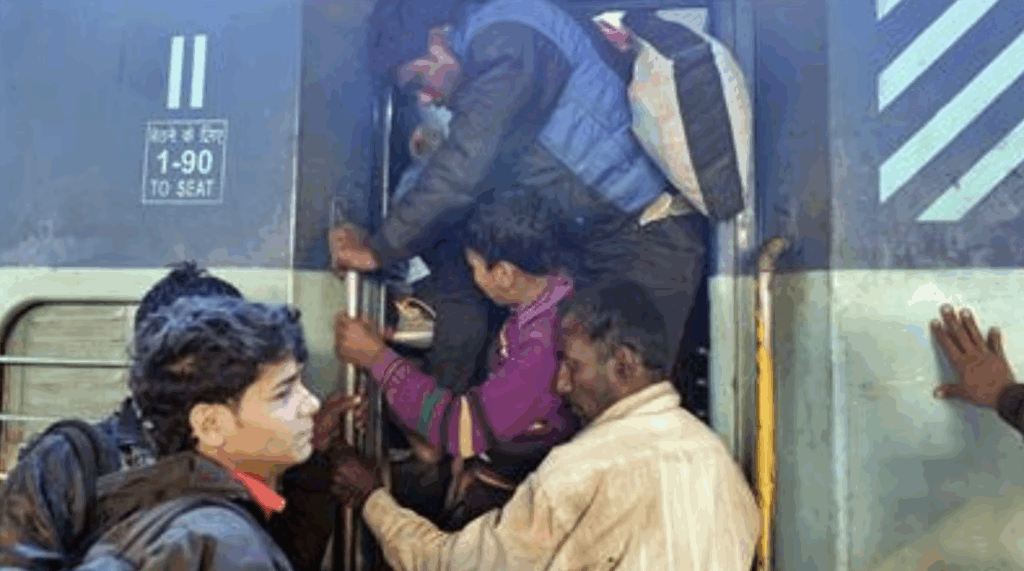
A bench comprising Justices Sanjay Karol and Nongmeikapam Kotiswar Singh observed that the expression “second class” should only describe the coach and not the individual travelling in it. The judges said that referring to people by such classifications reflects outdated notions that are inconsistent with the Constitution’s commitment to equality and human dignity.
The court suggested that Indian Railways revise the language used in its manuals, tickets and official communications so that every passenger is treated with equal respect, irrespective of the fare paid.
Compensation Case Led to the Observation
The remarks came while deciding the case of Chandrakant Thakkar, who died after falling from the Ahmedabad–Howrah Mail in November 2015. His family had sought compensation under the Railways Act, but both the Railway Claims Tribunal and the Madhya Pradesh High Court rejected the claim because his train ticket could not be recovered after the accident.
The Supreme Court overturned those rulings, stating that technical lapses should not prevent deserving families from receiving compensation under welfare legislation. The bench awarded ₹8 lakh to the deceased passenger’s widow.
Court Emphasises Constitutional Values
The apex court also observed that Indian Railways, being an instrumentality of the State, is expected to function in accordance with the principles of a welfare state. It stressed that public authorities should avoid an overly technical approach while deciding compensation claims, especially when the law is intended to protect citizens and provide relief.
According to the bench, constitutional values should influence not only policymaking but also the language used by government institutions. Official terminology, the judges said, must reflect equality, dignity and respect for every individual.
Possible Changes in Railway Terminology
Although the court did not issue a mandatory direction, its observations are expected to encourage Indian Railways to review the wording used in tickets, manuals and internal documents. Replacing the phrase “second-class passenger” with terminology that refers only to the coach category would better reflect the constitutional principle that all citizens deserve equal dignity.
Summary
The Supreme Court has advised Indian Railways to stop referring to travellers as “second-class passengers”, stating that only coaches—not people—should carry class labels. The observation came while awarding ₹8 lakh compensation in a passenger death case. The court emphasised that government institutions should uphold equality, dignity and a welfare-oriented approach in both their policies and official language.