In a major shift for India’s defence manufacturing, state-run Hindustan Aeronautics Limited (HAL) has been excluded from the Advanced Medium Combat Aircraft (AMCA) prototype development project, marking one of the biggest moves towards private sector involvement in building next-generation fighter jets.
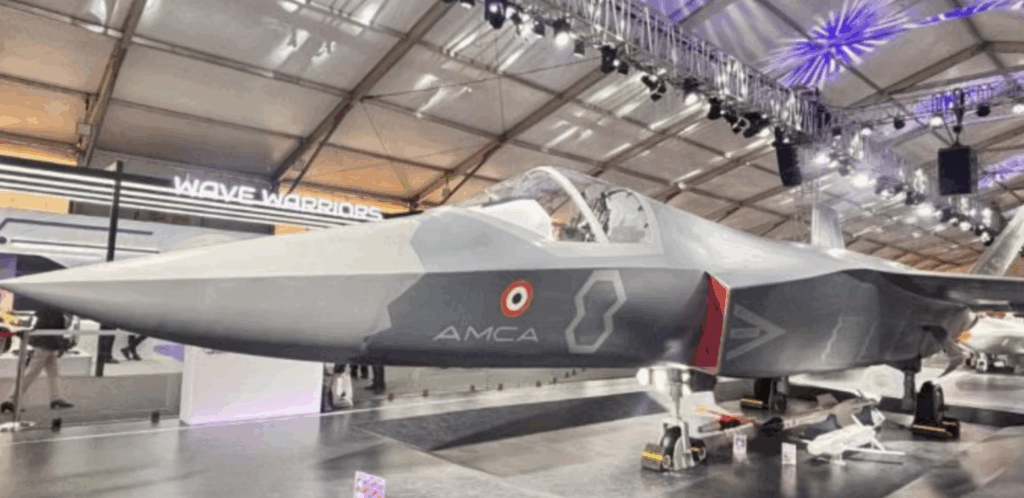
The AMCA programme — envisioned to produce an indigenous fifth-generation stealth fighter — is now competing among private industry players including Tata Advanced Systems, Larsen & Toubro (L&T) and Bharat Forge, with the final contract expected to go to the lowest bidder.
Why HAL Was Sidelined
HAL’s exclusion marks a departure from the longstanding practice where the state-owned defence enterprise was the default choice to build India’s indigenous high-end fighter aircraft. The decision isn’t about capability alone but commercial criteria — particularly the requirement that a bidder’s order book must not exceed three times its annual revenue. HAL’s extensive existing orders reportedly put it out of contention.
This implies a calculated gamble by the Indian government to tap private sector efficiency and competitiveness to accelerate the AMCA’s trajectory and introduce fresh dynamics into defence R&D and manufacturing.
The Contenders: Private Sector Takes the Lead
Three private sector groups have been shortlisted:
- A consortium led by the Tata Group, notable for its experience setting up the final assembly line for the Airbus C-295 transport aircraft in India.
- A team anchored by L&T, partnered with advanced component manufacturers.
- A group headed by Bharat Forge with support from niche defence electronics firms.
All contenders are expected to finalise commercial bids within the next three months, after which India’s Ministry of Defence will award the contract to the lowest bidder.
AMCA Timeline and Strategic Importance
If successfully executed, the AMCA is projected to see:
- Prototype rollouts by 2031
- First prototype by 2028 equipped with a GE-414 engine
- Full production expected by the mid-2030s to equip several Indian Air Force squadrons.
The programme’s success is critical for India’s long-term airpower capabilities and represents a milestone in reducing dependence on foreign imports, while catalysing private defence industry growth.