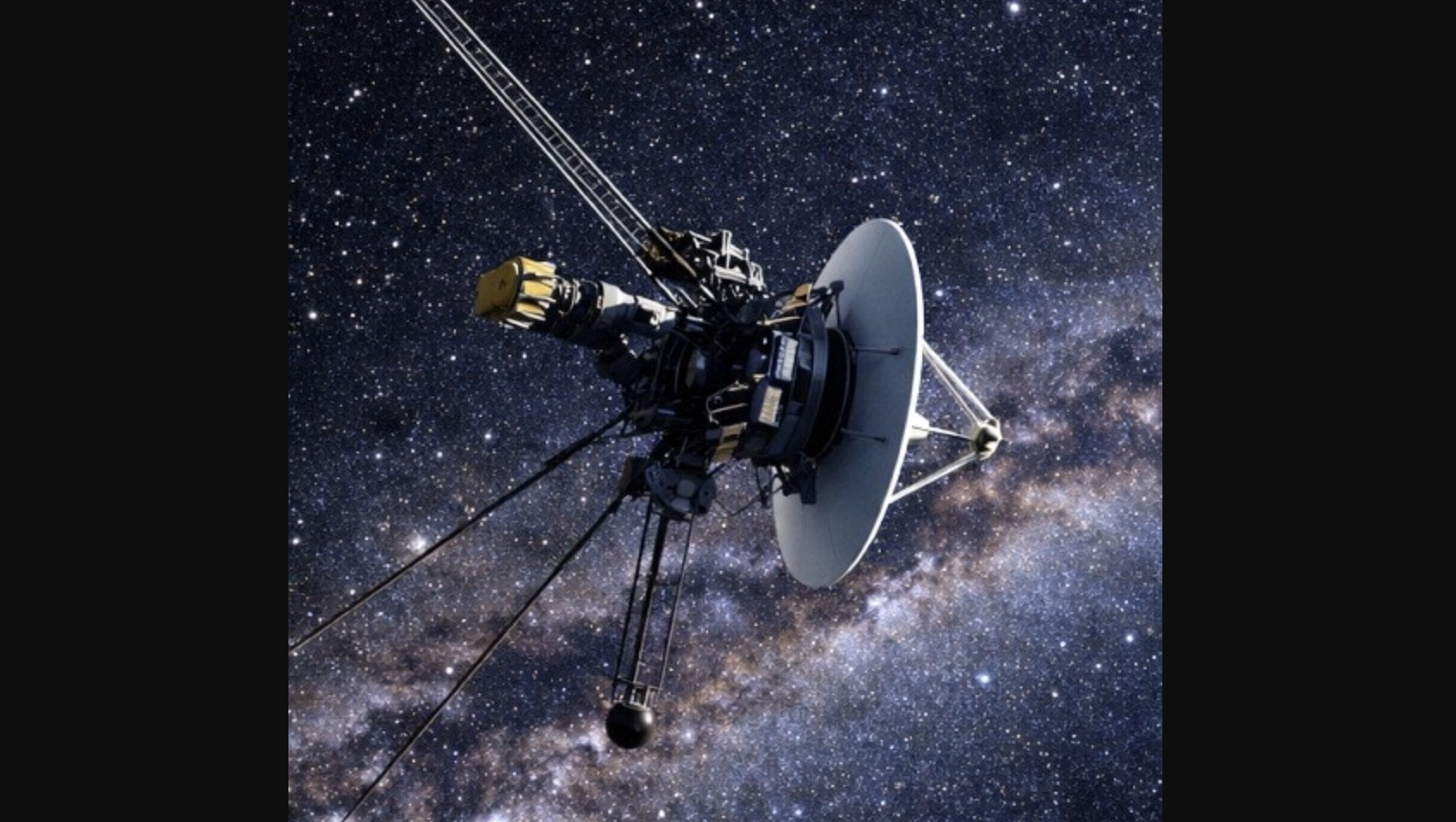


NASA has invited people around the world to participate in a global celebration as its Voyager 1 spacecraft reaches a historic milestone: travelling one light-day away from Earth. On November 18, 2026, the spacecraft is expected to cross a distance of more than 16 billion miles (25.9 billion kilometres), making it the first human-made object to reach this milestone.
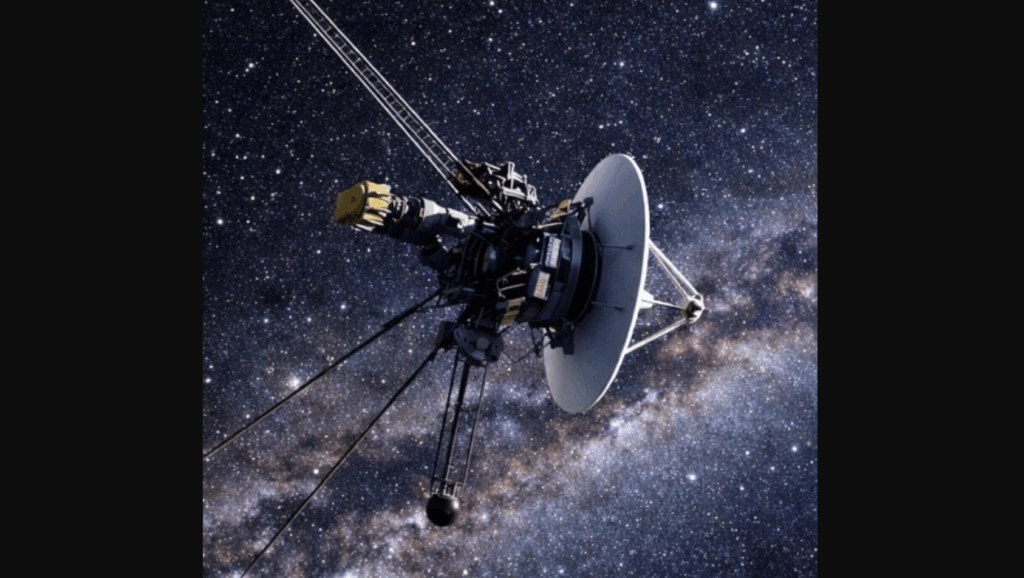
Launched in 1977, Voyager 1 has spent nearly five decades travelling through space. At this distance, a signal travelling at the speed of light takes approximately 24 hours to reach the spacecraft from Earth. This also means that any response from Voyager 1 takes another 24 hours to return.
NASA Asks People to Shine Bright for Voyager
As part of the celebrations, NASA has organised an initiative called “Shine Bright for Voyager’s Light-Day” on Tuesday, November 17, after sunset.
People are encouraged to create a symbolic wave of golden light by using smartphones, tablets, flashlights and other light sources. NASA has developed an online tool that allows mobile devices to flash the letters “VGR” in Morse code, which is Voyager’s mission call sign.
Participants can point their devices towards the sky and use the automated flasher to send the signal. Those who prefer can also manually flash the letters using a flashlight or another light source.
NASA has encouraged participants to capture photographs and videos of their light signals and share them on social media, tagging the agency’s official account.
The activity is intended as a symbolic global tribute to the spacecraft and its nearly 50-year journey beyond the solar system.
NASA to Host Discussion With Voyager Mission Team
NASA’s Jet Propulsion Laboratory (JPL) in Southern California will host a moderated discussion on November 19 at 12 p.m. EST (9 a.m. PST).
The event will bring together NASA leadership and members of the Voyager mission team to discuss the current status of Voyager 1 and Voyager 2, the scientific observations they continue to make in interstellar space, and the engineering challenges involved in keeping the ageing spacecraft operational.
The session will also include a question-and-answer segment for media and other audience members.
Participants include Nicky Fox, associate administrator of NASA’s Science Mission Directorate; Suzanne Dodd, Voyager project manager; Linda Spilker, Voyager project scientist; and Kareem Badaruddin, Voyager mission manager. Other participants include Jonathan Lunine of JPL and Caltech, and Jamie Rankin of Princeton University.
NASA will also preview an upcoming documentary about the Voyager mission, planned for release on NASA+ in 2027 to mark the mission’s 50th anniversary. The discussion will be available to watch online through NASA Live.
Voyager 1 and 2 Continue Exploring Interstellar Space
Voyager 1 and Voyager 2 were launched in 1977 to explore the outer planets, taking advantage of a rare planetary alignment that occurs approximately once every 176 years.
Voyager 1 entered interstellar space in 2012, followed by Voyager 2 in 2018. Both spacecraft continue to collect scientific observations beyond the heliosphere, the protective bubble of particles and magnetic fields generated by the Sun.
The twin spacecraft are managed by NASA’s Jet Propulsion Laboratory, which also operates them. NASA’s Deep Space Network enables communication with the probes across their enormous distances from Earth.
Summary
Voyager 1 is set to become the first human-made object to travel one light-day from Earth on November 18, 2026. NASA is marking the milestone with a worldwide light-based celebration on November 17 and a discussion with mission experts on November 19. The events will celebrate nearly 50 years of exploration by the Voyager mission.