Mumbai’s long-awaited east-west mobility corridor is finally approaching completion. The final phase of the Santacruz-Chembur Link Road (SCLR) project has reached nearly 98% physical completion, bringing the city closer to a seamless, signal-free connection between the Eastern Express Highway (EEH), Bandra-Kurla Complex (BKC), and the Western Express Highway (WEH). The project is expected to significantly reduce travel times, ease congestion, and strengthen connectivity across some of Mumbai’s busiest commercial and residential zones.
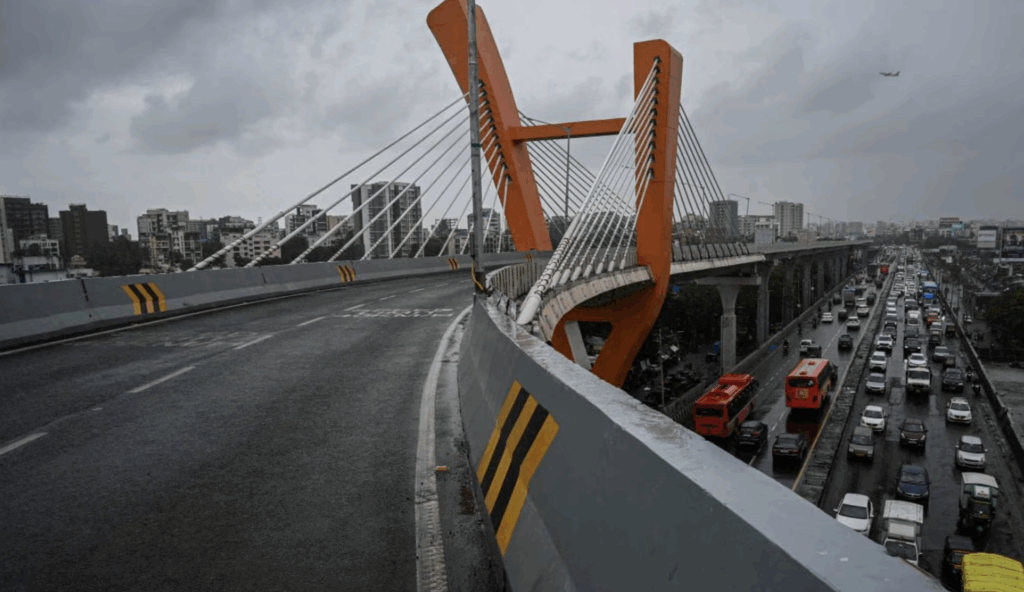
The SCLR corridor has been one of Mumbai’s most important infrastructure projects, designed to improve east-west movement in a city historically challenged by limited cross-connectivity.
Final Stretch Nearing Operationalisation
According to the Mumbai Metropolitan Region Development Authority (MMRDA), Phase 2 of the SCLR project is now in its final stage, with approximately 98% of the physical work completed. The remaining work largely involves finishing touches, testing, and final readiness procedures before opening the corridor fully to traffic.
The last major component is the 1.4-km Vakola–BKC arm, which will complete the larger 10.88-km integrated east-west corridor. Once operational, commuters will be able to travel between key business districts and highways with far fewer traffic bottlenecks.
Travel Time Could Reduce By Up To 35 Minutes
One of the biggest benefits of the project is expected to be faster travel across Mumbai’s suburban regions.
MMRDA officials estimate that the fully completed corridor could reduce travel time by nearly 35 minutes for many commuters travelling between eastern and western suburbs. The project is designed to create a largely signal-free route connecting:
- Eastern Express Highway
- Chembur
- Kurla
- Kalina
- Bandra-Kurla Complex (BKC)
- Vakola
- Western Express Highway
This could significantly improve daily commuting efficiency for office workers, logistics operators, airport-bound travellers, and public transport users.
Engineering Challenges Delayed The Project
The SCLR project has faced multiple delays over the years due to land acquisition issues, rehabilitation challenges, complex engineering requirements, and construction constraints in densely populated urban areas.
One of the most technically challenging portions involved the cable-stayed bridge over the Vakola flyover and the Western Express Highway. Engineers adopted advanced steel structures and orthotropic steel deck technology because traditional construction methods were not feasible in the limited urban space available.
The corridor also includes several major flyovers, elevated sections, and Mumbai’s well-known double-decker flyover infrastructure.
Boost For BKC And Mumbai’s Business Districts
The project is expected to deliver major economic benefits by improving access to BKC, one of India’s largest financial and commercial hubs.
BKC houses several major institutions and corporate headquarters, including:
- National Stock Exchange
- Bharat Diamond Bourse
- U.S. Consulate
- Major banks and financial institutions
Improved connectivity could reduce travel times for employees, business travellers, and logistics networks operating across the Mumbai Metropolitan Region.
Part Of Mumbai’s Larger Mobility Transformation
The near-completion of the SCLR corridor comes alongside several other major infrastructure upgrades underway across Mumbai, including metro expansion projects, coastal roads, sea links, and multimodal transport corridors.
Urban planners believe these projects collectively aim to reduce congestion, improve connectivity, and support Mumbai’s long-term economic growth.
With Phase 2 now nearing completion, the SCLR corridor is expected to become one of the city’s most important transportation links, connecting key residential, commercial, and transport hubs through a faster east-west mobility network.
Summary
Mumbai’s Santacruz-Chembur Link Road (SCLR) Phase 2 has reached 98% completion, bringing the city closer to a fully integrated 10.88-km east-west corridor connecting the Eastern Express Highway, BKC, and the Western Express Highway. The final Vakola–BKC stretch is expected to reduce travel times by up to 35 minutes, improve connectivity across major business districts, and strengthen Mumbai’s broader transportation infrastructure network.