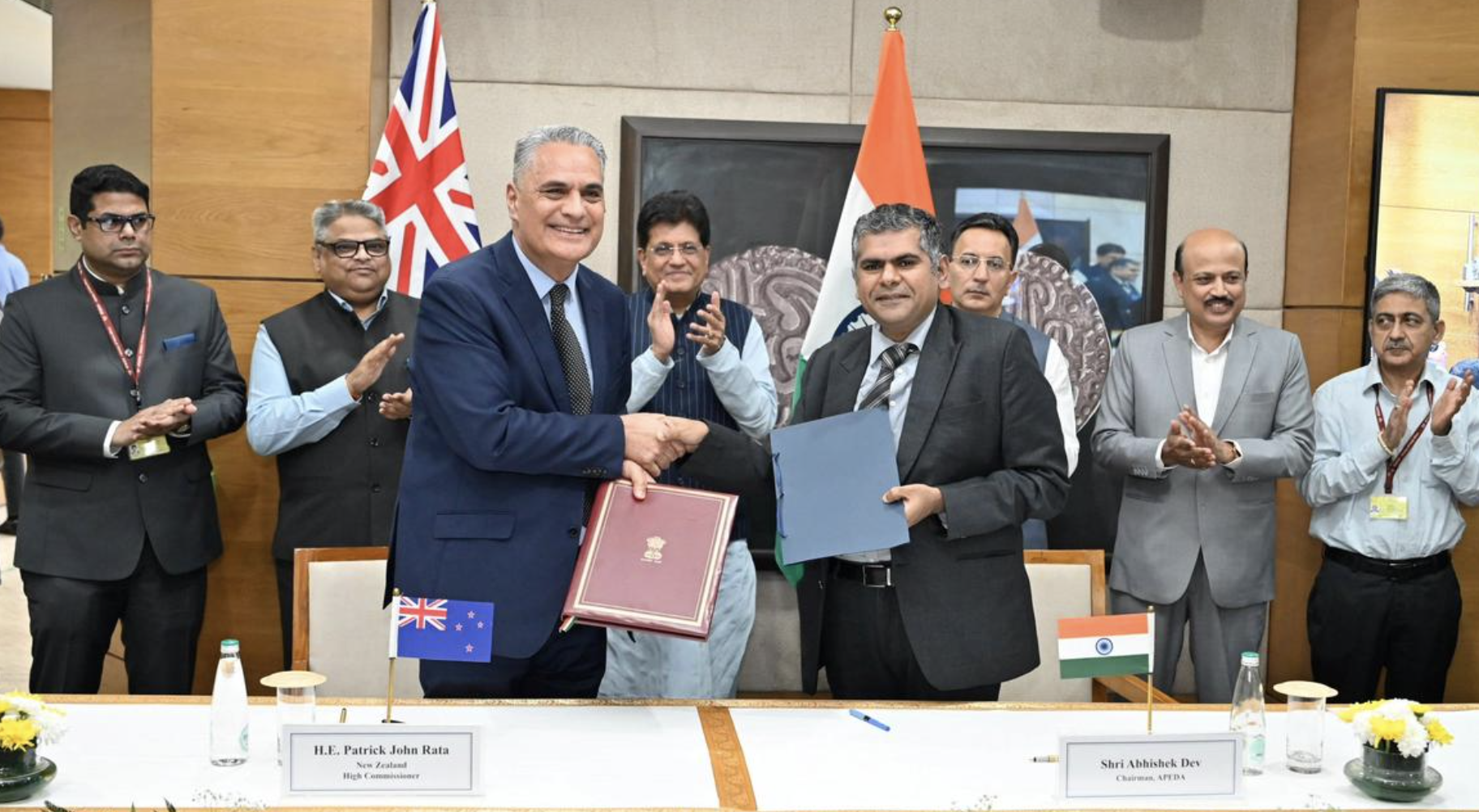


India’s Free Trade Agreement (FTA) with New Zealand officially came into force on October 20, 2026, marking a significant milestone in the economic relationship between the two countries. The agreement gives Indian goods duty-free access to New Zealand’s market and aims to expand trade, attract investment and create opportunities for businesses across manufacturing, agriculture, textiles and services.
The two countries have set an ambitious target of doubling bilateral trade in goods and services to NZ$7 billion (approximately ₹35,000 crore) by 2030.
100% Duty-Free Access for Indian Exports
One of the most significant benefits of the agreement is that 100% of Indian merchandise exports will receive duty-free access to New Zealand from the first day of implementation.
Indian exporters in sectors such as textiles, apparel, leather, footwear, engineering goods, processed food, ceramics, carpets, automobiles and auto components could become more competitive as import duties are eliminated.
The change is particularly relevant for micro, small and medium enterprises (MSMEs), which often face challenges when competing with suppliers from countries that already enjoy preferential trade arrangements.
With lower tariff barriers, Indian businesses could find it easier to expand their customer base in New Zealand and explore opportunities in the wider Asia-Pacific region.
New Zealand Commits $20 Billion in Investment
Alongside improved market access, New Zealand has committed to facilitate investments worth US$20 billion in India over 15 years.
The proposed investment could support manufacturing, infrastructure, agriculture, innovation and other areas of economic cooperation. However, the commitment should not be interpreted as an immediate cash transfer or guaranteed investment in a specific project. Its impact will depend on how investments are developed and implemented over time.
Both countries also expect the agreement to strengthen business partnerships and encourage companies to explore opportunities in each other’s markets.
What Does India Offer New Zealand?
The agreement is not a one-way arrangement. New Zealand exporters will receive preferential access to the Indian market for a range of products.
According to New Zealand’s official trade information, 57% of its current exports to India will benefit from full tariff elimination immediately, with the share expected to rise to 82% over time. A further 13% of exports will receive tariff reductions.
Products benefiting from improved access include wool, sheep meat, forestry products and selected agricultural goods. Preferential quotas and phased tariff reductions will also apply to certain products, including apples, kiwifruit, wine and honey.
India has retained protections for sensitive agricultural and dairy sectors, along with exclusions for selected products.
Services, Jobs and Skilled Professionals
Beyond merchandise trade, the agreement aims to strengthen cooperation in services and professional mobility. Potential opportunities include information technology, engineering, healthcare, education, construction and other knowledge-based industries.
Greater collaboration could help Indian service providers reach more customers in New Zealand, while businesses in both countries benefit from new partnerships, skills and investment.
The actual impact on employment and professional mobility will depend on implementation details, market demand and the relevant visa and qualification requirements.
Aiming to Double Bilateral Trade by 2030
The NZ$7 billion trade target represents a major ambition for both countries. Achieving it will require businesses to take advantage of tariff concessions, build reliable supply chains and understand regulatory requirements in each market.
The FTA removes or reduces important trade barriers, but it does not automatically eliminate customs procedures, product standards or certification requirements. Exporters must still meet the rules of origin and other applicable conditions to qualify for preferential tariffs.
Summary
The India–New Zealand Free Trade Agreement came into force on October 20, 2026, giving Indian merchandise exports duty-free access to New Zealand. The agreement includes a US$20 billion investment facilitation commitment over 15 years and a target of doubling bilateral trade to NZ$7 billion by 2030. It is expected to benefit exporters, MSMEs and services businesses, while India retains protections for sensitive agricultural and dairy sectors.