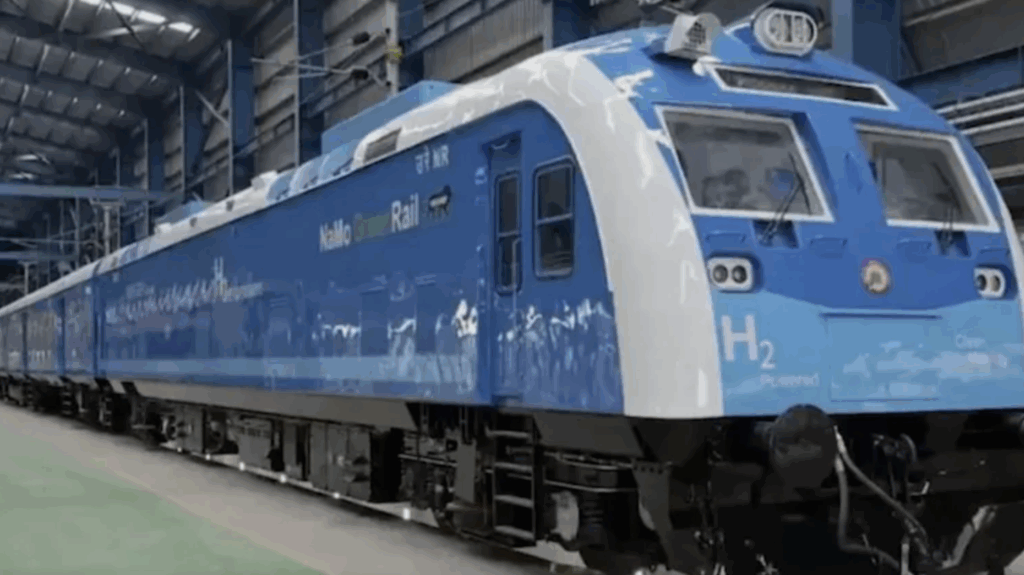
India is set to enter a new era of sustainable transportation with the launch of its first hydrogen-powered train. Indian Railways has approved the country’s first hydrogen fuel cell train for operations on the Jind-Sonipat route in Haryana, marking a significant milestone in its journey towards cleaner and greener mobility. The project positions India among a select group of nations exploring hydrogen-based rail transportation and showcases the country’s growing capabilities in developing advanced indigenous technologies.
What Makes the Hydrogen Train Special?
The hydrogen train is being described as the world’s longest and most powerful hydrogen-powered train operating on a broad-gauge network. The train consists of ten coaches and is powered by a hydrogen fuel cell propulsion system. It features two Driving Power Cars that together generate 2,400 kW of power, while the remaining coaches are dedicated to passenger travel.
The train is designed to operate at a commercial speed of up to 75 kmph, while trial runs will be conducted at speeds reaching 120 kmph. On a single refuelling cycle, it can travel approximately 250 kilometres, making it suitable for regional routes and areas where conventional electrification may be challenging.
How Hydrogen Fuel Cell Technology Works
Unlike diesel trains that burn fossil fuels, hydrogen trains generate electricity onboard through a chemical reaction between hydrogen and oxygen inside fuel cells. The process produces electricity to power the train while releasing only water vapour and heat as by-products.
This zero-emission technology significantly reduces environmental impact and supports India’s broader clean energy and carbon reduction goals. The train essentially acts as a moving power plant, generating its own electricity as it travels.
Built in India, for India
The hydrogen train has been developed under the government’s Atmanirbhar Bharat initiative. The Research Designs and Standards Organisation (RDSO) in Lucknow led the design efforts, while manufacturing was carried out by the Integral Coach Factory in Chennai. The project demonstrates India’s growing expertise in developing next-generation railway technologies domestically.
To support operations, a fully indigenous hydrogen storage and refuelling facility has been established at Jind. Advanced safety mechanisms, including hydrogen leak detectors, flame detectors, and continuous monitoring systems, have been installed to ensure safe operations.
A Step Towards Sustainable Railways
Indian Railways has already electrified over 99 percent of its broad-gauge network. Hydrogen trains are not intended to replace electric trains but are expected to serve routes where conventional electrification is difficult or economically unviable. The pilot project will help assess the viability of hydrogen technology for future railway applications across the country.
The launch of India’s first hydrogen train represents more than just a technological achievement. It reflects the country’s commitment to innovation, sustainability, and energy independence. If successful, the project could pave the way for wider adoption of hydrogen-powered transportation and strengthen India’s position as a leader in green mobility solutions.
Summary
India’s first hydrogen-powered train will operate on the Jind-Sonipat route in Haryana and is among the most powerful hydrogen trains globally. Powered by a 2,400 kW fuel cell system, it produces zero harmful emissions and can travel around 250 km on a single refuelling. The indigenous project highlights India’s commitment to sustainable transportation and clean energy innovation.