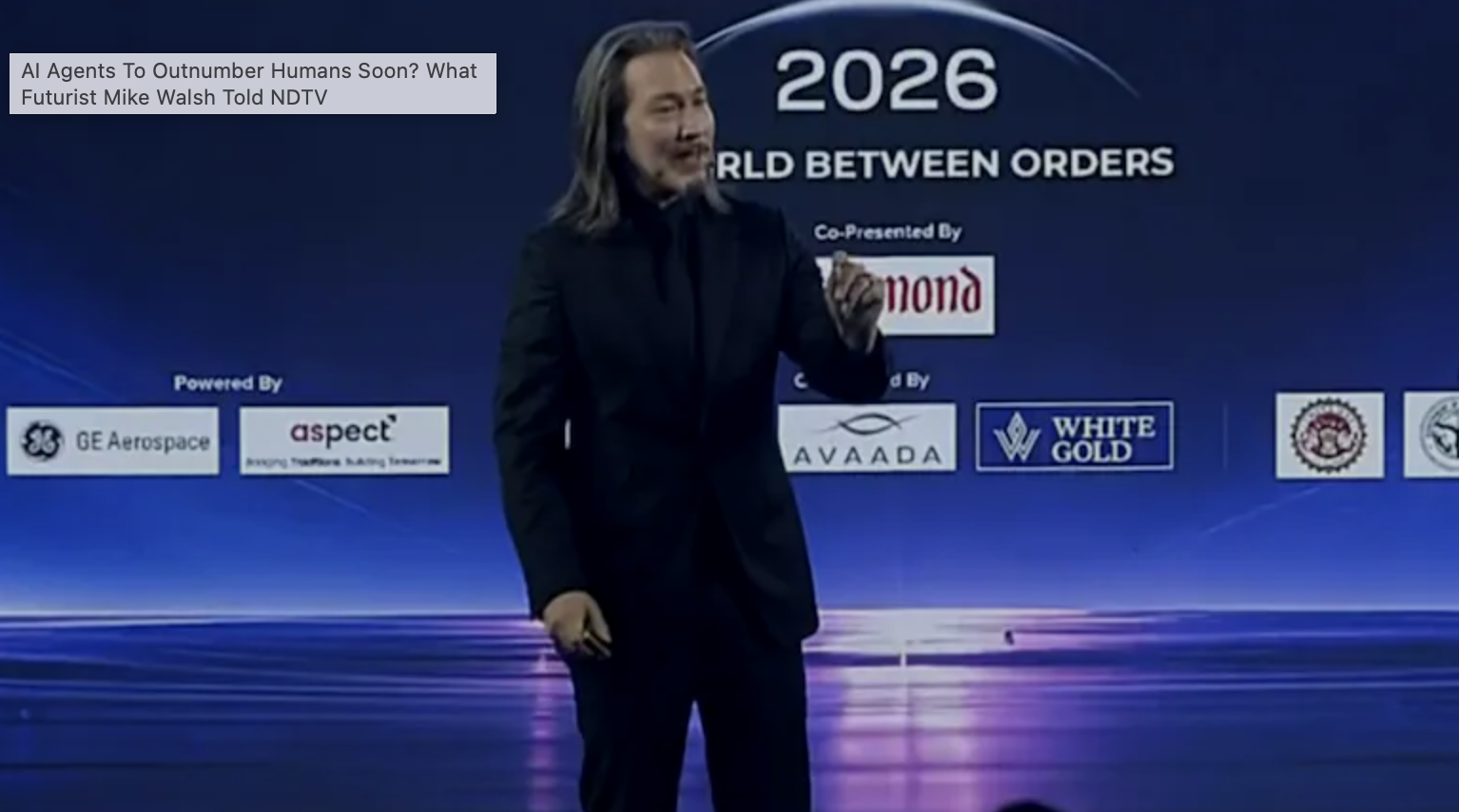


Artificial intelligence agents could soon outnumber humans, potentially transforming how businesses operate, people work and everyday transactions are conducted. Futurist Mike Walsh shared this prediction at the NDTV World Summit 2026, arguing that India could become one of the world’s most important markets for the next phase of AI adoption.
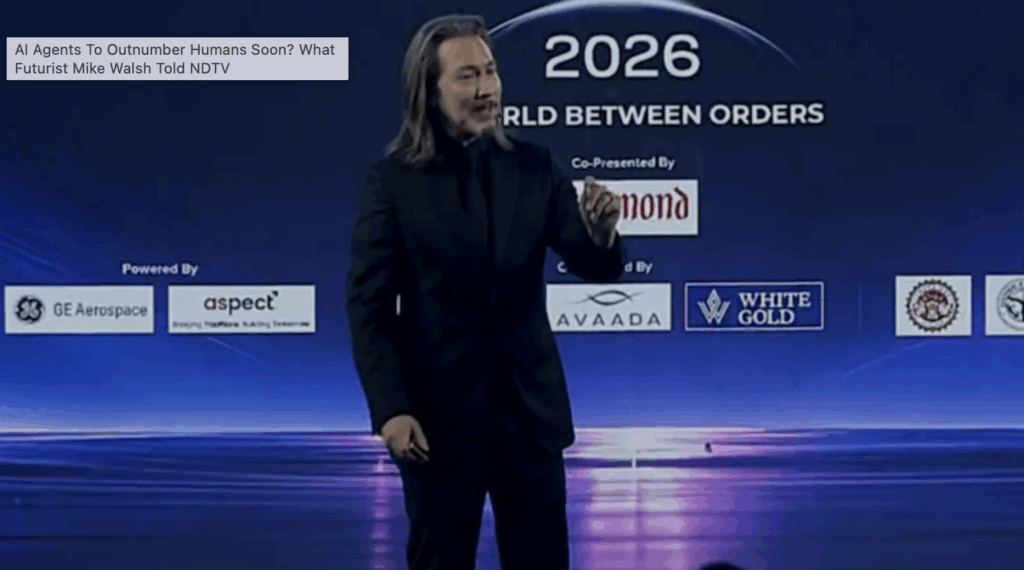
Walsh believes the future of AI extends beyond chatbots that answer questions. Autonomous agents could increasingly perform tasks, interact with businesses and make decisions on behalf of their users.
AI Agents Could Become Digital Employees
Today’s AI assistants primarily respond to instructions, generate content and help users complete individual tasks. The next generation of AI agents could take on more complex responsibilities with limited human intervention.
According to Walsh, these systems could help individuals and businesses manage workflows, develop products, communicate with customers and perform routine transactions.
He also discussed the possibility of AI agents making low-value payments without requiring users to approve every transaction individually. Such capabilities could support a new ecosystem of personal AI assistants that handle everyday digital activities.
However, greater autonomy would also require safeguards around spending limits, privacy, cybersecurity and accountability.
India Could Benefit from the AI Revolution
Walsh identified India as a potentially important market for AI agents, particularly because of its large workforce, technology talent and entrepreneurial ambitions.
He described a hypothetical young Indian student facing two different paths: spending years pursuing a traditional computer science degree or using AI agents to build a small software business.
In his example, a collection of AI agents could help prepare a business plan, develop a prototype and contact prospective customers. The illustration highlights how AI could lower the barriers to starting a business.
For young entrepreneurs, this could mean gaining access to capabilities that previously required larger teams, specialist expertise or significant financial resources.
From Scarcity to an Age of Abundance
Walsh argued that much of today’s AI debate focuses on scarcity, including whether data centres will have enough electricity and water, whether automation will eliminate jobs, and whether institutions can adapt quickly enough.
He suggested that society should also consider the potential benefits of abundance. If knowledge, expertise and certain forms of intelligence become more widely accessible, individuals and smaller businesses could gain opportunities previously available mainly to large organisations.
This does not mean the challenges will disappear. Energy consumption, employment disruption and unequal access to technology remain important concerns.
Why Humans Will Still Matter
Although AI agents may automate more work, Walsh has emphasised the importance of human judgement and responsibility. AI can generate recommendations and carry out tasks, but people remain essential when decisions involve empathy, accountability and real-world consequences.
Businesses may therefore need to rethink how employees work alongside digital systems instead of simply replacing existing processes with automation.
The Road Ahead for AI
The prospect of AI agents outnumbering people remains a prediction rather than an established fact. Nevertheless, the discussion reflects a broader shift towards systems that can plan, use digital tools and execute multi-step tasks.
For India, the opportunity will depend on how effectively businesses, workers and entrepreneurs adopt these technologies while managing their risks.
Summary
Futurist Mike Walsh said at the NDTV World Summit 2026 that AI agents could soon outnumber humans, transforming business operations and everyday activities. He sees India as a major potential market, with autonomous agents helping entrepreneurs build businesses and handle routine tasks. Walsh also highlighted AI’s promise of abundant knowledge while acknowledging concerns about jobs, resources and human accountability.