Public EV Charging Demand Surges
Electric vehicle adoption in India is showing clear signs of acceleration, with electricity consumption at public charging stations rising by more than 72% during FY 2025-26.
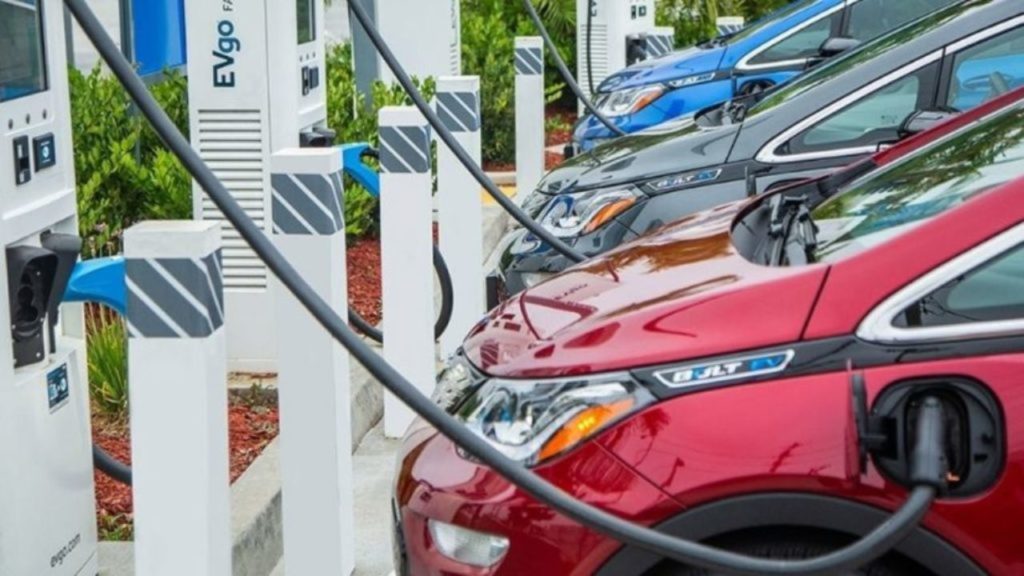
The sharp increase indicates that India’s growing fleet of electric vehicles is increasingly relying on public charging infrastructure, signalling a broader shift away from conventional petrol and diesel-powered transportation.
The rise is being driven by both private EV owners and commercial electric vehicles, according to the latest data.
72% Growth Signals Higher EV Usage
The increase in electricity consumption is significant because it provides a different way of measuring EV adoption.
While vehicle registrations indicate how many electric vehicles are entering the market, electricity consumption at public chargers shows how intensively the existing charging network is being used.
A more than 72% jump suggests that public charging stations are handling considerably more energy than they did previously.
It also indicates that EVs are being used more frequently for longer journeys and commercial operations.
Charging Infrastructure Is Expanding
India has been rapidly expanding its public EV charging network.
The International Energy Agency estimates that India’s public charging points increased by around 15% during 2025 to approximately 88,000.
The government is also supporting the expansion of fast-charging infrastructure through schemes such as PM E-DRIVE.
The growing utilisation of existing chargers could encourage charging operators and energy companies to invest further in new locations.
Commercial EVs Are Playing A Major Role
The increase in electricity consumption is not coming only from private electric cars.
Commercial EVs are becoming an important contributor to public charging demand.
Electric buses, taxis, delivery vehicles, three-wheelers and other commercial vehicles can require frequent charging, particularly when they operate for long hours every day.
This makes public charging infrastructure particularly important for India’s commercial electrification.
Public Chargers Could Become More Important
Home charging remains one of the most convenient options for EV owners who have access to dedicated parking and electricity connections.
However, public charging becomes essential for people living in apartments without private charging facilities and for vehicles travelling long distances.
It is also critical for commercial fleets that cannot remain parked for extended periods.
As the EV fleet grows, utilisation of public charging infrastructure is therefore expected to increase further.
India Still Needs More Chargers
Despite the strong growth in usage, India’s charging infrastructure still needs significant expansion.
The IEA estimates that India had around 88,000 public charging points at the end of 2025.
Under its current-policies scenario, India could require more than 520,000 public charging points by 2035 as the electric vehicle fleet expands.
That would require the country to add roughly 43,000 public charging points every year on average through 2035.
Fast Charging Will Become Increasingly Important
The future charging network will not simply need more chargers; it will also need faster chargers.
Fast and ultra-fast charging can significantly reduce the time an EV spends at a charging station.
This is particularly important for commercial vehicles, highway travel and long-distance journeys.
As EV battery capacities increase, charging infrastructure will also need to deliver higher power to maintain reasonable charging times.
A New Electricity Demand Centre
The rise in public charging consumption also has implications for India’s power sector.
As more vehicles shift from petrol and diesel to electricity, a growing portion of transportation energy demand will move onto the electricity grid.
This creates opportunities for electricity distribution companies, renewable-energy providers, charging operators and battery-storage companies.
It also means that charging demand will need to be managed carefully to avoid putting unnecessary pressure on local electricity networks.
EVs Are Becoming A Bigger Part Of India’s Energy System
The 72% increase is more than a charging-industry statistic.
It indicates that transportation and electricity are becoming increasingly interconnected.
Every additional electric car, bus, taxi or delivery vehicle shifts part of India’s energy consumption from oil to electricity.
As EV adoption continues, charging infrastructure will become an increasingly important component of India’s transport and energy ecosystem.
The EV Transition Is Gaining Momentum
India’s electric mobility transition is moving beyond vehicle sales and into everyday infrastructure usage.
The sharp increase in electricity consumption at public charging stations shows that EVs are not merely being purchased; they are increasingly being used and charged at scale.
The challenge now is to ensure that charging infrastructure expands quickly enough to keep pace with demand.
If investment continues in chargers, grid capacity and faster charging technology, India’s EV ecosystem could expand significantly over the next decade.
Summary
Electricity consumption at India’s public EV charging stations increased by more than 72% in FY 2025-26, signalling stronger use of electric vehicles across the country. Both private and commercial EVs are contributing to the increase. India’s public charging network is also expanding, with around 88,000 public charging points estimated at the end of 2025. However, infrastructure will need to grow much faster as EV adoption accelerates, with India potentially requiring more than 520,000 public charging points by 2035.