China has reportedly completed the maiden flight of the world’s first megawatt-class hydrogen-powered turboprop engine, marking a major development in hydrogen aviation technology and zero-emission aircraft research.
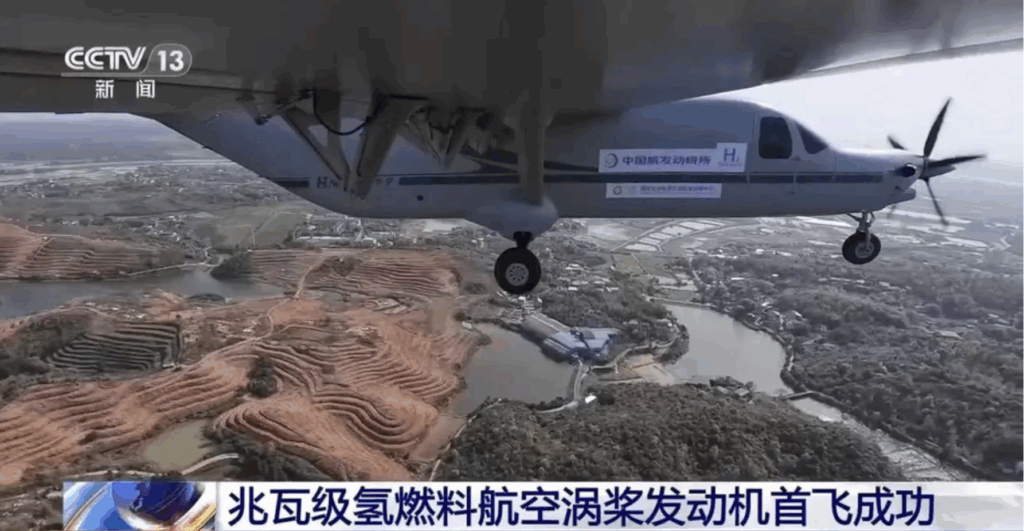
The test flight was conducted using a hydrogen fuel-cell propulsion system designed to power regional aircraft while reducing carbon emissions associated with conventional aviation fuel.
Hydrogen Engine Powers Test Aircraft
According to reports, the aircraft used a megawatt-class hydrogen fuel-cell system integrated with an electric propulsion architecture. The engine generated electricity through hydrogen fuel cells, which then powered electric motors connected to the aircraft propellers.
Unlike conventional jet fuel engines, hydrogen fuel-cell systems emit mainly water vapor and significantly reduce carbon dioxide emissions during operation.
China Expands Hydrogen Aviation Research
The successful flight is being viewed as part of China’s broader push toward clean-energy transportation and advanced aviation technologies.
Chinese companies and research institutions have increased investments in hydrogen-powered mobility solutions across sectors including automobiles, trains, heavy vehicles, ships, and aircraft.
Industry experts said hydrogen-powered aviation could become an important area of future competition among major aerospace economies.
Aviation Industry Looks For Cleaner Alternatives
The global aviation industry has been exploring multiple technologies to reduce emissions, including sustainable aviation fuel (SAF), battery-electric propulsion, hybrid systems, and hydrogen-powered engines.
Hydrogen is considered one of the most promising long-term solutions for decarbonising regional and short-haul aviation because of its high energy density and lower emissions profile.
However, large-scale commercial adoption still faces challenges related to hydrogen storage, infrastructure development, aircraft certification, safety systems, and fuel transportation.
Regional Aircraft Segment Under Focus
Hydrogen propulsion systems are currently seen as more practical for regional and short-distance aircraft because of weight and storage limitations associated with hydrogen fuel tanks.
Several global aerospace companies have already announced hydrogen aviation programs focused on commuter aircraft and future short-haul passenger transportation.
The Chinese test flight adds to growing international efforts to develop next-generation low-emission aviation systems.
Competition In Future Aviation Technologies Intensifies
Countries including the United States, China, France, Germany, and Japan have accelerated investments in clean aviation technologies as governments push for net-zero emission targets.
Hydrogen aviation is increasingly being viewed as a strategic technology area that could reshape future aerospace manufacturing, airline operations, airport infrastructure, and global energy demand.
Industry analysts said commercial deployment of hydrogen-powered passenger aircraft may still take several years due to technological and regulatory requirements.