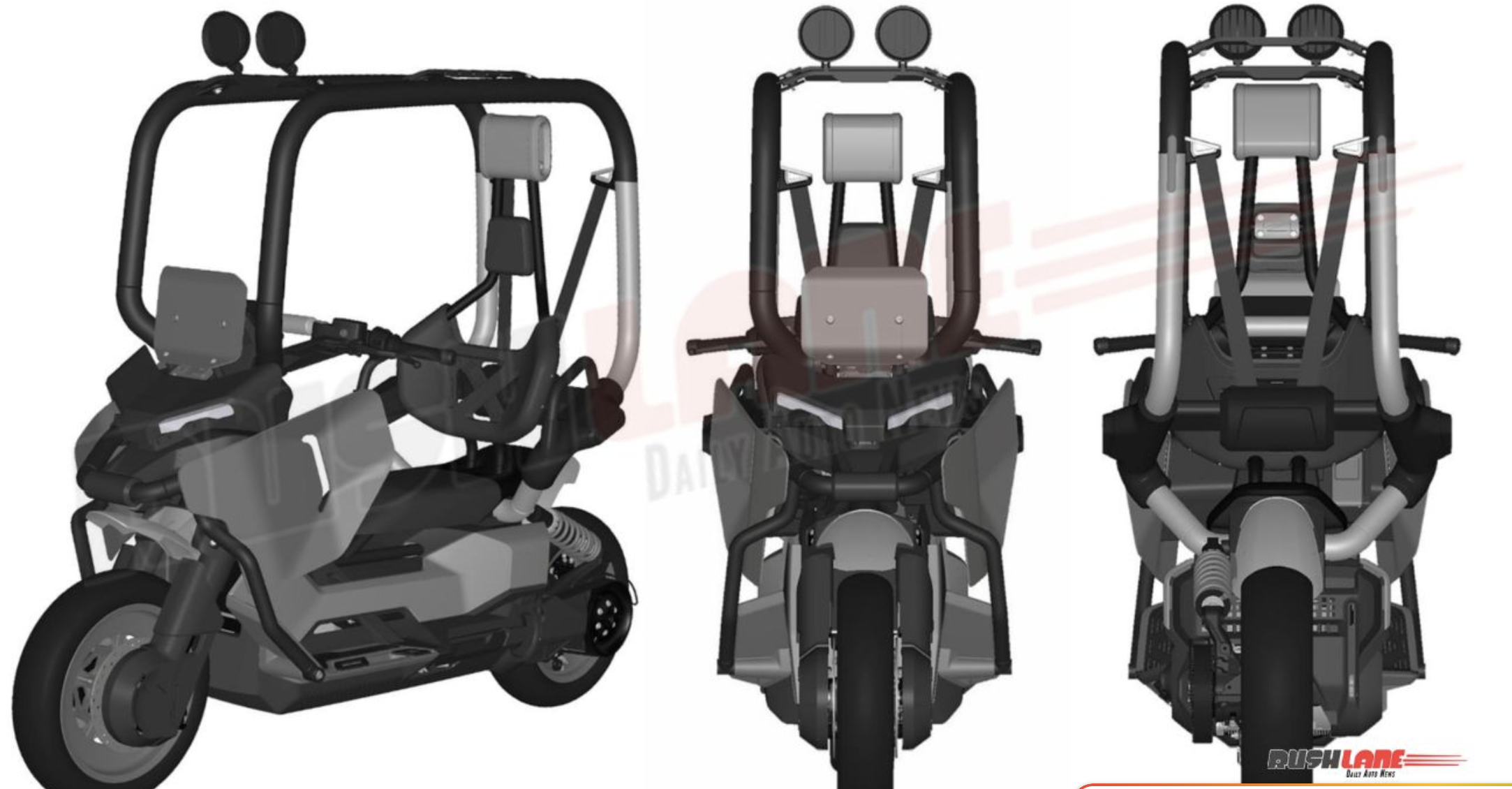


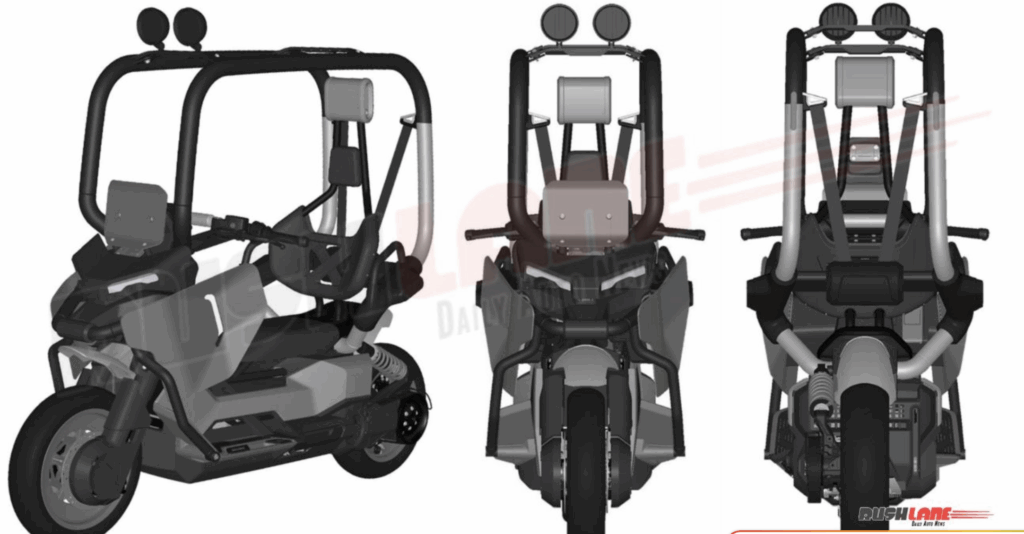
BMW Motorrad has patented the design of its futuristic Vision CE electric two-wheeler in India, bringing an unusual concept closer to potential commercial consideration. The electric scooter combines self-balancing technology with a protective safety cage and a seatbelt, aiming to make urban riding safer and more convenient. However, BMW has not announced a production schedule or an Indian launch date.
Self-Balancing Technology Could Eliminate the Need to Put Feet Down
One of the most distinctive features of the BMW Vision CE is its self-balancing system. The scooter is designed to remain upright even when stationary, meaning riders would not need to put their feet on the ground whenever they stop at a traffic signal.
The system is expected to use sensors and electric actuators to maintain stability. A conventional stand is also included for long-term parking, when the balancing system can be switched off to conserve battery power.
If successfully implemented in a production model, this technology could make two-wheelers easier to handle at low speeds and during frequent stops in crowded cities.
Protective Cage and Seatbelt Focus on Rider Safety
BMW Vision CE takes a different approach to rider protection. Instead of relying entirely on conventional riding gear, the concept features a sturdy tubular frame surrounding the rider.
A four-point seatbelt is designed to secure the rider to the seat, while structural elements around the vehicle are intended to help protect the legs, hips and shoulders during an impact or tip-over. Foam cushioning on parts of the frame, backrest and handlebar could provide additional protection.
The concept has been presented as a possible helmet-free riding solution. However, this does not mean riders can legally travel without helmets in India. Any production vehicle would need to comply with applicable Indian road safety laws and regulations.
Battery, Range and Performance Remain Unconfirmed
BMW has not released the Vision CE’s final technical specifications. Some reports suggest that it could draw inspiration from the company’s existing CE 04 electric scooter, which uses an 8.5 kWh battery and has a claimed range of approximately 130 kilometres.
The CE 04 produces 42 hp and 62 Nm of torque, with an electronically limited top speed of 120 km/h. These figures are only a reference point; they should not be treated as specifications for the Vision CE.
The protective frame and additional safety equipment could also increase the vehicle’s weight, potentially affecting its range and performance.
Will BMW Launch It in India?
The Indian design patent indicates that BMW has sought to protect its design in this market. It does not, by itself, confirm that the company will manufacture or sell the scooter in India.
BMW has not announced its price, launch date or production plans. For now, the Vision CE remains a futuristic electric mobility concept that demonstrates how self-balancing systems and integrated rider protection could influence the next generation of two-wheelers.
Summary
BMW Motorrad has patented its Vision CE electric scooter design in India. The concept features self-balancing technology, a protective frame and a four-point seatbelt designed to improve rider safety and convenience. Battery capacity, range, pricing and launch plans remain unconfirmed. Despite its proposed helmet-free design, riders in India must continue to follow applicable helmet laws.