Amul is often seen as proof that when small producers unite, they can compete with large corporations, and Bharat Taxi wants to apply this same cooperative idea to ride-hailing in India.
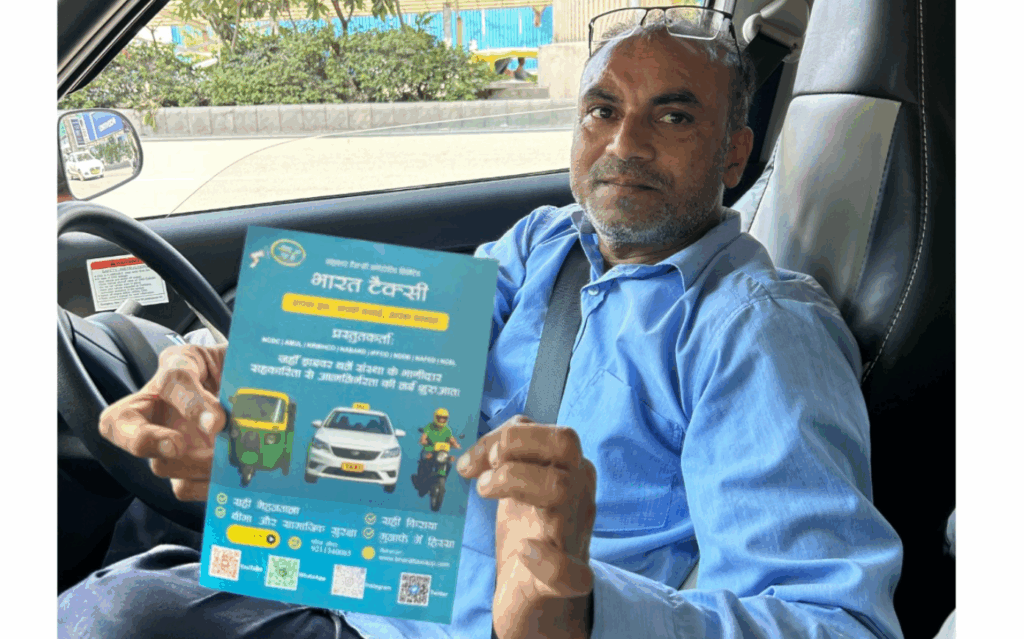
Bharat Taxi is scheduled to launch on January 1, 2026, with pilot runs already active in a few locations across the country.
Bharat Taxi To Bring the Amul Cooperative Model to Cabs
The platform is built as a cooperative, meaning it is not driven by a profit-focused private company but owned collectively by thousands of drivers.
This structure is meant to benefit both drivers and customers, at least in theory, by redistributing value more fairly.
Bharat Taxi is operated by Sahakar Taxi Cooperative Limited, based in New Delhi, with Amul’s MD Jayen Mehta serving as chairman.
The initiative is backed by the Ministry of Cooperation and integrated with the National e-Governance Division, adding institutional credibility.
Despite this backing, the core owners of the platform are the drivers themselves, not external investors.
Unlike Uber or Ola, Bharat Taxi plans to follow a zero-commission model, allowing drivers to keep most of their daily earnings.
Reports suggest drivers could retain around 80–100% of fares, though some contribution toward platform operations is likely.
This could take the form of a small daily or monthly fee paid to the cooperative.
Traditional platforms often deduct 20–30% commission, leaving drivers with limited income after fuel and EMI costs.
Higher take-home earnings appear to be a major attraction, reflected in over 51,000 driver enrolments within ten days of announcement.
Drivers are not just service providers but also participants in governance, with elected representatives on the cooperative’s board.
For passengers, Bharat Taxi promises more predictable pricing and an end to extreme surge fares during peak hours or bad weather.
Stable Pricing on Regular Routes, With Scalability Yet to Be Tested
Regular routes, such as home-to-work trips, may have stable or near-fixed pricing instead of fluctuating rates.
Whether this pricing promise holds up at scale remains to be seen after wider rollout.
The cooperative model does not need to outperform corporate rivals in profits, only in long-term sustainability for drivers.
Even a modest daily income increase for drivers and small savings for riders could help the platform grow through loyalty and word of mouth.
On the technology side, Bharat Taxi uses the same backend as the ONDC-backed Namma Yatri app, built by Moving Tech Innovations.
Early testing suggests the app functions reasonably well, though improvements are expected since it is still in beta.
A major difference from Amul is that, here, the “product” is the driver and car themselves, not a separate physical good.
This makes operations more complex, as human behavior and real-world road conditions directly affect service quality.
Questions remain around accountability, dispute resolution, and responsibility when problems occur during rides.
These operational grey areas will need clear systems once services scale up.
Globally, similar models exist, such as New York’s Drivers Cooperative, which has operated since 2021 and remains the largest of its kind in the US.
A contrasting example is Goa’s taxi unions, which operate through collective control but are known for high fares and resistance to regulation.
Their pushback against aggregators shows how cooperative-like structures can also become restrictive if not well governed.
Bharat Taxi’s success will ultimately depend on whether it can balance fairness, efficiency, accountability, and user experience at scale.