Google is preparing one of the biggest Android security overhauls ever with Android 17, introducing a massive suite of AI-driven protections aimed at fighting scams, theft, malware, phishing, and financial fraud.
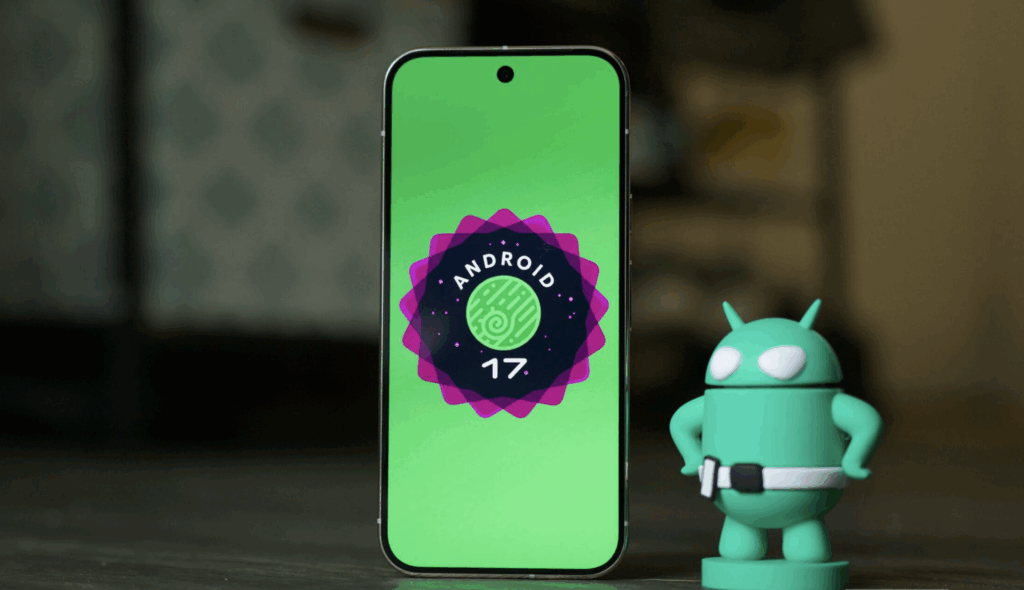
The company unveiled the upcoming features during the Android Show 2026 ahead of Google I/O, positioning Android 17 as a major leap toward “intelligent security.”
The update focuses heavily on:
- AI scam detection
- Verified bank calls
- Anti-theft protections
- Real-time malware monitoring
- Privacy enhancements
- Device recovery tools
Android Will Now Automatically End Fake Bank Calls
One of the most important additions is “Verified Financial Calls,” a feature designed to combat caller-ID spoofing scams — one of the fastest-growing cybercrime methods globally.
Here’s how it works:
- If a caller claims to be from your bank, Android quietly checks the official banking app installed on your phone
- If the banking app confirms no legitimate outgoing call exists, Android can automatically terminate the scam call
Banks can also mark certain numbers as:
- “Inbound-only”
- Meaning they should never make outgoing calls
If scammers spoof those numbers for outgoing calls, Android will instantly block them.
Google says financial fraud linked to spoofed calls causes nearly $980 million in annual losses worldwide.
AI Will Monitor Apps In Real Time
Android 17 is also expanding its “Live Threat Detection” system powered by on-device AI.
The system can now detect suspicious activities such as:
- SMS forwarding attempts
- Accessibility overlay abuse
- Apps launching silently in the background
- Hidden malicious permissions
- Apps disguising icons or behavior
A new “dynamic signal monitoring” system will continuously analyze app behavior patterns in real time.
Android will then:
- Warn users
- Recommend uninstalling risky apps
- Restrict dangerous permissions automatically
Google is also adding AI-powered APK scanning inside Chrome downloads to stop malicious apps before installation.
New Anti-Theft Features Could Make Stolen Phones Useless
Android 17 is aggressively targeting smartphone theft.
New protections include:
- Biometric authentication required after a device is marked lost
- Automatic hiding of Quick Settings
- Blocking Wi-Fi and Bluetooth pairing
- Longer delays after repeated failed PIN attempts
- Reduced PIN guess limits
Google is also expanding:
- Remote Lock
- Theft Detection Lock
- “Mark as Lost” protections globally
The goal is simple:
Even if thieves know your PIN, the device becomes much harder to unlock, reset, or resell.
OTP Theft Protection Is Getting Stronger
Android 17 will now automatically hide one-time passwords (OTPs) from most third-party apps for three hours.
This specifically targets:
- Banking fraud
- SIM-swap scams
- Malware intercepting verification codes
Google is also strengthening protections around:
- Accessibility services
- App permissions
- Screen overlays commonly used in financial fraud attacks
Android Is Becoming An “Intelligence System”
Beyond security, Google is heavily integrating Gemini AI into Android 17.
New AI capabilities include:
- Cross-app task automation
- AI-generated widgets
- Smart autofill
- Real-time speech cleanup
- Personalized contextual assistance
Google describes this shift as Android evolving:
“From an operating system into an intelligence system.”
Android 17 Also Adds Lifestyle & Creator Features
Alongside security upgrades, Android 17 introduces:
- 3D emojis
- “Pause Point” digital wellbeing tools
- Better iPhone file-sharing compatibility
- Simultaneous selfie + screen recording for creators
- Improved Instagram editing and upload quality
The update also improves:
- Device switching from iPhone
- AI-enhanced Android Auto
- Cross-device ecosystem connectivity
Why This Update Matters
Android powers over 3 billion active devices globally, making it the world’s largest mobile operating system ecosystem.
That scale also makes Android:
- A major target for cybercriminals
- A hotspot for financial fraud
- A key battlefield for AI-powered cybersecurity
The bigger shift here is philosophical:
Smartphones are no longer just communication devices. They are becoming AI-driven security guardians constantly monitoring scams, threats, fraud, and identity risks in real time.