Mumbai’s suburban rail network is set to get a major capacity boost with a new third railway line between Kalyan and Kasara, aimed at reducing congestion on one of the busiest corridors of the Central Railway.
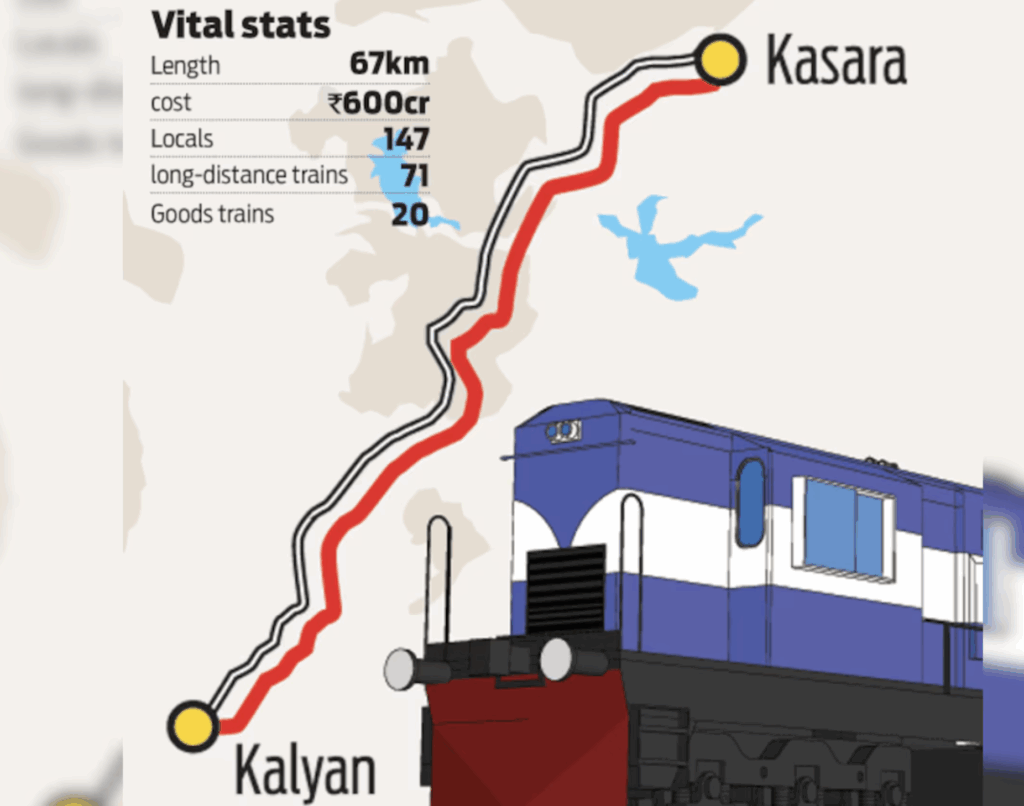
67-Km Third Line To Transform The Route
The project involves constructing a 67-km-long third track between Kalyan and Kasara, a critical stretch on Mumbai’s Central Line.
- Phase 1: Asangaon–Kasara (~35 km)
- A key 13.53-km stretch is nearing completion
- Total project cost: ₹792.89 crore
This corridor is part of broader efforts to expand Mumbai’s suburban rail capacity and reduce overcrowding.
Why This Project Matters
The Kalyan–Kasara stretch is a high-density route used by:
- Daily suburban commuters
- Long-distance trains heading towards Nashik and beyond
- Freight services
Currently, all these trains share the same tracks, leading to:
- Frequent delays
- Overcrowding
- Operational bottlenecks
The third line will separate suburban and long-distance traffic, making operations smoother and more efficient.
Key Benefits For Commuters
Once operational, the new rail line is expected to:
- Increase the number of local train services
- Reduce delays caused by mixed train traffic
- Improve punctuality and reliability
- Ease crowding, especially during peak hours
This is particularly important as the Central Line handles millions of passengers daily, with Kalyan acting as a major junction for multiple routes.
Part Of Larger Rail Expansion Plan
The third line is not a standalone project. It complements several ongoing upgrades in the region:
- Additional 4th line between Kalyan and Kasara planned
- Expansion projects under Mumbai Urban Transport Project (MUTP)
- Efforts to segregate suburban and long-distance corridors
Together, these projects aim to modernize Mumbai’s suburban railway system and handle growing demand.
A Much-Needed Relief For Daily Travelers
For commuters traveling between Kalyan, Asangaon, and Kasara, this project could significantly reduce travel stress.
By improving train frequency and reducing congestion, the new line is expected to make daily commuting faster, more predictable, and less crowded.