Voter List Revision Triggers Nationwide Protests
India is witnessing a growing political and public dispute over changes to electoral rolls, with opposition parties, civil society groups and youth activists protesting against the Election Commission’s ongoing Special Intensive Revision, or SIR, of voter lists.
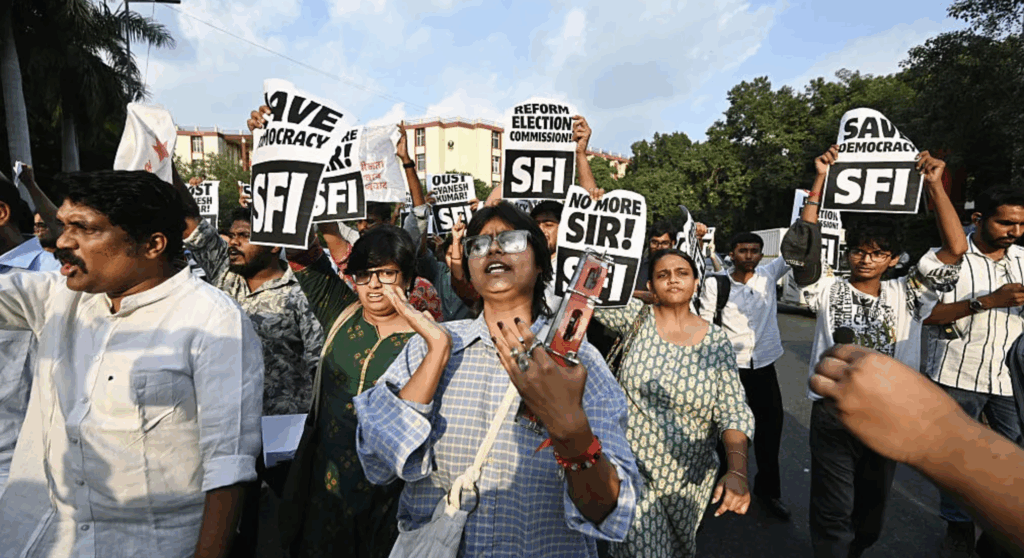
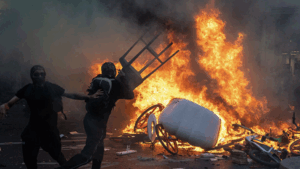
The protests have intensified in recent days, with demonstrators demanding that Chief Election Commissioner Gyanesh Kumar resign and that the voter-list revision be stopped.
The Election Commission and the ruling BJP have rejected allegations of political manipulation and said the exercise is intended to clean up electoral rolls by removing duplicate, deceased and otherwise ineligible entries.
What Is The Special Intensive Revision?
The SIR process requires voters to provide documents establishing their eligibility to remain on electoral rolls.
The exercise began in Bihar and has subsequently expanded to most Indian states and Union territories.
Supporters say the revision is necessary to ensure that voter lists contain only eligible citizens and to eliminate duplicate or outdated records.
Critics, however, argue that the documentation requirements could make it difficult for poorer citizens, migrants and other vulnerable groups to prove their eligibility.
Millions Of Names Under Scrutiny
The scale of the exercise has become one of the biggest points of contention.
According to figures compiled by activists and reported by international media, around 130 million names have been removed from final or draft electoral rolls across different states during the revision process.
The Election Commission maintains that voters whose names are excluded or flagged have opportunities to submit documents and seek inclusion.
The commission has also directed election officials to visit the homes of certain voters whose documents or eligibility require further verification.
Opposition Accuses Election Commission Of Bias
Opposition parties have accused the Election Commission of conducting the revision in a manner that could exclude legitimate voters and potentially influence future elections.
The BJP and the Election Commission deny the allegations.
The BJP has argued that removing deceased, duplicate or ineligible voters is necessary to protect the integrity of elections.
The dispute has become particularly intense following changes to electoral rolls in West Bengal, where millions of names were removed during the revision process.
Protests Escalate In Delhi
On October 6, opposition lawmakers led by Rahul Gandhi marched towards the Election Commission’s headquarters in New Delhi.
The protesters demanded a meeting with election officials and called for the resignation of Gyanesh Kumar.
Police stopped the march, and several opposition leaders and lawmakers, including Rahul Gandhi and Priyanka Gandhi, were detained before being released later.
The demonstrations are part of a broader series of protests involving opposition parties, student groups and the youth-led Cockroach movement.
Election Commission Faces Questions Over Internal Differences
The controversy has also intensified following reports of disagreements within the Election Commission over aspects of the voter-list revision, registration procedures and digital systems.
Reports have suggested that two election commissioners raised objections to certain decisions, although the Election Commission has described the matter as differences during internal deliberations rather than formal written objections.
The Supreme Court has so far allowed the revision process to continue while emphasising that proper procedures must be followed.
A Major Test For India’s Electoral System
The voter-list controversy is likely to remain politically significant as several states prepare for elections.
At the heart of the dispute is a fundamental question: how can India ensure that electoral rolls are accurate and free of fraudulent entries while also ensuring that eligible citizens are not accidentally excluded?
With protests continuing and the revision expanding across the country, the Election Commission’s handling of objections, documentation and appeals will remain under close scrutiny.
Summary
Protests have intensified across India over the Election Commission’s Special Intensive Revision of voter lists. Opposition parties and civil society groups accuse the process of risking the exclusion of legitimate voters and are demanding Chief Election Commissioner Gyanesh Kumar’s resignation. The Election Commission and BJP deny political manipulation, saying the exercise is intended to remove duplicate, deceased and ineligible entries while allowing eligible voters to seek inclusion.