Why Indian Trains Have Five-Digit Numbers
Every passenger train in India carries a unique five-digit number. But those numbers are not completely random.
Indian Railways shifted from a four-digit numbering system to a five-digit system in 2010. The change was introduced to create a more uniform and computer-friendly system capable of identifying the growing number of passenger services across the country.
The first digit generally indicates the type or category of the train, while the following digits provide information related to the railway zone, division or service. The final digits help distinguish individual trains.
The First Digit Tells You The Train Type
The first digit is one of the most useful clues.
A train beginning with 0 generally represents a special service, such as a summer, holiday or festival special introduced for a limited period.
Numbers beginning with 1 or 2 are generally associated with long-distance passenger services, including express, mail and superfast trains.
The numbering system also uses other first digits for different categories. For example, suburban services and conventional passenger services have their own numbering ranges.
This means the first number can immediately provide a broad indication of what kind of train you are looking at.
Why Did Indian Railways Add A Fifth Digit?
Before 2010, long-distance passenger trains generally used four-digit numbers.
However, the older system had a limitation: the same number could exist in different railway zones.
As the number of services increased, Indian Railways needed a system that could uniquely identify trains across its network.
In 2010, the Railways therefore introduced five-digit numbers.
Interestingly, the transition was designed to be relatively simple. For many existing trains, the Railways added the digit 1 as a prefix to their earlier four-digit numbers. Special trains were generally assigned numbers beginning with 0. :contentReference[oaicite:1]{index=1}
What Do The Second And Third Digits Mean?
The second and third digits provide geographical information in many categories of trains.
They can indicate a railway zone, division or other operating-related information.
For example, certain number combinations are associated with Central Railway, Northern Railway, Western Railway and other railway zones.
However, the system is not as simple as saying that every second digit always represents one particular zone.
The meaning can change depending on the first digit and the category of the train.
That is why the five-digit number needs to be read as a complete combination rather than as five completely independent numbers.
What About The Last Two Digits?
The fourth and fifth digits generally help provide the unique serial number of the train within the relevant numbering structure.
They allow individual services to be distinguished from others that may share the same broader category or geographical identifiers.
This is one reason why two trains operating in different parts of the country can have numbers that look structurally similar while still being completely different services.
Take A Train Like 12123
Consider a number such as 12123.
The first digit, 1, indicates that it belongs to the long-distance scheduled passenger category.
The next digits provide information within the relevant numbering structure, while the final digits distinguish the individual service.
However, it would be wrong to assume that every five-digit number can always be decoded using one identical formula.
Indian Railways has several numbering conventions depending on the type of service.
Special Trains Have Their Own Clue
If you see a train number beginning with 0, there is a good chance you are looking at a special service.
These can include trains introduced during periods of exceptionally high passenger demand, such as summer holidays or major festivals.
Railways frequently adds special trains to handle temporary increases in passenger traffic.
The numbering system therefore helps distinguish these temporary services from regular scheduled trains.
Suburban Trains Follow Different Rules
The system becomes even more interesting when suburban services are considered.
Trains operating in metropolitan railway systems have separate numbering ranges.
For example, suburban services in Mumbai, Chennai and Delhi can use different numbering patterns from long-distance express trains.
This is why the meaning of a five-digit number cannot always be determined simply by memorising one universal table.
The first digit provides a starting point, but the rest depends on the category.
Train Numbers Are Not Coach Numbers
There is another common source of confusion.
The number printed on a train or displayed on railway systems identifies the train service. It is not the same thing as the coach number.
Individual coaches also carry their own identification numbers.
A passenger’s coach might therefore have a number that looks like a train number, but the two serve completely different purposes.
The train number identifies the service; the coach number identifies the physical carriage.
Why The System Matters
The numbering system is particularly useful for railway operations and computerised reservation systems.
Indian Railways operates an enormous network involving thousands of passenger services, multiple zones and divisions.
A standardised numbering system allows railway databases, reservation systems, station displays and operational software to identify services more efficiently.
The five-digit system was therefore not simply a cosmetic change.
It was introduced to make the increasingly complex railway network easier to manage digitally.
The Number Can Also Reveal A Train’s Geography
For many categories, the middle digits provide clues about where the train is operated or maintained.
Depending on the numbering structure, they can be associated with railway zones or divisions.
This means someone familiar with the numbering system can sometimes identify the broad railway region associated with a train simply by looking at its number.
But because different train categories use different conventions, the number should always be interpreted in context.
The System Has Changed Over Time
Indian Railways’ numbering system has evolved as the network has expanded.
The move from four digits to five digits in 2010 was a major step towards creating a more standardised national system.
The older four-digit system was used for long-distance passenger trains from 1989 to 2010.
The five-digit structure provided additional capacity and made it easier for railway computer systems to handle the growing number of services. :contentReference[oaicite:2]{index=2}
So Is Every Digit A Secret Code?
Not exactly.
While the train number contains useful information, it is not a perfectly universal code where every digit has one fixed meaning regardless of the train.
The first digit is generally the easiest to interpret because it indicates the broad train category.
The meaning of the middle digits depends on the numbering structure being used, while the final digits generally distinguish the individual service.
So the number is best understood as a structured identification system rather than a simple five-digit mathematical code.
The Next Time You See A Train Number
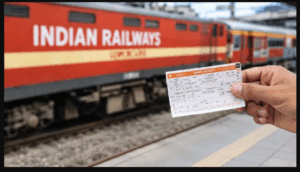
The next time a train number appears on a station display, ticket or railway app, it is worth looking at it differently.
That five-digit number is the result of a system designed to organise one of the world’s largest railway networks.
The first digit can tell you about the broad category of service. The middle digits can provide geographical or operational clues, and the remaining digits help identify the specific train.
What looks like a random sequence of numbers is actually part of a carefully designed system that helps Indian Railways keep track of its vast passenger network.
Summary
Indian Railways’ five-digit train numbers are not entirely random. Introduced in 2010, the system replaced the earlier four-digit numbering structure and was designed to make train identification more uniform and computer-friendly. The first digit generally indicates the train category, while subsequent digits can provide information about railway zones, divisions and individual services. However, the exact meaning varies depending on the type of train.