India has entered a new phase in sustainable transportation with the successful trial run of its first hydrogen-powered train. The test took place in Haryana’s Jind district, marking a significant milestone in the country’s effort to modernise railway infrastructure while reducing environmental impact. The trial demonstrated the potential of hydrogen fuel technology to power trains without relying on diesel or traditional fossil fuels.
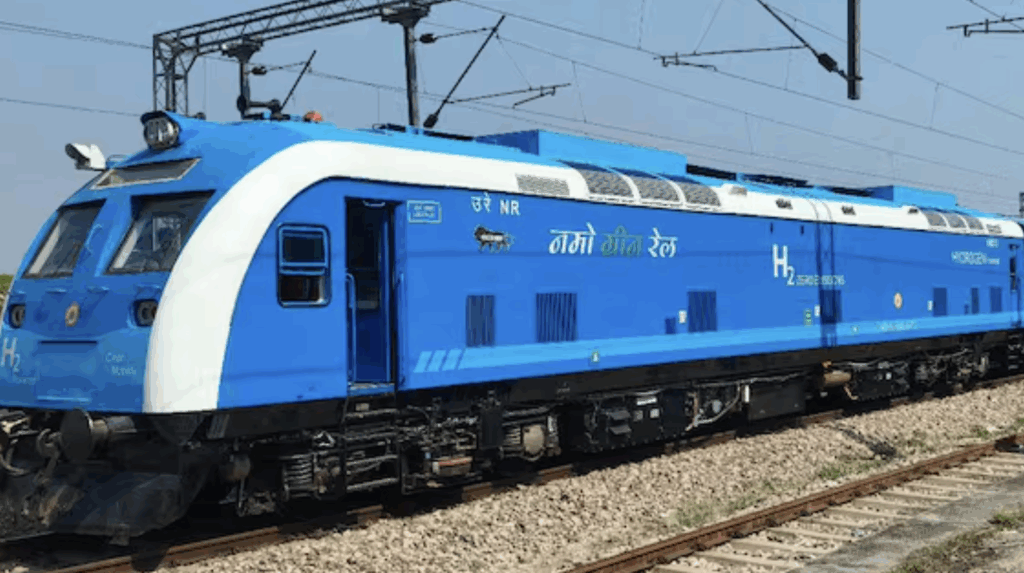
Successful Trial Run in Haryana
The hydrogen-powered train started its trial journey from Jind railway station at around 8:30 AM and travelled towards Lalit Khera before returning to Jind. The train covered a 20-kilometre stretch during the test run and achieved a top speed of around 70 kmph.
The train consisted of eight coaches and carried railway officials, locomotive pilots and Railway Protection Force (RPF) personnel during the trial. Their presence ensured that the operations, safety systems and technical performance of the train could be closely monitored throughout the journey.
The trial was part of a broader testing programme that will continue for several days before the train is approved for full operations.
Testing Phase to Continue
According to railway officials, the hydrogen train is currently undergoing a detailed testing phase. Over the coming week, engineers and railway experts will conduct additional trial runs to evaluate the train’s speed, safety mechanisms, fuel efficiency and reliability.
If the trials continue to deliver successful results, the train is expected to eventually operate on the Jind–Sonipat route, a key section of the Northern Railway network.
These tests are crucial before introducing the train for regular passenger service.
Hydrogen Plant Set Up in Jind
One of the unique aspects of the project is that the hydrogen production facility for the train has been built in Jind itself. This makes the city a central hub for India’s hydrogen railway initiative.
The hydrogen plant supplies the fuel needed to run the train’s fuel-cell system, which converts hydrogen into electricity to power the train.
How Hydrogen Trains Work
Hydrogen-powered trains use fuel cells to generate electricity by combining hydrogen and oxygen. The only byproduct of this process is water vapour, making it a zero-emission transport technology.
Unlike diesel locomotives, hydrogen trains produce no harmful pollutants and can operate on non-electrified tracks, making them particularly useful for routes where installing overhead electric lines is difficult or expensive.
A Step Toward Green Railways
The hydrogen train project is part of Indian Railways’ broader plan to reduce carbon emissions and promote green mobility. Hydrogen fuel technology offers a cleaner alternative to diesel trains and supports India’s long-term sustainability goals.
If the pilot project proves successful, similar hydrogen-powered trains could be deployed on more routes across the country. This could significantly transform India’s railway network by introducing cleaner, quieter and more energy-efficient transportation in the years ahead.