Tech billionaire and venture capitalist Vinod Khosla has delivered a stark message for India’s job market and economy: traditional Information Technology (IT) services and Business Process Outsourcing (BPO) sectors could “almost completely disappear” within the next five years due to rapid advances in artificial intelligence (AI).
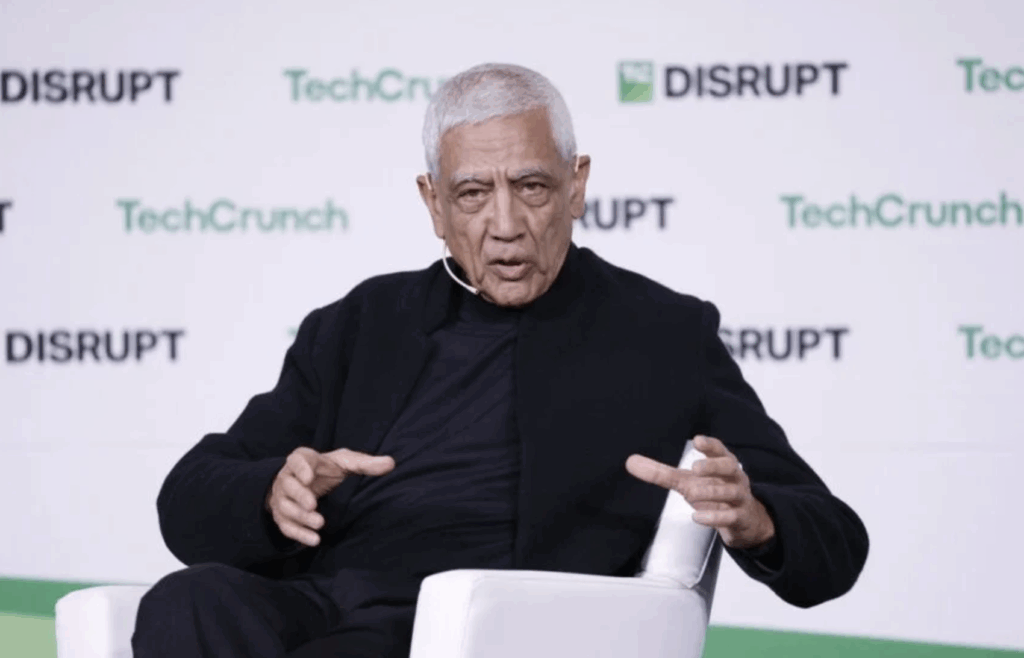
Speaking ahead of the India AI Impact Summit 2026, Khosla — co-founder of Sun Microsystems and founder of Khosla Ventures — argued that AI is evolving beyond simple automation and will soon outperform humans in most expertise-based tasks. He predicted that as AI agents become capable of performing complex work independently, the business models underpinning IT and BPO services will be fundamentally disrupted.
AI to Replace White-Collar Services
According to Khosla, AI systems are on track to do everything from accounting and legal research to medical diagnosis and chip design — roles that underpin much of the work currently outsourced globally. As a result, entire segments of the IT and BPO industries — long viewed as engines of employment, especially in India — might no longer be economically viable in their present form.
He told reporters that within the next five years — a period shorter than many expect — AI could be better than most humans at most tasks, making large workforces of human specialists redundant in many service roles.
A Major Shift for India’s Workforce
The implications for India are profound. The country’s IT and BPO sectors have been crucial to the creation of millions of middle-class jobs, leveraging labour arbitrage and domestic talent to serve global clients. Khosla urged that rather than focusing on traditional service delivery, India’s 250 million young workers should shift their attention toward developing and exporting AI-driven products and solutions — the next frontier in the digital economy.
He also highlighted that political and policy choices will influence how quickly AI is adopted and how its impacts are felt. Some countries might slow implementation, but those that move quickly could gain competitive advantage.
Not All Doom and Gloom
While Khosla’s forecast paints a disruptive picture, it also carries hopeful strands: AI could drastically reduce the cost of essential services and democratise access to quality care, education, and other expert-driven fields. The key challenge will be building capacities and policies that help the workforce adapt rather than be displaced.
Debate Over AI’s Impact
Industry leaders and analysts have offered varied views on this topic. Some argue that AI will augment rather than eliminate jobs, especially in IT services where human creativity and complex judgment remain valuable. But there is no denying that AI’s growth is accelerating discussions around the future of work and the need for fresh economic models.