

Swiggy is preparing to change how its quick-commerce platform Instamart operates, moving from a marketplace model to an inventory-led business model over the next two to three quarters. The transition is expected to begin around the middle of the third quarter of FY2026–27 and could improve Instamart’s contribution margin by approximately 80 basis points once fully implemented.
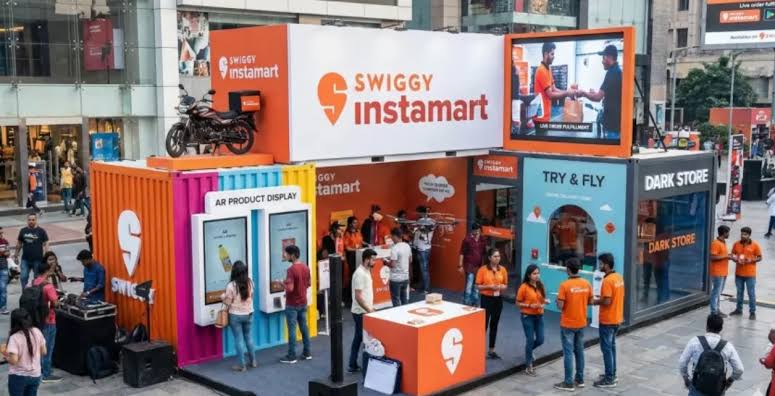
The move comes as Swiggy faces intense competition in India’s quick-commerce market and seeks to improve profitability while expanding its network of dark stores.
What Is Changing at Instamart?
Instamart currently operates primarily as a marketplace, hosting third-party sellers that supply products to customers. Under the proposed inventory-led model, the business will be able to own inventory and exercise greater control over product sourcing, assortment, pricing and availability.
This shift could allow Swiggy to procure products directly from brands and manage its supply chain more closely. It may also help the company improve stock availability, introduce differentiated products and respond more quickly to customer demand.
Swiggy expects the transition to take two to three quarters to complete, with the process beginning around mid-Q3 FY2027.
Why Swiggy Wants the Inventory Model
The change is intended to improve Instamart’s operational flexibility and financial performance. Swiggy expects the transition to add approximately 80 basis points to contribution margin when fully implemented.
The company also expects its working capital cycle to improve by eight to ten days. It anticipates that net working capital days will stabilise at around 15 days once the model reaches a steady state, helping offset the additional investment required to hold inventory.
Swiggy has said it does not expect significant incremental working capital deployment or disruption to customer experience and supplier relationships during the transition.
Instamart’s Losses Remain a Concern
The business model change comes as Instamart continues to invest heavily in expansion, pricing and customer retention.
In the September 2026 quarter, Instamart’s contribution margin stood at minus 1% of gross order value, compared with minus 0.2% in the previous quarter. Its adjusted EBITDA loss widened to ₹895 crore from ₹778 crore.
Net order value increased 34.8% year-on-year to ₹6,594 crore, while orders rose 29.3% to approximately 130 million. Swiggy added 69 net dark stores during the quarter, taking its network to 1,240 stores across 133 cities.
These figures show that Instamart is expanding its business, but the cost of growth continues to weigh on profitability.
Blinkit’s Inventory Model Offers a Comparison
Swiggy’s rival Blinkit, owned by Eternal, has already transitioned to an inventory-led structure. The model allows the business to recognise the full value of product sales as revenue rather than primarily recording marketplace commissions.
However, revenue figures under the two models are not directly comparable because the accounting treatment differs. The more important measures for assessing performance include contribution margins, operating costs, order growth and profitability.
Swiggy’s transition reflects a broader effort to strengthen its position as competition intensifies across quick-commerce platforms.
Swiggy’s Indian-Owned and Controlled Status Enables the Move
The transition follows Swiggy’s move to qualify as an Indian-Owned and Controlled Company (IOCC). Shareholders approved a proposal to cap foreign ownership at 49.5% on a fully diluted basis in August 2026, allowing the company to meet the relevant ownership requirements.
Swiggy subsequently reported that domestic ownership had risen above 58%. This status clears the way for Instamart to adopt the inventory-ownership model.
What Happens Next?
Swiggy will begin the transition in mid-Q3 FY2027, with completion expected over the following two to three quarters. The expected margin improvement will depend on how effectively the company manages procurement, inventory, logistics and pricing.
The shift is an important step in Swiggy’s attempt to improve Instamart’s economics without slowing its expansion. Whether the model delivers sustained profitability will become clearer as the transition progresses.
Summary
Swiggy plans to transition Instamart from a marketplace to an inventory-led model, beginning around mid-Q3 FY2027 and taking two to three quarters to complete. The company expects the shift to improve contribution margin by around 80 basis points and shorten its working capital cycle by eight to ten days. Instamart’s adjusted EBITDA loss reached ₹895 crore in the September quarter.