In a recent observation of 2 strong solar flares within 24 hours, NASA has issued warnings that the intense eruptions on the Sun’s surface could cause problems on Earth.
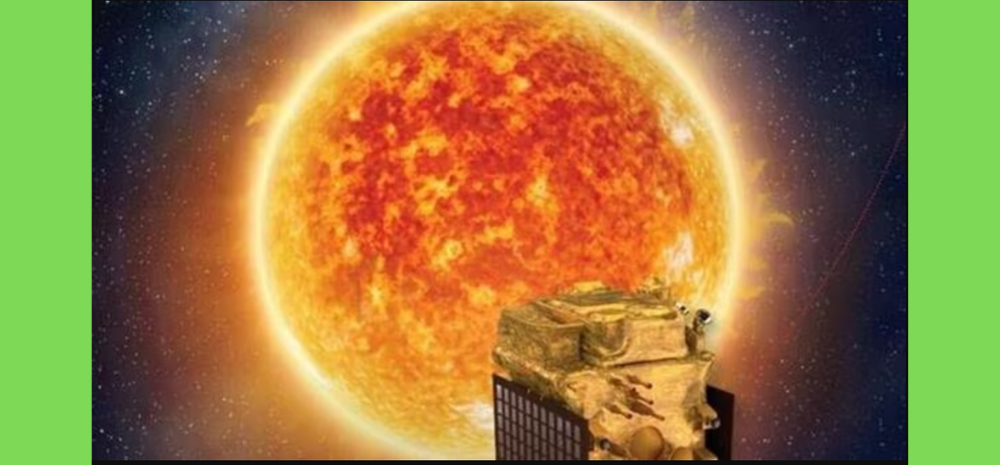
NASA’s Solar Dynamics Observatory appears to have captured the image of a solar flare which is seen as the bright flash on the left on May 14.
What Is The Significance Of NASA Spotted Two Large Solar Flares?
This image showcases a subset of extreme ultraviolet light further highlighting the extremely hot material in flares and which is colorised in red.
NASA’s Solar Dynamics Observatory have spotted the first flare at 1:38am AEST, Wednesday 14 May (11:38am ET, 13 May).
They have witnessed the second image at 6:25pm AEST (4:25am ET) on 14 May.
Both of these flares belong to the highest category, X, of solar flare strength where the first one was measured at X1.2, and the second was an X2.7.
Here strength matters as usually Solar flares come in 5 strength categories including A, B, C, M and X.
Here, each letter in the scale represents a flare 10 times greater in strength than the previous letter.
Further the number which is next to the letter is a further scale factor, for instance X2.7 is 2.7 times stronger than an X1.
So far, the activites on the Sun’s surface is cyclic, it means that every 11 years, our central star reaches “solar maximum” when this activity peaks.
During October 2024, the Sun had reached solar maximum for this cycle – the 25th recorded as confirmed by the Experts from NASA, the National Oceanic and Atmospheric Administration (NOAA) and the Solar Cycle Prediction panel.
Normally that mark Solar maximum by increased sunspots, solar flares and coronal mass ejections.
Although, Solar Cycle 25’s maximum is not predicted to be particularly violent.
But, satellites, GPS systems, radio networks and power grids are all at risk if solar flares shoot high-speed particles in Earth’s direction, according to the experts.
Besides this, the strong flares can also pose a direct risk to spacecraft and astronauts.
Prior to this, an X1-class flare caused a 30-minute radio blackout across the Pacific Ocean and the western US in 2023.
Unpredictable Situation
The observations of the Sun help space weather scientists determine when effects might be felt on Earth, said Devika Kamath, an associate professor in astronomy and astrophysics at Macquarie University in Australia.
In a media interaction, she said, “The Sun is continuously monitored by a network of solar observatories in space.”
Further adding, “These observatories provide near real-time data, allowing us to detect solar flares – sudden bursts of high-energy radiation – and track coronal mass ejections (CMEs), which are huge clouds of magnetised plasma ejected from the Sun.”
But, there is still a lot of uncertainty, according to Kamath “However, not every flare or CME affects Earth. Whether we experience impacts depends largely on 2 things: whether the CME is actually heading toward Earth, and whether its magnetic field is oriented in a way that can effectively interact with Earth’s own magnetic field. If that alignment is just right, it can trigger significant geomagnetic storms.”
Adding, “If a CME is confirmed to be on a collision course with Earth, we usually get 12 to 72 hours’ notice—long enough to alert vulnerable sectors, but not always enough to predict the severity or location of impact with high confidence.”
“So, while we can monitor solar activity in real time and forecast the likelihood of an impact, predicting exactly which flare will cause trouble remains a complex and evolving challenge.”