671-Km High-Speed Rail Corridor Takes Shape
The proposed Mumbai-Pune-Hyderabad bullet train corridor is moving closer to becoming a reality, with the Detailed Project Report (DPR) completed for the ambitious high-speed rail link.
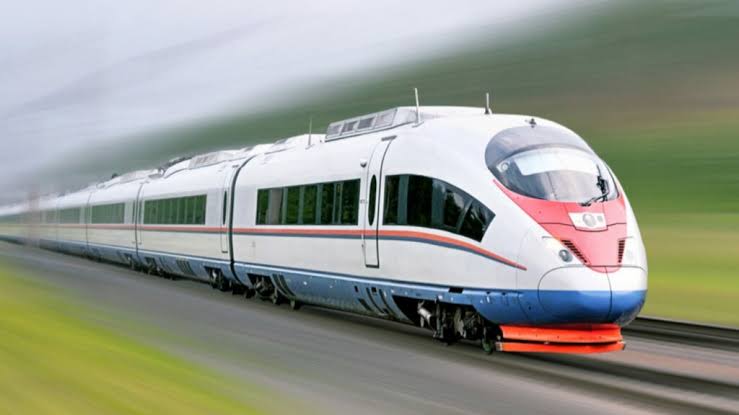
The approximately 671-km corridor is planned to connect major cities and towns across Maharashtra, Karnataka and Telangana. The project would create a faster rail connection between Mumbai and Hyderabad while significantly improving connectivity for Pune and several other cities along the route.
The completion of the DPR is an important milestone because it covers key aspects including the proposed alignment, engineering requirements, stations and other project details. However, the corridor has not yet entered the construction phase.
Mumbai to Hyderabad in Around 3 to 3.5 Hours
One of the biggest attractions of the proposed bullet train is the potential reduction in travel time.
The Mumbai-Hyderabad journey currently takes roughly 12 to 15 hours by conventional trains. Once the high-speed corridor becomes operational, the journey could take around 3 to 3.5 hours.
The Mumbai-Pune section is expected to be particularly transformative, with the journey potentially taking just about 48 minutes. Pune to Hyderabad could take around two hours, according to the project details reported for the proposed corridor.
This could make high-speed rail a competitive alternative for passengers who currently rely on flights or long-distance trains.
Proposed Route and Stations
The planned corridor will connect Mumbai with Hyderabad through Pune and Solapur, passing through several important locations.
The proposed stations include Navi Mumbai, Pune, Daund, Akluj, Pandharpur, Solapur, Kalaburagi, Zaheerabad and Hyderabad, with the final station configuration subject to further approvals and changes.
The alignment would therefore connect not just the major metropolitan centres but also several emerging urban and regional hubs.
Pune Could Become a Major High-Speed Rail Hub
For Pune, the project could significantly improve connectivity with both Mumbai and southern India.
A sub-one-hour connection to Mumbai would potentially transform commuting and business travel between the two cities. Faster access to Solapur and Hyderabad could also benefit businesses, students, tourists and professionals travelling across Maharashtra, Karnataka and Telangana.
The corridor could also stimulate development around stations, encouraging new commercial and residential activity along the route.
Project Still Awaits Further Approvals
Despite the completion of the DPR, the project is not yet under construction. Government approval and subsequent stages such as financing, land acquisition, detailed design and construction contracts will determine how quickly work can begin.
This means that the proposed travel times and station list should currently be viewed as project plans rather than confirmed operational details.
The progress of the DPR nevertheless indicates that the proposed corridor has moved beyond the purely conceptual stage.
A Major Expansion of India’s High-Speed Rail Network
The Mumbai-Pune-Hyderabad corridor would represent a major expansion of India’s high-speed rail ambitions beyond the Mumbai-Ahmedabad project.
If approved and eventually completed, it could create a new high-speed transport spine connecting western and southern India. For Pune in particular, the combination of rapid access to Mumbai and a much faster connection towards Hyderabad could significantly alter long-distance travel patterns.
The next major step will be securing government approval and moving the project from planning into implementation.
Summary
The proposed Mumbai-Pune-Hyderabad bullet train corridor has moved forward with the completion of its DPR. The roughly 671-km route is planned to connect Mumbai, Pune, Solapur, Kalaburagi and Hyderabad, among other locations. Travel time between Mumbai and Hyderabad could fall to around 3–3.5 hours, while Mumbai-Pune travel could take about 48 minutes.