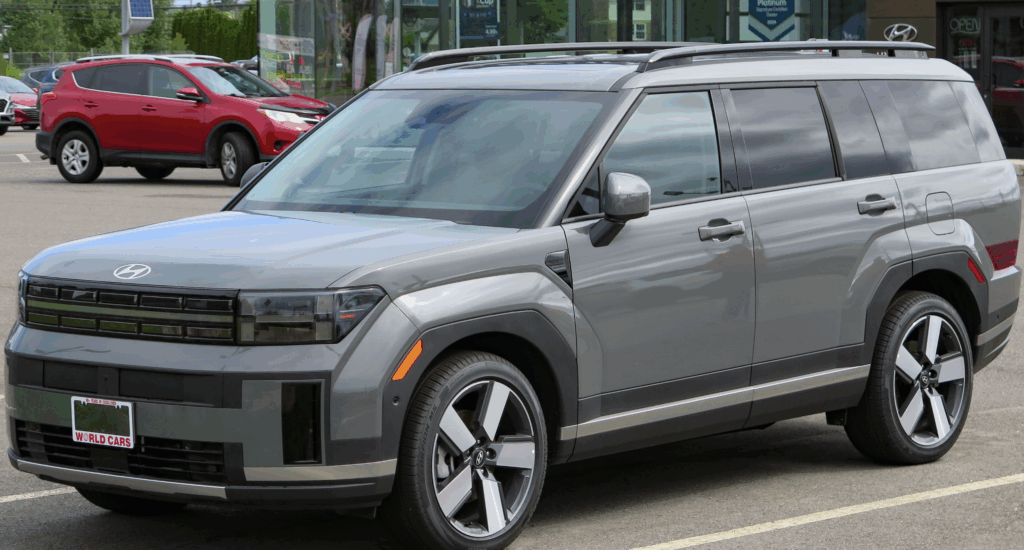
In a major safety recall, Hyundai Motor Company has recalled 13,153 Santa Fe SUVs in Canada due to a potential fire risk linked to the starter motor’s terminal cover. The affected models include 2024 and 2025 editions of the popular mid-size SUV.
🚨 What Triggered the Recall
According to Transport Canada, the terminal cover on the starter motor of certain Hyundai Santa Fe vehicles may not have been installed correctly. This can leave the positive terminal exposed, posing a risk if it comes into contact with nearby metal components during a crash.
Such contact could cause a short circuit, potentially leading to a vehicle fire or injury. The agency noted that while no real-world incidents have been reported so far, the defect was confirmed during safety testing.
🇺🇸 Similar Recall in the United States
Just a week earlier, the U.S. National Highway Traffic Safety Administration (NHTSA) issued a similar recall affecting around 135,386 vehicles in the United States. The NHTSA stated that improper installation of the B+ positive terminal cover during assembly could result in an electrical short if the car crashes, creating a fire hazard.
The issue was first identified last year during a crash test of a 2024 Santa Fe, when a “thermal event” occurred after impact. Thankfully, Hyundai clarified that no incidents have been reported in real-world conditions across North America.
🧰 What Hyundai Owners Should Do
Hyundai has said that all affected vehicle owners in Canada will receive direct notification by mail. The company will advise them to visit a Hyundai dealership, where technicians will inspect and reinstall the terminal cover if necessary — free of cost.
Owners are also encouraged to contact Hyundai Canada’s customer service or Transport Canada’s recall database for more details regarding vehicle identification numbers (VINs) included in the recall.
⚠️ A Reminder on Vehicle Safety
While the recall affects a limited number of vehicles, it highlights how even small assembly errors can lead to significant risks. Hyundai’s proactive move and transparent communication ensure customer safety remains a top priority.