India Expands Its Biofuel Strategy
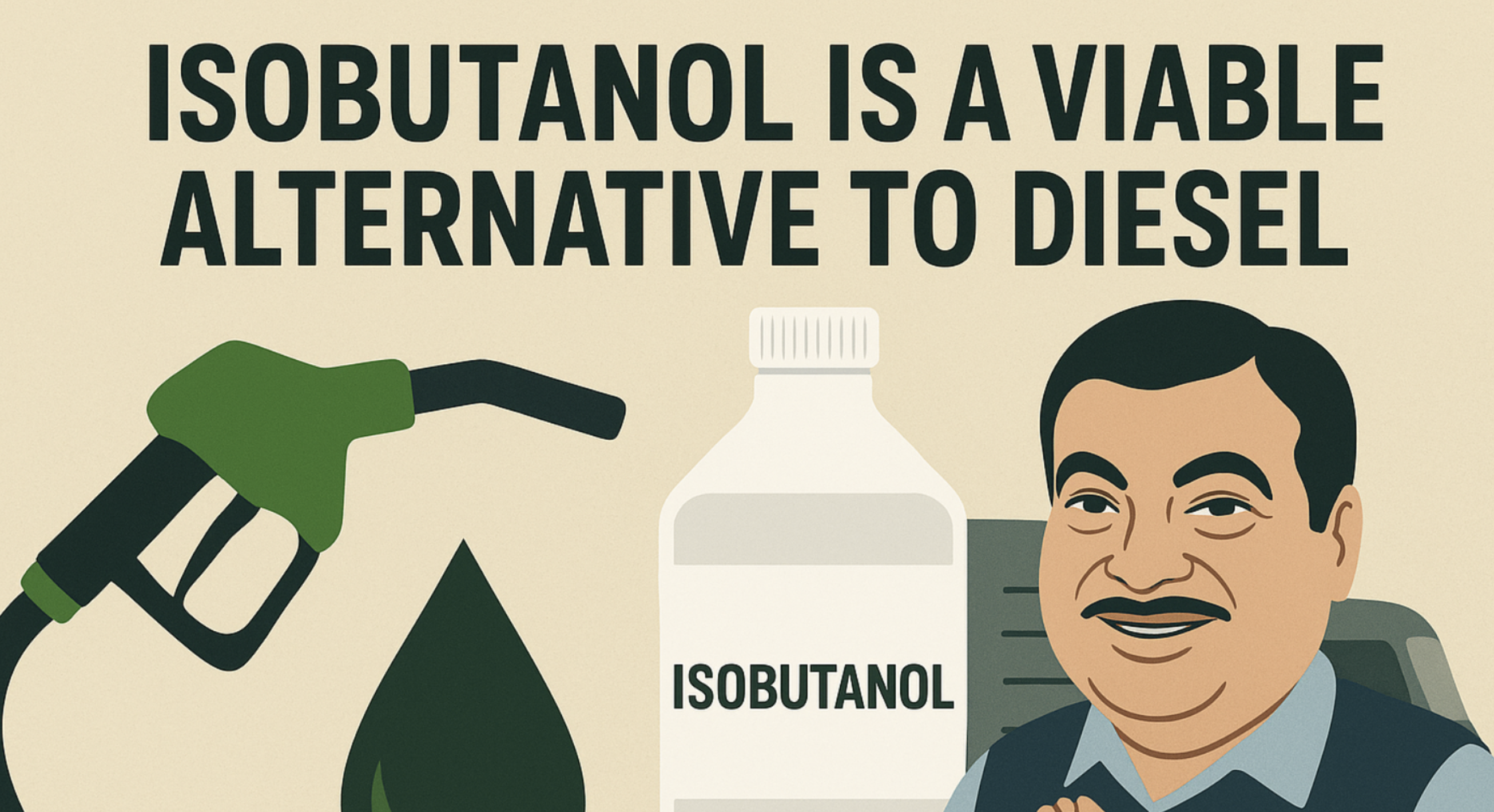
After successfully implementing E20 petrol across the country, India is preparing for the next phase of its alternative fuel journey. Union Road Transport and Highways Minister Nitin Gadkari has announced that the government is working towards allowing up to 15% isobutanol blending in diesel. The move is aimed at reducing India’s dependence on imported crude oil while promoting cleaner and more sustainable fuel options. Pilot projects have reportedly delivered encouraging results, paving the way for wider adoption in the coming years.
What Is Isobutanol and Why Is It Important?
Isobutanol is a bio-based alcohol that can be produced from ethanol and agricultural feedstocks. Unlike ethanol, which cannot be directly blended with diesel efficiently, isobutanol offers better compatibility with diesel fuel. It can improve combustion performance, reduce emissions, and serve as a renewable alternative to conventional fossil fuels.
According to Gadkari, the government is exploring isobutanol because it can help diversify India’s biofuel portfolio and create new opportunities for cleaner transportation. The initiative also aligns with India’s long-term goals of energy security and environmental sustainability.
Building on the Success of E20 Petrol
India’s E20 programme, which involves blending 20% ethanol with petrol, has become the country’s standard fuel policy. The initiative has helped reduce crude oil imports, supported domestic ethanol production, and created additional income opportunities for farmers. Industry leaders have stated that modern vehicles are fully compatible with E20 fuel, although a minor reduction in mileage has been acknowledged.
The proposed isobutanol-diesel blend seeks to replicate similar benefits in the diesel segment, which powers a significant portion of India’s commercial transport, logistics, and agricultural machinery.
Benefits for Farmers and the Economy
One of the biggest advantages of biofuel expansion is its potential impact on rural incomes. Increased demand for ethanol and isobutanol can create new markets for agricultural products and crop residues. This supports farmers while reducing the nation’s fuel import bill.
At the same time, greater use of domestically produced biofuels can strengthen India’s energy independence and reduce exposure to fluctuations in global oil prices.
A Step Towards Cleaner Transportation
The proposed 15% isobutanol blend in diesel represents another important step in India’s clean energy transition. If implemented successfully, it could reduce emissions, support rural economies, and further strengthen the country’s push towards self-reliance in energy. As testing and policy development continue, the initiative could become a key pillar of India’s future transportation fuel strategy.