The National Capital Region Planning Board (NCRPB) has approved the Regional Plan 2041, outlining an ambitious roadmap for the future development of the National Capital Region (NCR). The plan proposes the creation of four new “NaMo Cities” and three major economic zones aimed at reducing pressure on Delhi while promoting balanced growth across the region.
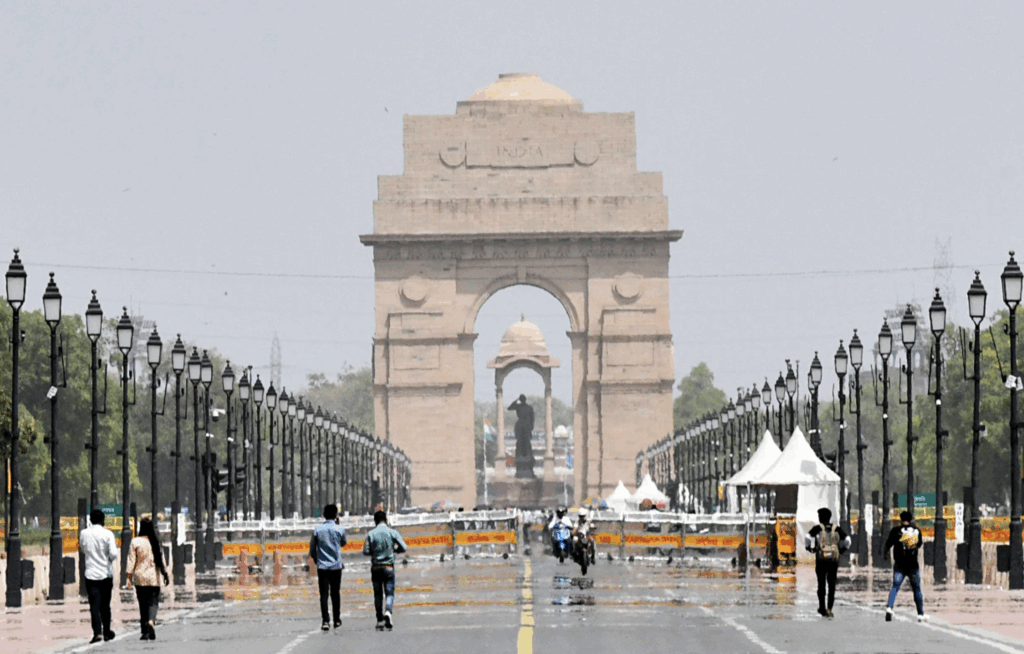
The blueprint is expected to shape urban development, infrastructure, housing, transportation, and economic activity across NCR over the next two decades.
Four New NaMo Cities To Drive Regional Growth
One of the key highlights of the Regional Plan 2041 is the proposal to develop four new New Model (NaMo) Cities. These cities are envisioned as modern, self-sustaining urban centres equipped with world-class infrastructure, employment opportunities, housing, and social amenities.
The objective is to create alternative growth hubs that can absorb future population expansion and reduce migration pressure on Delhi and existing NCR cities. Authorities believe these planned cities will help distribute economic activity more evenly across the region.
Three Economic Zones Planned
The regional plan also proposes three specialised economic zones that will focus on manufacturing, logistics, services, and emerging industries. These zones are expected to attract investments, generate employment opportunities, and strengthen the NCR’s position as one of India’s leading economic regions.
Officials believe the economic zones will benefit from improved connectivity, industrial infrastructure, and proximity to major consumption centres across North India.
No Change In NCR Boundaries
Despite the introduction of new growth centres, the Regional Plan 2041 does not propose any expansion or modification of the existing NCR boundaries. Authorities have decided to focus on improving planning and infrastructure within the current geographical limits rather than extending the region further.
The decision is intended to ensure better governance, coordinated development, and efficient implementation of infrastructure projects across the NCR states.
Focus On Connectivity And Sustainable Development
A major component of the plan is the enhancement of regional connectivity through highways, expressways, rapid rail systems, metro networks, and multimodal transportation corridors. Improved connectivity is expected to support economic activity while reducing travel times between cities and employment centres.
The plan also emphasises sustainable urban development through better land-use planning, environmental protection measures, water resource management, and climate-resilient infrastructure.
Reducing Pressure On Delhi
Urban planners have long argued that excessive concentration of population and economic activity in Delhi has created challenges related to congestion, pollution, housing shortages, and infrastructure stress.
By promoting development in surrounding NCR cities and new urban centres, the Regional Plan 2041 seeks to create a more balanced regional growth model. The proposed NaMo Cities and economic zones are expected to play a central role in achieving this objective.
A Vision For NCR’s Future
The Regional Plan 2041 represents one of the most comprehensive long-term planning exercises undertaken for the NCR. If implemented successfully, it could transform the region into a network of interconnected economic and urban centres while improving quality of life for millions of residents.
The focus on planned urbanisation, economic diversification, and infrastructure expansion is expected to shape the next phase of growth for India’s largest metropolitan region.
Summary:
The NCR Regional Plan 2041 proposes four new NaMo Cities and three specialised economic zones to support future urban and economic growth. The plan aims to reduce pressure on Delhi, improve regional connectivity, and create self-sustaining growth centres across the National Capital Region. Importantly, the existing NCR boundaries will remain unchanged under the new development framework.