India is planning an ambitious high-speed rail corridor between Chennai and Bengaluru that could reduce the travel time between the two major South Indian cities to approximately 1 hour 13 minutes, a dramatic improvement over current rail and road journeys that take several hours. This project is a flagship part of a broader national infrastructure push outlined in the Union Budget 2026–27, aimed at transforming inter-city travel across the country.
The High-Speed Rail Corridor: Route and Speed
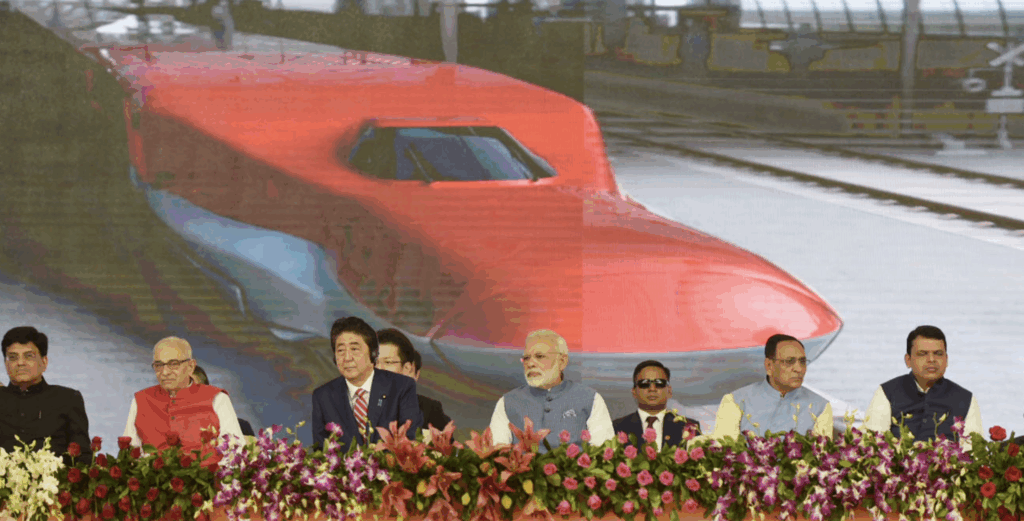
The proposed corridor spans about 306 kilometres and will be developed by the National High Speed Rail Corporation Limited (NHSRCL). Trains on this route are expected to run at maximum speeds up to 350 km/h, with average operational speeds around 250 km/h — enabling the rapid 73-minute journey once the system is operational.
To minimise disruption and optimise alignment, a final alignment survey has already been completed. The chosen route connects key urban hubs and emerging centres across Tamil Nadu, Andhra Pradesh and Karnataka, providing efficient inter-state connectivity.
Underground Sections and Urban Integration
A unique feature of this high-speed project is the inclusion of underground sections and stations in Bengaluru. Two underground stations are planned — at Byappanahalli and Whitefield — to seamlessly integrate with existing metro and rail networks, while avoiding major surface-level disruption in densely populated areas. Additionally, an approximately 12-kilometre tunnel will carry the line through parts of Bengaluru’s urban zone.
Other tunnels are planned in geographically challenging areas, including an 11.5-km stretch through the Mogili Ghat section and a 2.5-km tunnel in Chennai City. These underground sections help maintain high speeds and stable operations while conserving space and reducing environmental impact.
Stations and Connectivity
Major stations set to be part of the corridor include:
- Chennai Central (starting point)
- Poonamallee and Parandur (near Chennai’s second airport)
- Ramapuram (Chittoor)
- Kolar (Hudukula)
- Kodihalli (near Hoskote)
- Whitefield and Byappanahalli (in Bengaluru)
These stops are strategically chosen to enhance regional access and link economic hubs, supporting both commuter and business travel while fostering economic integration across states.
Impact on South India’s Transport Landscape
Once completed, this high-speed rail corridor will not only cut travel time drastically but also improve economic integration, boost tourism, and enhance talent mobility between two major metropolitan regions. By providing a fast, reliable, and modern transport alternative, the Chennai–Bengaluru corridor is expected to drive regional development and set a model for future high-speed rail networks across India.