Nationwide Bank Strike On September 11
Banking services across India could face disruption on September 11, 2026, after the United Forum of Bank Unions (UFBU) announced a nationwide strike.
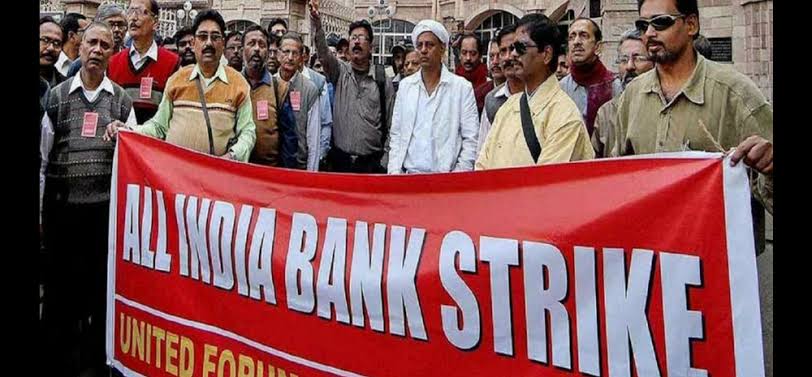
The strike has been called over several unresolved demands, with the implementation of a five-day banking week emerging as one of the key issues.
If the strike goes ahead, public sector bank operations are expected to be particularly affected.
Why Bank Unions Want A 5-Day Week
Bank employees and officers have been demanding that banks operate only from Monday to Friday, with Saturdays becoming regular holidays.
The Indian Banks’ Association had agreed to the proposal under the 12th Bipartite Settlement and 9th Joint Note signed in March 2024.
Under the proposed arrangement, employees would work an additional 40 minutes from Monday to Friday to compensate for the reduction in working days.
The proposal was subsequently sent to the government for approval but has remained pending for more than two years.
Why September 11 Could Mean Four Days Of Disruption
The proposed strike falls on a Friday.
It will be followed by Saturday and Sunday, which are regular bank holidays.
In some states, September 14 is also a bank holiday because of Ganesh Chaturthi.
As a result, customers in several parts of the country could face a prolonged interruption in branch-based banking services.
The exact impact will depend on participation and local holiday calendars.
Performance-Linked Incentive Is Another Flashpoint
The unions are also protesting against differences over the government’s Performance-Linked Incentive (PLI) scheme for bank officers.
The unions argue that the current structure differs from the understanding reached with the Indian Banks’ Association.
According to the UFBU, the earlier understanding was that PLI would be linked to the overall performance of individual banks and would follow a more uniform structure across employee and officer categories.
Why Unions Oppose The Government’s PLI Structure
Under the government-backed arrangement, officers in Scale IV and above could receive PLI of up to 365 days of basic pay based on individual performance.
By comparison, workmen employees and officers up to Scale III would receive a maximum of 15 days’ basic pay plus dearness allowance, according to the unions.
The UFBU argues that this creates a significant disparity between different categories of bank employees.
The PLI issue is currently under conciliation proceedings before the Chief Labour Commissioner and is also part of a legal dispute.
Unions Say PLI Payments Have Already Started
The UFBU has alleged that the Department of Financial Services advised banks to implement the government’s PLI scheme even while conciliation proceedings were continuing.
The unions say banks have already begun crediting PLI payments under the government-backed structure.
They argue that this undermines the status quo expected during the conciliation process.
The dispute has therefore become another major reason behind the planned strike.
Pension Demands Are Also Pending
The unions have several additional demands beyond five-day banking and PLI.
These include updating and improving pension benefits, introducing a uniform dearness allowance formula for pensioners and providing employees covered under the National Pension System with an option to move to the old pension scheme.
The UFBU says these issues have remained unresolved despite repeated discussions.
More Strikes Could Follow In September
The September 11 strike may not be the only disruption.
The UFBU has also threatened a three-day nationwide strike from September 28, coinciding with the half-yearly closing period for banks.
That could create another period of disruption for customers and businesses.
The unions have indicated that further industrial action could follow if negotiations do not produce a satisfactory resolution.
Indefinite Strike Threat From October 26
The most serious escalation could come later.
The UFBU has warned that bank employees could begin an indefinite nationwide strike from October 26 if their demands remain unresolved.
This would represent a much larger disruption than the planned one-day September strike.
For banks, businesses and customers, avoiding an indefinite strike will therefore depend heavily on whether the government, bank management and unions can reach an agreement.
What Customers Should Know
Customers should not assume that all banking services will completely stop on September 11.
The proposed action primarily concerns employees and officers participating in the strike, meaning the extent of disruption will depend on participation.
However, branch operations and other employee-dependent services could be affected.
Customers with important cash withdrawals, deposits, documentation, loan-related work or other branch transactions may therefore want to complete them before the proposed strike date.
Digital Banking Could Continue
Online banking, mobile banking, UPI and other automated digital services are generally not dependent on employees being physically present at bank branches in the same way.
Therefore, many routine digital transactions may continue even if branches are affected.
However, certain services requiring bank employees, physical documentation or branch processing could face delays.
Customers should also remember that technical outages or transaction limits are separate from the strike itself.
Public Sector Banks Could Feel The Biggest Impact
The strike is expected to have a particularly visible effect on public sector banks because their employees and officers are represented by the unions participating in the UFBU.
The overall impact will depend on how widely employees participate.
Private-sector banks may not necessarily experience the same level of disruption.
Customers should therefore check with their individual bank before assuming that branches will be closed.
Why Five-Day Banking Matters To Employees
For bank employees, the five-day workweek is primarily a work-life and working-hours issue.
The proposed arrangement does not simply remove Saturdays without adjustment.
The agreement envisages extending weekday working hours by 40 minutes so that the total working time can be accommodated within Monday to Friday.
The unions believe the proposal should now be implemented because the banking industry has already agreed to it.
Why The Government Has Not Implemented It Yet
Although the proposal was agreed between the unions and the Indian Banks’ Association, it still requires government approval.
The delay has become a major source of frustration among bank employees.
The unions argue that the proposal has been pending for more than two years and that there is no justification for further delay.
The government and banking authorities have yet to resolve the issue to the unions’ satisfaction.
What Happens Next
The immediate focus will be on negotiations between the UFBU, bank management and the government.
If the parties reach an agreement before September 11, the proposed strike could potentially be avoided or withdrawn.
If no agreement is reached, customers could see disruptions beginning with the September 11 action, followed by another proposed strike later in the month.
The October 26 indefinite-strike threat adds further pressure on all sides to find a settlement.
Banking Services Face A Potentially Disruptive Autumn
The September 11 strike is part of a wider dispute between bank unions, management and the government over working arrangements, incentives and employee benefits.
The demand for five-day banking has been pending despite an earlier agreement, while disagreements over PLI and pension-related issues have added to tensions.
For customers, the most important dates to watch are September 11, September 28-30 and October 26.
Unless the outstanding issues are resolved, India’s banking sector could face increasingly serious disruptions over the coming months.
Summary
Bank unions under the United Forum of Bank Unions have announced a nationwide strike for September 11, 2026, demanding implementation of a five-day banking week and raising objections to the government’s Performance-Linked Incentive scheme. Pension-related demands also remain unresolved. A three-day strike is planned from September 28, while unions have threatened an indefinite strike from October 26 if their demands are not addressed.