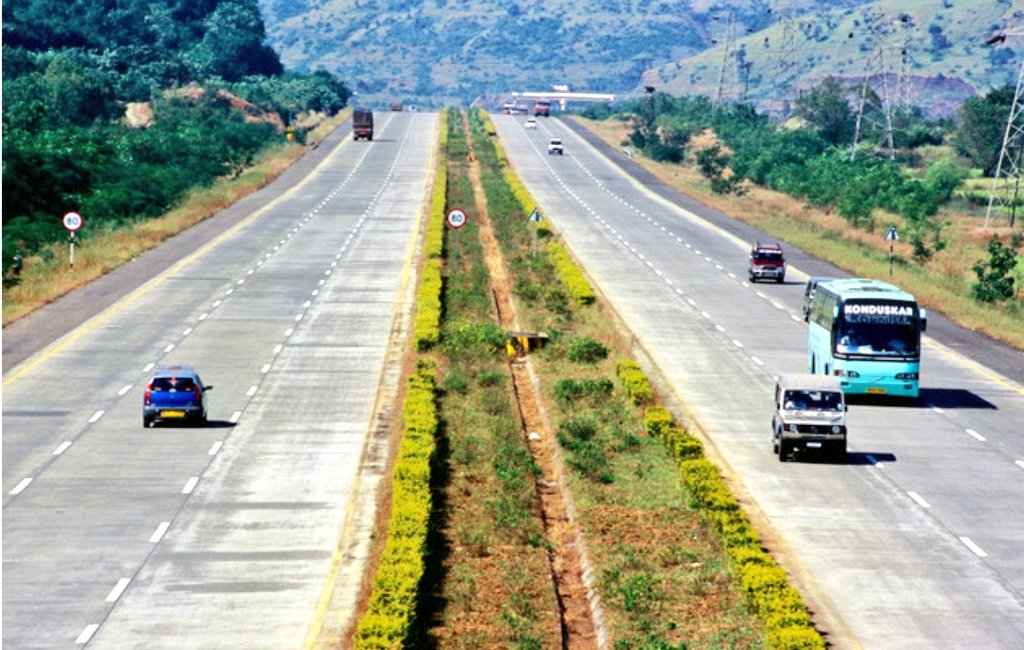
For people in Bengaluru, reaching the nearest beaches such as Mangaluru or Karwar currently takes at least seven hours by road or train, while a trip to Goa can stretch beyond 12 hours.
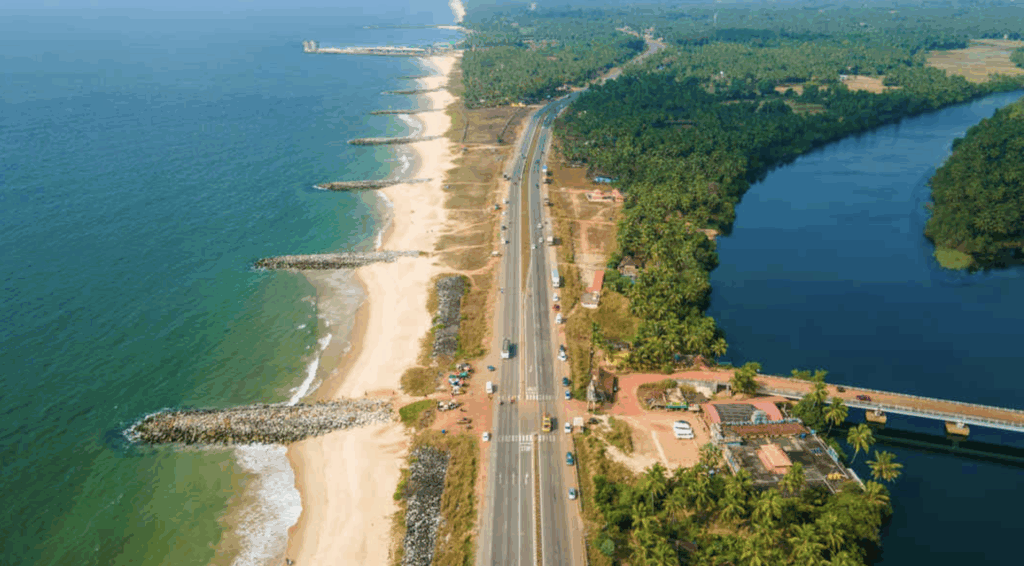
A new expressway is expected to drastically cut that travel time to roughly three hours to the nearest coastline, making quick beach trips far more realistic.
New Expressway to Cut Bengaluru-to-Beach Travel Time from 7 Hours to Just 3
The upcoming Bengaluru–Chennai Expressway (NE-7) is now moving into its final and most demanding stage of construction.
This massive corridor, built to strengthen connectivity between South India’s two biggest economic centers, is scheduled for a full public opening in early 2027, according to the National Highways Authority of India (NHAI).
Spanning 263 km, the expressway is intended to reduce travel time between Bengaluru and Chennai from nearly seven hours to just 2.5 to 3 hours.
Although construction has advanced quickly in Karnataka and Andhra Pradesh, technical and administrative challenges in Tamil Nadu have forced authorities to push back the completion deadline.
The project forms a key part of the PM Gati Shakti programme, which focuses on improving large-scale infrastructure planning and execution.
The expressway has been divided into ten construction packages across three different states.
As of February 2026, about 235 km — or 89% of the total 263.2 km — has already been completed.
In Karnataka, the entire 71.7-km stretch between Hoskote and Bethamangala is finished and open for use.
This completed section has already reduced congestion for commuters traveling toward Kolar and the KGF belt.
In Andhra Pradesh, around 85 km passing through the Palamaner and Chittoor regions is nearly done, with 92% of the work completed.
A remaining 6.5-km portion near the state border is still pending due to geological complications that slowed progress.
Tamil Nadu remains the most delayed segment, with only about 80% of its 106-km portion complete.
Final Tamil Nadu Stretch Delays Bengaluru–Chennai Expressway Completion to 2027
Approximately 85 km in Tamil Nadu has been paved, but the last 28.6 km — especially the Arakkonam to Kancheepuram stretch — continues to act as a bottleneck.
The project’s deadline has shifted from 2024/25 to early 2027 because of multiple setbacks.
One major issue has been the financial troubles of a concessionaire responsible for the Kancheepuram segment.
As a result, NHAI has begun the process of replacing the developer so that construction can proceed without further interruption.
Work was also slowed by difficult hard-rock excavation in the hilly areas of the Eastern Ghats.
Delays in obtaining forest clearances added to the timeline pressures.
Unseasonal heavy rainfall over the past two seasons in the Kancheepuram and Sriperumbudur regions further disrupted earthwork and paving schedules.
The expressway is a greenfield development, meaning it has been constructed along an entirely new alignment rather than upgrading an existing road.
It has been engineered for a maximum speed of 120 kmph.
The road currently has four access-controlled lanes with a 90-meter Right of Way, leaving space for a future upgrade to eight lanes without acquiring additional land.
The corridor is expected to play a central role in supporting the Chennai–Bengaluru Industrial Corridor (CBIC).
Major automobile hubs in Hoskote and Sriperumbudur, along with electronics manufacturing clusters along the route, are set to benefit significantly.
The infrastructure plan includes 17 major flyovers and 41 underpasses to ensure smooth traffic movement.
A 30-acre Way-Side Amenity (WSA) complex is being developed at Iythandahalli for travelers.
This facility will feature a trauma center, a helipad, and large food courts to support long-distance commuters.
To make travel more affordable on the operational Karnataka stretch, NHAI reduced toll charges by around 15% starting mid-February 2026.
The toll revision was made to bring rates in line with standard national highway fee regulations.
This reduced toll will remain in place until a unified tolling system covering the entire 263-km expressway becomes operational in 2027.
Although the delay has frustrated frequent travelers, the massive ₹17,692-crore investment ensures that once completed, the project will dramatically transform logistics and passenger transport across South India.