At 603 km/h, the new maglev train sets a record and changes how distance is experienced.
The remarkable part is not just that the maglev train hits 603 km/h, but that it appears completely normal and calm while doing so.
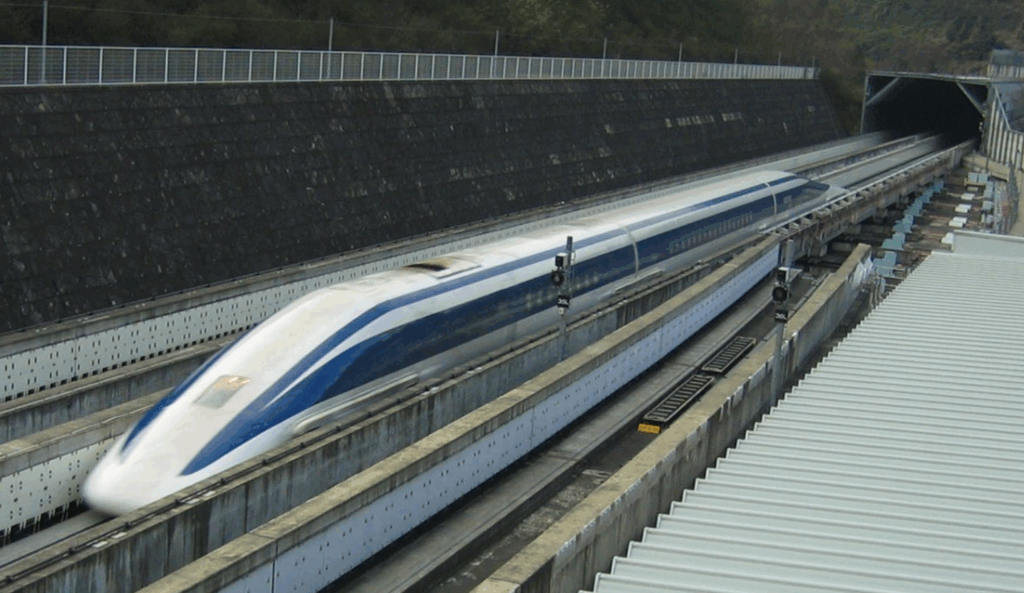
Maglev Train Redefines Speed and Distance at 603 km/h
Inside the train, there is no shaking, no dramatic motion, and no sparks — only a smooth glide and the feeling that the outside world is falling behind.
The interior features clean white panels, soft lighting, and seats that resemble those in an airport lounge.
Without knowing the speed, a passenger might assume the train is traveling at around 150 km/h.
Despite the calm environment, the brain senses that this is not how trains are supposed to feel.
Humans have spent a century привыкнув to the sound and rhythm of wheels on rails, and this train removes that familiar soundtrack.
By removing those familiar sounds, the train changes the way people imagine travel.
The record was achieved in Japan on a dedicated test track using a specially prepared maglev unit designed for controlled high-speed testing.
L0 Series Maglev Broke World Speed Record in 2015
In April 2015, the L0 Series maglev reached 603 km/h, beating its own previous record of 590 km/h and surpassing all traditional high-speed train records worldwide.
On paper, the achievement is just data and technical terms, but inside the cabin it is reflected in human reactions.
A driver with years of Shinkansen experience grips the armrest more than the controls.
A safety engineer watches real-time graphs that remain almost perfectly flat.
Reporters stretch their necks, waiting to see the precise moment when the digital speed display flips from 599 to 600.
People can relate this to checking a car speedometer and thinking, “That’s a bit fast,” then multiplying that feeling by six.
Despite the extreme speed, passengers feel safer than they would in their own cars.
The term “maglev” means magnetic levitation.
Instead of using wheels, the train floats above the track and is held and driven forward by strong magnetic fields.
Because there is no physical contact, there is no friction.
Without friction, the normal limits of steel-on-steel rail travel disappear.
This lack of friction makes speeds like 603 km/h not only achievable but also surprisingly stable.