The Food Safety and Standards Authority of India (FSSAI) has issued a landmark order prohibiting food and beverage companies from using the term ‘Oral Rehydration Salts’ or ‘ORS’ unless the product’s formulation strictly matches the World Health Organisation (WHO) standards.
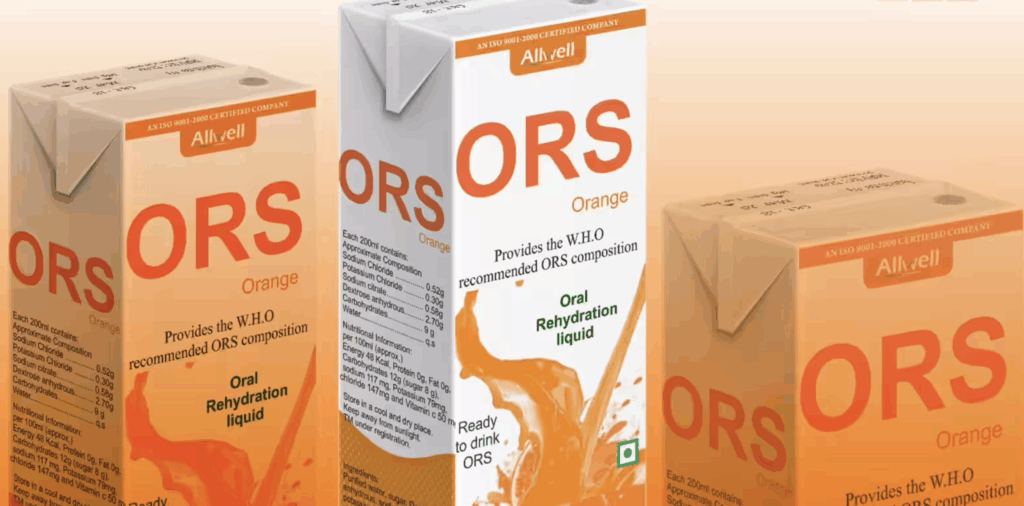
The directive, released on October 14, 2025, immediately withdraws previous permissions that allowed the use of ‘ORS’ as part of trademarks, even with disclaimers such as “Not a WHO-recommended ORS.” The regulator said such labels “mislead consumers through false and deceptive naming,” violating multiple provisions under the Food Safety and Standards Act, 2006.
The Science Behind True ORS
According to WHO, a genuine ORS formula must contain 2.6 grams of sodium chloride, 1.5 grams of potassium chloride, 2.9 grams of sodium citrate, and 13.5 grams of dextrose per litre of water — maintaining a total osmolarity of 245 mOsm/L.
However, several commercial drinks marketed as ORS in India contain up to 120 grams of sugar per litre, nearly 10 times higher than recommended, and provide insufficient electrolytes. Experts warn that such formulations can worsen dehydration instead of treating it, particularly in children.
A Doctor’s Decade-Long Fight
The regulatory shift is the result of a persistent campaign led by Hyderabad-based paediatrician Dr. Sivaranjani Santosh. For nearly a decade, she raised concerns about misleading “ORS” products and filed a Public Interest Litigation (PIL) in 2022 before the Telangana High Court.
“This victory belongs to people’s power — doctors, advocates, and parents who stood by the truth,” Dr. Sivaranjani said after the FSSAI order.
A Win for Public Health and Accountability
The new regulation is expected to trigger mass relabelling across the food and beverage sector. It also sets a precedent for stricter scrutiny of other misleading “health” claims in India’s FMCG market — from so-called immunity boosters to vitamin waters — marking a new chapter in consumer protection and responsible advertising.