


IDBI Bank employee unions have announced a one-day nationwide strike on December 3, 2026, to protest against the proposed sale of a majority stake in the bank to Canada’s Fairfax Financial Holdings. The strike will cover IDBI Bank branches and offices across the country, escalating the employees’ opposition to the proposed transfer of management control to a foreign private investor.
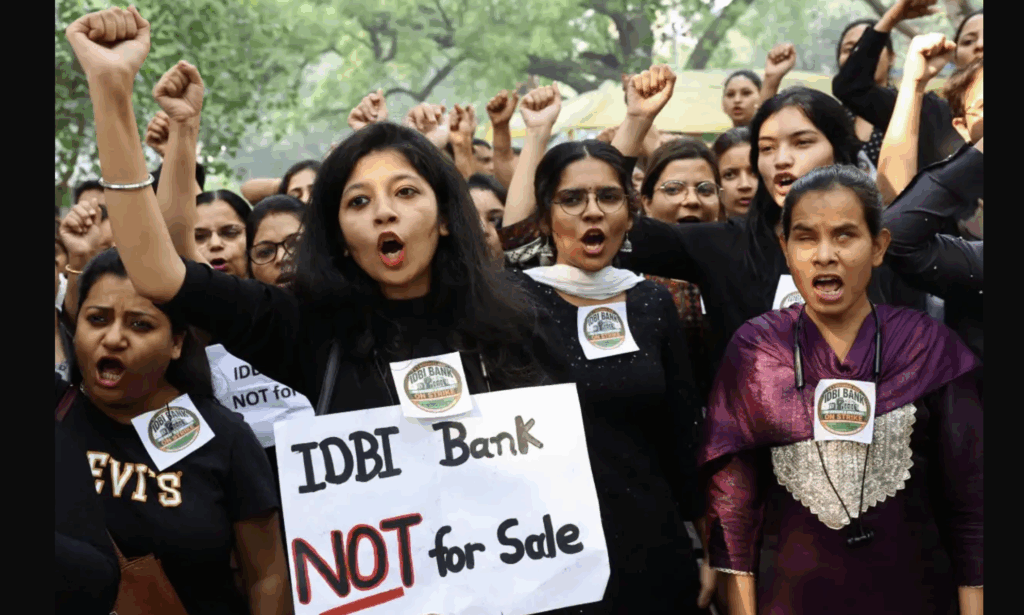
The United Forum of IDBI Officers and Employees (UFIOE), which represents the All India IDBI Officers’ Association and the All India Industrial Development Bank Employees’ Association, has issued a formal strike notice to the bank’s Managing Director and CEO.
Second Nationwide Strike Within a Month
The December 3 strike follows a two-day nationwide protest organised by IDBI Bank employees on November 2 and 3.
Despite the earlier agitation, the unions have decided to intensify their campaign and are demanding that the government and Life Insurance Corporation of India (LIC) withdraw from the proposed transaction.
The UFIOE has described IDBI Bank as a national asset and warned that it could organise longer protests, including an indefinite strike, if its demands are not addressed.
The unions have also approached the Reserve Bank of India (RBI), requesting it to withhold regulatory approvals for the proposed ownership and management transfer until an independent examination of the transaction is completed.
Why Are IDBI Bank Employees Opposing the Fairfax Deal?
The unions have raised concerns over the bank’s valuation, the source of acquisition funding, depositor protection and employee benefits.
They have questioned whether the proposed sale price adequately reflects IDBI Bank’s assets, properties, customer relationships and future earning potential.
Another concern relates to how Fairfax will finance the acquisition. The unions have asked the RBI to examine the source of funds and ensure that IDBI Bank’s deposits, assets, capital or future cash flows are not used directly or indirectly to finance the purchase.
Employees are also seeking legally enforceable assurances covering job security, existing service conditions, pensions, retirement benefits, promotions and reservation-related commitments.
The unions have additionally raised questions about the impact of the ownership change on depositors, branch accessibility and the bank’s public-sector responsibilities.
Government Approved ₹52,878 Crore Stake Sale
On October 14, 2026, the government approved the sale of a combined 60.72% stake in IDBI Bank to Fairfax Financial Holdings through its subsidiary, 10955230 Canada Inc.
The proposed transaction is valued at approximately ₹52,878 crore.
The government will sell its 30.48% stake, while LIC will divest another 30.24%. Fairfax is expected to pay ₹81 per share, compared with the benchmark fair value of ₹75.99 determined by two independent valuation agencies.
After the transaction, the government is expected to retain a 15% stake in IDBI Bank, while LIC will hold 19%.
The transaction remains subject to regulatory clearances, including approval from the RBI.
Opposition Also Questions the Privatisation Process
The proposed sale has attracted criticism from opposition parties, particularly the Congress, which has questioned the bank’s valuation and demanded a halt to the transaction.
Congress leaders have also called for a Joint Parliamentary Committee investigation into the proposed disinvestment.
The government, meanwhile, has defended the sale process and the valuation used to determine the transaction price.
With employee unions preparing another nationwide strike and seeking intervention from the RBI, the proposed Fairfax acquisition faces continued opposition as it moves towards regulatory approval.
Summary
IDBI Bank unions have called a nationwide strike on December 3, 2026, against the proposed ₹52,878-crore sale of a 60.72% stake to Fairfax Financial Holdings. Employees have raised concerns over valuation, acquisition funding, depositor protection and job security. The strike follows a two-day protest on November 2 and 3, while the transaction awaits regulatory clearances.