Indian Applications To US Colleges Fall Sharply
The number of Indian students applying for undergraduate programmes at US colleges has fallen by 15% in the 2025-26 admissions cycle, according to the latest Common App data.
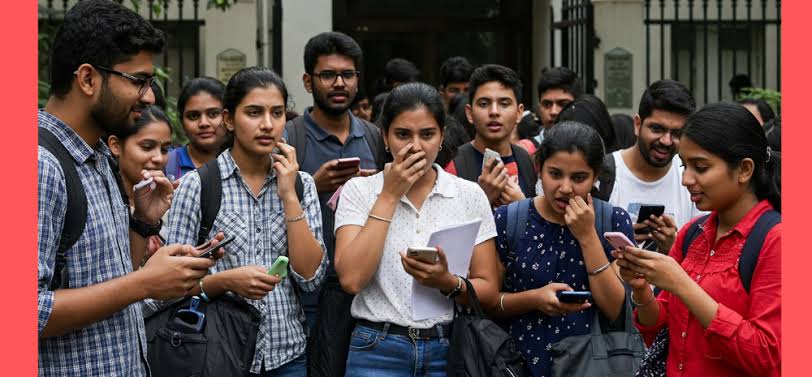
The decline is significant because India remains the largest source of international students in the United States.
The drop also comes at a time when overall applications to US colleges are still increasing, highlighting a growing gap between domestic demand and international interest.
International Applications Are Falling Too
The decline is not limited to India.
International applications submitted through Common App fell by 10% through March 1, marking the steepest decline recorded in the data.
By comparison, applications from US-based students continued to grow.
This suggests that the problem is not a general decline in interest in American higher education. Instead, international students are becoming increasingly cautious about choosing the US.
India Is Driving A Large Part Of The Decline
India’s 15% fall is particularly important because Indian students represent one of the largest international student communities in America.
More than 3.63 lakh Indian students were enrolled in different US programmes during the 2024-25 academic year.
With Indian applicants now falling sharply, US universities that depend heavily on international enrolments could face increasing pressure to attract students from other countries.
Trump’s Immigration Policies Are A Major Factor
The decline comes amid tighter US immigration policies and increased scrutiny of foreign students.
The Trump administration has expanded visa screening and vetting requirements for international students and has taken a tougher approach towards immigration.
These developments have created uncertainty for students who are considering spending several years in the US.
For families making a major financial investment in an overseas degree, uncertainty around visas and post-study opportunities can significantly influence the final decision.
Students Are Worried About What Happens After Graduation
For many Indian students, studying in America has traditionally been about more than earning a degree.
The opportunity to gain work experience after graduation has been an important part of the decision.
The US is now considering additional restrictions and costs related to programmes that allow international graduates to work after completing their studies.
Any uncertainty around post-study employment can therefore make the US less attractive compared with competing destinations.
US Student Visa Rules Are Also Changing
The US government has also moved to change the way student and visitor visas operate.
Traditional “duration of status” arrangements are being replaced by rules that could limit stays to a defined period, generally aligned with the expected duration of an academic programme.
Students may therefore face greater scrutiny regarding how long they remain in the country.
For prospective applicants, the overall message is that studying in America is becoming more closely linked to immigration compliance.
The Cost Of Studying In America Is Already High
Visa uncertainty comes on top of another major concern: cost.
Tuition at US universities can run into tens of thousands of dollars each year.
Students must also pay for accommodation, health insurance, food, transportation and other living expenses.
When families are committing several years of savings to an overseas education, uncertainty about whether a graduate will be able to work in the US afterward can make the investment harder to justify.
The US Is Still The Biggest Destination
Despite the decline, America remains one of the world’s most important destinations for international education.
Indian students continue to choose the country for its universities, research opportunities, technology ecosystem and global career prospects.
The latest decline therefore does not mean Indian students have stopped considering America altogether.
Instead, it indicates that the decision is becoming more difficult as families weigh academic benefits against immigration uncertainty, costs and employment prospects.
Other Countries Could Gain
The decline in US-bound students could benefit competing education destinations.
Canada, the United Kingdom, Australia and other countries have spent years attracting Indian students with specialised programmes and pathways to employment.
If students become less confident about securing visas or work opportunities in America, they could increasingly consider these alternatives.
Universities outside the US could therefore gain from a shift in India’s study-abroad preferences.
US Universities Could Face Financial Pressure
International students are financially important to many American universities.
Foreign students often pay higher tuition fees than domestic students, making them an important source of revenue.
A sustained decline could therefore affect institutions that rely heavily on overseas enrolments.
The impact may be especially serious for smaller and mid-tier universities that have fewer financial reserves and depend more heavily on international tuition.
The Economic Impact Could Extend Beyond Universities
The consequences of fewer international students would not be limited to colleges.
Students spend money on housing, food, transportation, healthcare and other services.
According to estimates cited in the latest report, international students contributed around $41.77 billion to the US economy during the 2025-26 academic year.
That contribution is projected to fall to approximately $38.37 billion in 2026-27.
A continued decline could therefore affect local economies in university towns as well.
India Remains The Largest Source Of US International Students
Even with the latest decline, India continues to occupy a crucial position in America’s international education ecosystem.
Indian students are present across undergraduate, postgraduate, doctoral and professional programmes.
Their presence has expanded significantly over the past decade.
The current decline is therefore notable because it represents a change in the direction of a market that had previously shown strong growth.
The Fall Is Happening Despite Overall US Application Growth
One of the most revealing aspects of the latest data is that US college application volumes have not collapsed.
Overall undergraduate applications have increased.
The weakness is concentrated among international applicants.
This suggests that the issue is less about declining demand for American education and more about changing perceptions of whether studying in America remains worth the financial and immigration risks.
Visa Uncertainty Could Become A Long-Term Problem
Students planning to study abroad often make decisions months or even years in advance.
They want certainty about admission, visas, academic progression and employment opportunities.
If immigration policies continue changing rapidly, some students may choose destinations where the rules appear more predictable.
That could create a longer-term challenge for US universities, particularly if international applicants begin shifting their preferences before applying.
India’s Study-Abroad Market Is Becoming More Selective
Indian families are also becoming increasingly careful about the return on investment from foreign education.
A US degree can be extremely expensive, and the ability to gain international work experience can play a major role in whether that investment makes financial sense.
If post-study employment becomes harder or more expensive, students may increasingly compare the US against countries offering clearer employment pathways.
This could change the pattern of Indian overseas education demand.
The American Dream Is Facing A New Test
For generations of Indian students, studying in America has represented access to world-class education and global career opportunities.
The latest application numbers suggest that this attraction remains strong but is no longer enough on its own.
Students are increasingly considering the entire journey: admission, visa approval, cost of education, ability to remain in the country and prospects after graduation.
The more uncertain that journey becomes, the more likely students are to explore alternatives.
What Happens Next?
The next few admission cycles will show whether the latest decline is temporary or the beginning of a larger structural shift.
If US immigration rules become more predictable and universities continue offering strong academic and career opportunities, Indian applications could recover.
But if visa restrictions, costs and uncertainty continue increasing, more Indian students may choose alternative destinations.
For American universities, retaining India’s position as the largest international student market could become an increasingly important challenge.
Summary
Indian applications to US colleges fell 15% in the 2025-26 admissions cycle, according to Common App data, while international applications overall declined 10%. The decline comes amid tighter US immigration policies, increased visa scrutiny and uncertainty over post-study work opportunities. India remains the largest source of international students in America, with more than 3.63 lakh enrolled in 2024-25. The shift could benefit competing destinations such as Canada, Australia and the UK.