India’s banking sector is gearing up for another major overhaul as the Union government revisits PSU bank consolidation. The objective is clear: build world-class, globally competitive public sector banks capable of supporting India’s expanding economy, rising credit demands, and ambitious infrastructure growth plans.
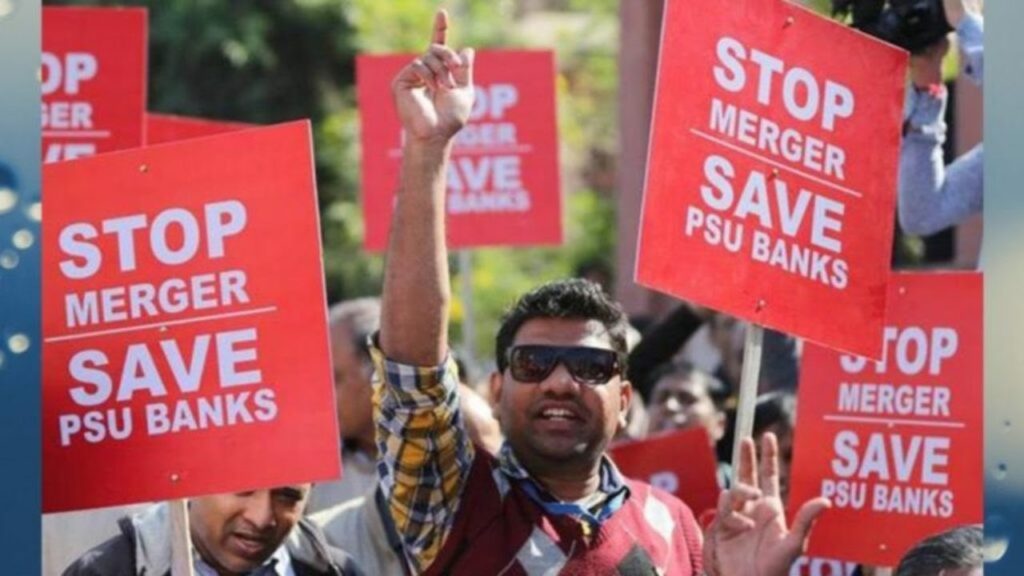
Why Another Round of Bank Mergers?
India currently has 12 public sector banks, down from 27 before the 2017–2020 consolidation phase. The government’s vision is to reduce this number to 6 or 7 strong mega-banks that can:
- Compete with global financial giants
- Improve credit flow to industries
- Strengthen digital banking systems
- Reduce operational costs
- Improve asset quality and lower NPAs
- Support India’s USD 5 trillion economy target
State Bank of India (SBI), the country’s largest bank, has publicly backed the next phase of mergers, citing better market value and stronger balance sheets as key benefits.
Which Banks Could Merge Next?
Discussions are currently centred around six PSU banks:
- Bank of India
- Indian Overseas Bank
- Central Bank of India
- Bank of Maharashtra
- UCO Bank
- Punjab & Sind Bank
These banks could be merged with each other, absorbed by larger banks, or grouped strategically based on financial health, technology readiness, and regional strengths.
A Look Back: Major Mergers That Shaped India’s Banking Landscape
India has undergone multiple waves of bank mergers since the 1990s.
2017 – The SBI Mega Merger
SBI absorbed five associate banks and Bharatiya Mahila Bank, making it India’s first truly large-scale national bank.
2019 – Bank of Baroda Takes the Lead
Bank of Baroda merged with Dena Bank and Vijaya Bank, becoming the third-largest PSU bank.
2020 – The Biggest Merger Wave
- PNB + OBC + United Bank
- Canara Bank + Syndicate Bank
- Union Bank + Andhra Bank + Corporation Bank
- Indian Bank + Allahabad Bank
This reduced the number of PSU banks to 12.
What Happens Next?
While no formal announcement has been made, historically major mergers roll out in April, aligning with the new financial year. Reports suggest that unlike the 2020 bulk mergers, the upcoming consolidation may be executed in 2–3 phases for smoother integration, capital planning and system alignment.
With India’s economy expanding, consolidation aims to create stronger, digitally advanced, globally competitive banks that can support large-scale national development.