India’s scientific history boasts a remarkable distinction: its only two Nobel laureates in Physics are an uncle-nephew pair—Sir Chandrasekhara Venkata Raman and his nephew, Subrahmanyan Chandrasekhar. This rare familial achievement not only symbolizes intellectual legacy but also highlights generational excellence in theoretical and experimental physics.
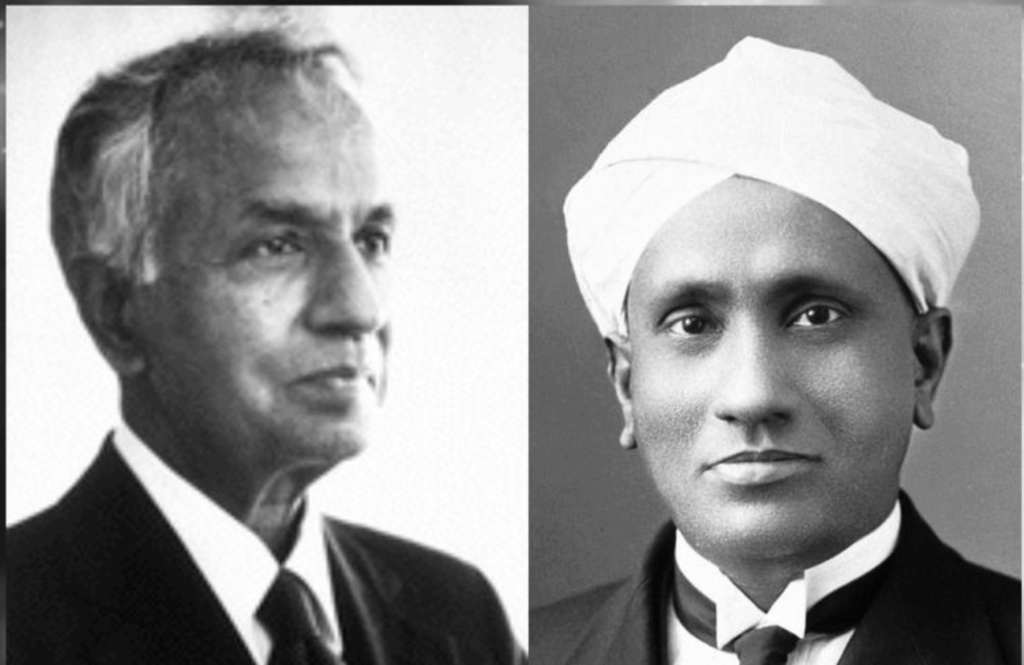
CV Raman: Pioneer of Light
Sir C. V. Raman, born in 1888, was celebrated for his groundbreaking discovery in the field of light scattering—now famous as the “Raman Effect”. In 1930, Raman won the Nobel Prize for Physics, making history as the first Asian and non-white recipient in any Nobel category. His innovative work revolutionized optics and formed the core of modern spectroscopy. Throughout his career, Raman established key scientific institutions in India, mentored a generation of researchers, and inspired countless young minds, not least among them his own family.
Subrahmanyan Chandrasekhar: Architect of Stellar Evolution
Raman’s nephew, Subrahmanyan Chandrasekhar, born in 1910, followed a stellar academic trajectory that culminated in the 1983 Nobel Prize for Physics. Chandrasekhar’s most renowned achievement is the Chandrasekhar Limit: a theoretical threshold governing the fate of dying stars. His work mapped the blueprint for understanding white dwarfs, neutron stars, and black holes—contributions fundamental to modern astrophysics. Beyond astrophysics, Chandrasekhar’s scholarship covered fluid dynamics, radiation, and mathematical physics.
Legacy That Shaped Science
Both icons left a profound legacy: Raman’s research remains central to optics, chemistry, and materials science; Chandrasekhar’s equations underpin the cosmic life cycles modeled in astronomy today. Their shared heritage as Nobel-winning physicists from India is a testament to the power of intellectual curiosity, mentorship, family influence, and global impact.
Conclusion
The Nobel laureateship of CV Raman and Subrahmanyan Chandrasekhar stands unique in global science, connecting two generations through pursuit of excellence and discovery. Their achievements are celebrated in classrooms, research labs, and scientific institutions worldwide—reminders of India’s enduring contribution to fundamental physics.