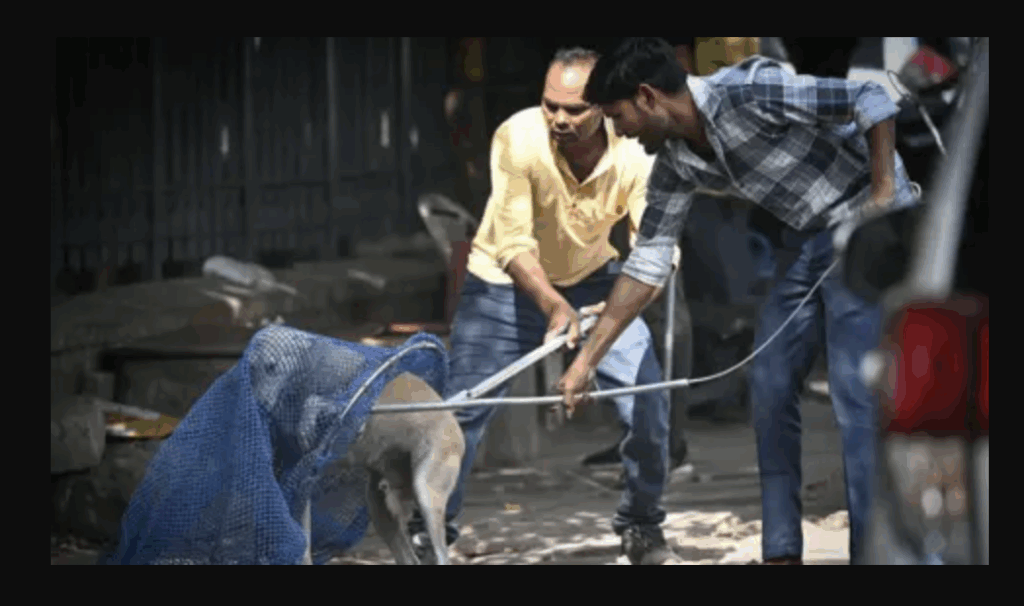
The Supreme Court noted that “incidents of dog-bite attacks continue to be reported with alarming frequency” and directed that stray dogs be removed “forthwith” from educational institutions, hospitals, sports complexes, bus stands, depots, and railway stations, and taken to “a designated shelter, after due sterilization and vaccination in accordance with the animal birth control rules.”
Supreme Court Orders Immediate Removal of Stray Dogs from Public and Institutional Premises
The Court ordered that these directions be “implemented uniformly across India” with “status compliance certificates within a period of eight weeks.”
The stray dogs removed “shall not be released back to the same location from which they were picked up.”
The Court emphasized that releasing dogs back to the same location would “frustrate the very effect of the directions issued to liberate such institutional areas from the presence of stray dogs,” placing responsibility on municipal bodies or authorities.
The Court cited news reports about dog-bite incidents in institutional areas and stated that recurring incidents “reflects not only administrative apathy but also a systemic failure to secure these premises from preventable hazards.”
It highlighted the need for immediate judicial intervention to protect the fundamental right to life and safety under Article 21, especially for children, patients, and sportspersons.
The Court noted that India continues to report “one of the world’s highest statistics of rabies-related mortality” despite public health advances.
It criticized the ineffective implementation of the Animal Birth Control Rules, which use the Capture-Sterilize-Vaccinate-Release (CSVR) model to control stray dog populations.
The bench cited a case of a Welsh entrepreneur in Bengaluru bitten by a stray dog, noting that the issue affects public safety, tourism, and the country’s global image.
Data from several states and Union Territories show a year-on-year increase in reported dog-bite cases, many occurring within or near public institutions.
State Governments and UTs Directed to Identify Vulnerable Institutional Areas Within Two Weeks
State governments and Union Territories are directed to identify vulnerable institutional areas within two weeks.
Administrative heads must ensure premises are secured with fencing, boundary walls, gates, and other structural or administrative measures to prevent stray dog entry.
Management of each identified institution must “designate a nodal officer responsible for the upkeep and cleanliness of the premises and for ensuring that the stray dogs do not enter or inhabit the campus.”
Officer details “shall be displayed permanently at the entrance and notified to the jurisdiction municipal body or authority.”
Local municipal authorities and panchayats must inspect at least once every three months to ensure “no stray dog habitats within or in the immediate vicinity of these institutions.”
The Court warned that “any lapse in this regard shall be viewed seriously.”
Municipal authorities, the road and transport department, the public works department of all states and UTs, and the National Highways Authority of India (NHAI) must conduct coordinated drives to remove stray cattle and animals from highways and expressways.
Stray cattle and animals “shall be kept in appropriate shelters or Gaushalas or cattle pounds” with necessary food, water, and veterinary care according to the Prevention of Cruelty to Animals Act and Animal Birth Control Rules 2023.
Each authority must form highway patrol teams and assign road safety units for continuous surveillance and immediate response to stray animals obstructing roadways.
The directions must be implemented uniformly across India, with chief secretaries, NHAI chairpersons, and the Ministry of Road Transport and Highways filing status compliance certificates within eight weeks, showing removal mechanisms, patrol team function, helpline operations, and signboards with helpline numbers.
The Supreme Court will review compliance reports on January 13, 2026.