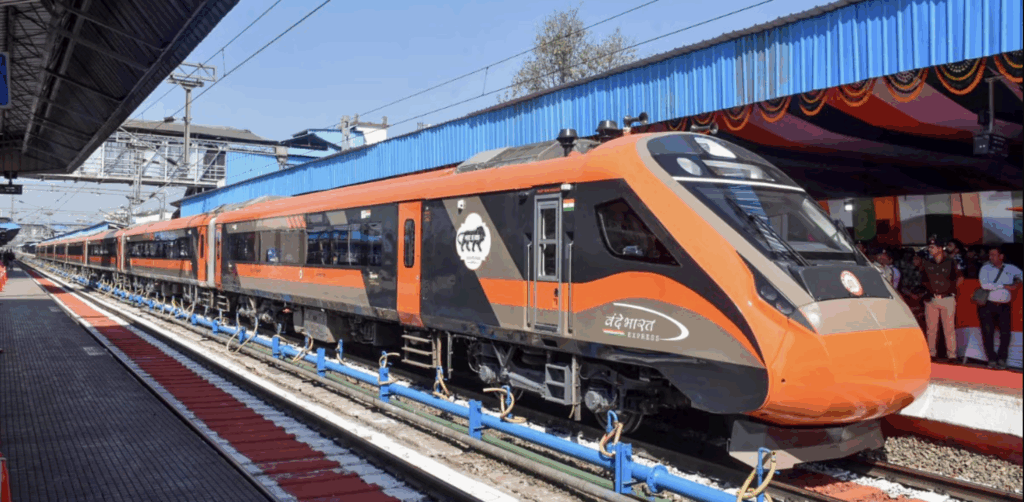
In a significant boost to rail travel in Maharashtra, Indian Railways has removed a key speed restriction on the Mumbai–Nagpur route, enabling trains to run faster and more efficiently on this busy corridor.
What Exactly Has Changed?
The speed restriction was earlier imposed on a short but critical stretch between Asvali and Padli in the Bhusaval division.
- The restriction covered around 800 metres
- It slowed down trains on the route, impacting overall journey time
- Now removed after completion of Through Formation Treatment (TFTR) work
With the track upgraded and stabilized, trains can now maintain higher speeds without safety concerns.
Why Was the Restriction There?
Speed restrictions—also called Permanent Speed Restrictions (PSRs)—are typically imposed due to:
- Weak track formation or soil issues
- Maintenance or safety concerns
- Structural limitations in specific sections
In this case, the restriction was linked to track stability, which has now been corrected through engineering upgrades.
Impact on Train Speeds and Travel Time
Although the restricted stretch was relatively short, it had a cascading effect on train operations.
- Even brief slowdowns can delay overall schedules
- Removing such bottlenecks helps improve average speeds
- Leads to better punctuality and smoother operations
For passengers, this translates into slightly faster journeys and more reliable timings on one of Maharashtra’s busiest routes.
Part of a Bigger Railway Upgrade Push
This move is part of Indian Railways’ broader strategy to:
- Remove speed restrictions across key routes
- Upgrade track infrastructure
- Improve safety and efficiency
Recent efforts across divisions have already shown results, with higher permissible speeds and improved punctuality on several routes.
Why the Mumbai–Nagpur Route Matters
The Mumbai–Nagpur corridor is a crucial railway link:
- Connects Maharashtra’s financial capital with its second capital (Nagpur)
- Carries heavy passenger and freight traffic
- Forms part of the larger Howrah–Nagpur–Mumbai trunk line
Improving speed on this route has a statewide economic and connectivity impact.
What It Means for Passengers
For daily and long-distance travellers, the benefits include:
- Reduced travel time (incremental but meaningful)
- Better punctuality of trains
- Smoother journeys without sudden slowdowns
While this change alone won’t drastically cut journey hours, it contributes to gradual, system-wide improvements in rail travel.