The Indian government is considering further easing the norms for setting up petrol pumps in the country, the world’s fastest-growing fuel market, due to changes in the energy security scenario and its decarbonisation commitments.
India May Further Ease Petrol Pump Setup Rules Amid Energy Shift, Decarbonisation Push
Under the 2019 rules, companies with a net worth of ₹250 crore could sell petrol and diesel if they committed to building infrastructure for at least one alternative fuel—such as CNG, LNG, biofuels, or EV charging—within three years of starting operations.
For companies wishing to sell petrol and diesel to both retail and bulk consumers, the net worth requirement was set at ₹500 crore.
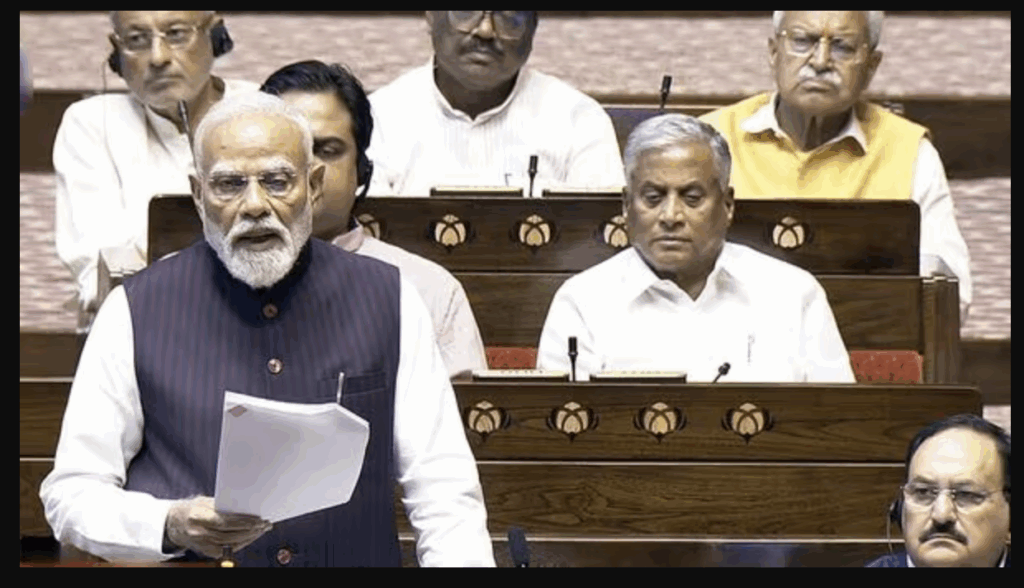
The Ministry of Petroleum and Natural Gas has now formed an expert committee to review the 2019 guidelines for granting licences to market transportation fuels.
According to the official order, the committee will “assess the effectiveness of the framework envisaged in Resolution dated November 8, 2019, in ensuring energy security and market efficiency; align the policy framework with national commitment towards decarbonisation, electrical mobility and promotion of alternative fuel; and address issues in implementation of existing guidelines.”
The committee is headed by Sukhmal Jain, former Director (Marketing) of Bharat Petroleum Corporation Ltd (BPCL).
The other members of the four-member panel are Petroleum Planning and Analysis Cell (PPAC) Director General P Manoj Kumar, FIPI member PS Ravi, and Arun Kumar, Director (Marketing) in the ministry.
On August 6, the ministry issued a notice inviting comments and suggestions from stakeholders and the general public within 14 days.
Before the 2019 reform, obtaining a fuel retailing licence required a company to invest, or commit to invest, ₹2,000 crore in areas like hydrocarbon exploration and production, refining, pipelines, or LNG terminals.
This investment rule was scrapped in 2019, when the government allowed any entity with a net worth of ₹250 crore to obtain a licence to retail petrol and diesel to bulk or retail consumers. For authorisation to sell to both retail and bulk markets, the minimum net worth was fixed at ₹500 crore at the time of application.
Requirements For Retail Authorization
For retail authorisation, companies must set up at least 100 retail outlets.
At least 5% of these retail outlets must be established in rural areas within five years.
Major global energy companies have been interested in entering the Indian fuel market for years.
In November 2018, French energy giant TotalEnergies partnered with Adani Group and applied for a licence to set up 1,500 petrol and diesel outlets.
BP has partnered with Reliance Industries to establish petrol pumps in India.
Oil trader Trafigura’s downstream arm, Puma Energy, has applied for a licence.
Saudi Arabia’s Aramco has been in talks to enter the Indian fuel retail sector.
Currently, most of the country’s 97,804 petrol pumps are owned by state-run oil marketing companies: Indian Oil Corporation (IOC), Bharat Petroleum Corporation Ltd (BPCL), and Hindustan Petroleum Corporation Ltd (HPCL).
Private sector players in the market include Reliance Industries, Nayara Energy (formerly Essar Oil), and Royal Dutch Shell, though they have a smaller presence.