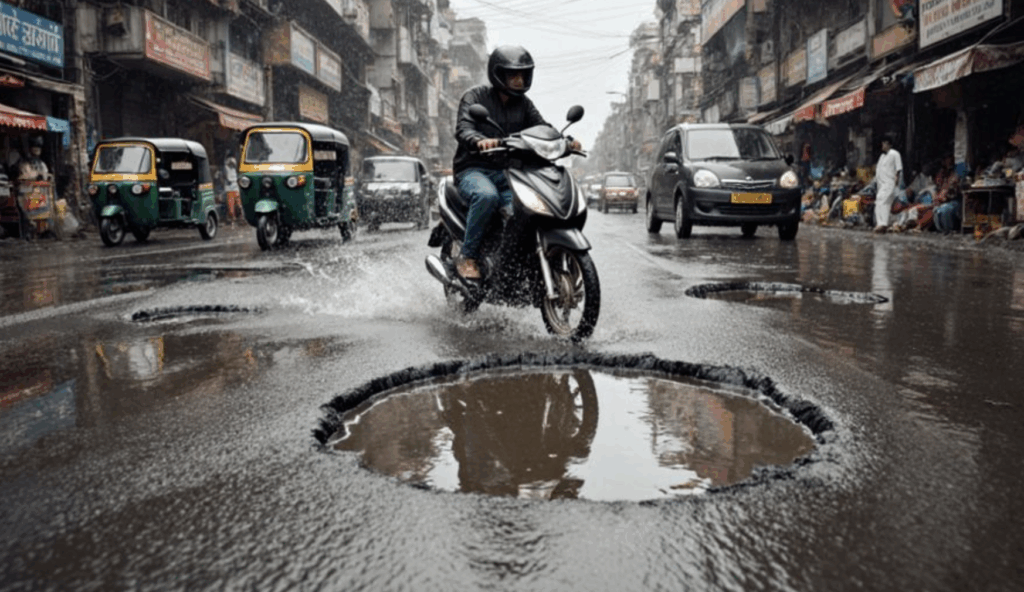
Potholes have long been a menace across Maharashtra, especially during monsoon seasons. Despite numerous directives and funds allocated over the years, roads in cities like Mumbai continue to deteriorate, leading to severe accidents and even fatalities. The Bombay High Court has been monitoring the issue since 2013, yet poor road quality persists.
Court Recognizes Safe Roads as a Fundamental Right
In a landmark ruling, a division bench of Justice Revati Mohite Dere and Justice Sandesh D. Patil reaffirmed that the right to have roads in reasonable condition falls under Article 21 of the Indian Constitution, which guarantees the right to life. The judges observed that bad roads not only threaten lives but also disrupt economic activity and public safety.
Compensation and Accountability
The High Court has directed that families of those who die in pothole-related accidents will receive ₹6 lakh as compensation. Victims who sustain injuries will be entitled to amounts ranging from ₹50,000 to ₹2.5 lakh, depending on the severity.
To ensure implementation, the court ordered the formation of district-level committees to verify claims, disburse compensation, and identify those responsible for negligence. Municipal authorities and contractors will now be held directly accountable for poor road conditions and misuse of public funds.
Strict Monitoring and Future Compliance
The court emphasized that it will not tolerate continued neglect. Authorities have been asked to submit compliance reports detailing the number of complaints received, compensation awarded, and actions taken against erring officials or contractors. The directive also aims to improve transparency in road maintenance projects and ensure effective use of taxpayers’ money.
A Step Towards Safer Roads
This ruling marks a significant step in holding civic bodies accountable and recognizing that basic infrastructure is a constitutional obligation. By linking road safety to the right to life, the court has underscored that citizens deserve well-maintained roads free from hazards that endanger public welfare.