India stands at a defining moment in its journey toward a solar-powered future. This transformation was vividly captured at the TaiyangNews Solar Technology Conference India 2025, where manufacturers and stakeholders gathered to highlight the nation’s readiness for a solar energy revolution. The central theme was clear: India’s solar ambitions are no longer dreams, but fast-approaching realities requiring bold innovation and policy coordination.
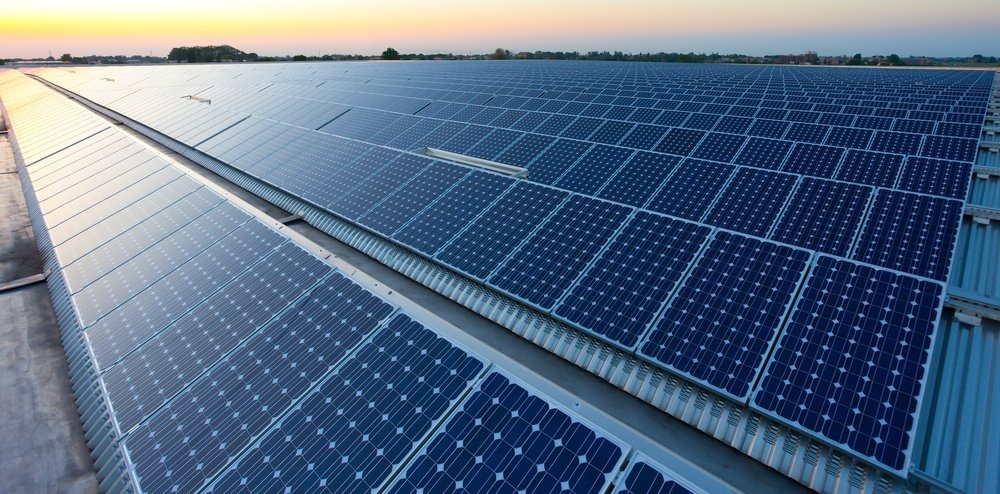
Powering the Future: India’s Ambitious Solar Expansion and the Push for Efficiency
Sukumar Madugula, Director of Sales at RCT Solutions, emphasized that renewable energy will soon dominate India’s energy mix, projecting it to exceed 60% within 10–15 years. This shift could significantly lower household electricity costs to just ₹1–2 per unit, dramatically improving energy access and affordability. Dr. Peter Fath, CEO of RCT Solutions, reinforced the economic logic of solar energy, calling it a “zero-fuel industry,” as sunlight—the key input—is both free and abundant in India.
India’s solar manufacturing plans are ambitious. According to Subrahmanyam Pulipaka, CEO of the National Solar Energy Federation of India, solar module capacity is expected to double from 80 GW in 2025 to 160 GW by 2030. Solar cell production is set to jump from 15 GW to 120 GW, and India aims to establish end-to-end manufacturing—including wafers and silicon—each targeting 100 GW capacity by decade’s end. However, Dr. Fath cautioned that mere expansion is not enough; increasing efficiency is critical. Most current panels operate at 24–25% efficiency, but improved technology can maximize energy output per square meter, reducing land use.
Bridging the Innovation Gap: Advancing Solar Research and Access in India
Innovation is thriving in research hubs like IIT Bombay, where Prof. Dinesh Kabra’s team recently achieved 29.84% efficiency in perovskite solar cells, aiming for 30% by 2027. Despite such progress, Dr. Fath noted that India lags behind countries like Germany in research capacity and called for dedicated solar institutes and increased investment—up to 2% of GDP.
Ensuring universal access to solar power is vital for economic equity. Germany’s success in deriving 62% of energy from renewables in a decade proves the power of coordinated policy and innovation. For India, integrating academia, industry, and government is essential to overcome the “energy trilemma” of affordability, sustainability, and security.
Summary:
India is accelerating toward a solar-powered future, aiming for over 60% renewable energy in 10–15 years. With ambitious manufacturing goals, rising innovation, and research breakthroughs like IIT Bombay’s perovskite cell, success depends on improved efficiency, investment in research, and unified efforts across policy, academia, and industry to ensure universal solar access.