The government has announced that cash payments at highway toll booths will be completely discontinued from April 10, making digital transactions compulsory across national highways and expressways.
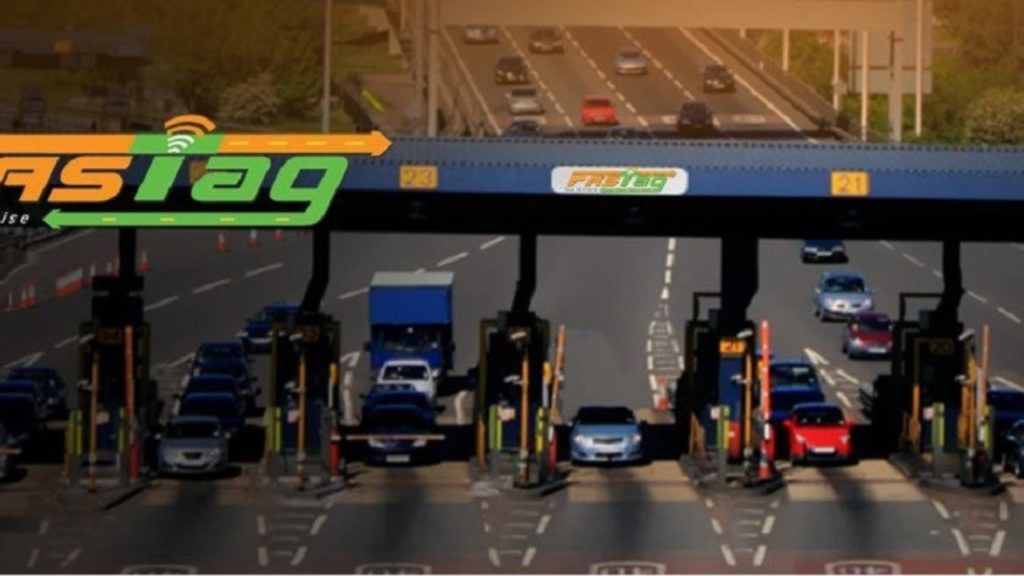
This decision, issued by the Ministry of Road Transport and Highways through an official notification, revises toll rules to allow only electronic payment methods such as FASTag or other digital options.
Cashless Tolling from April 10: Govt Mandates Digital Payments on Highways
Building on earlier adoption of FASTag, this move aims to further streamline toll collection by reducing congestion and delays caused by manual cash handling.
As a result, the change will significantly affect how motorists manage both their travel costs and payment methods during daily commutes.
For instance, having a valid FASTag now becomes essential, as vehicles will no longer have the option to pay tolls using cash.
In cases where a FASTag is not available, users can still pay digitally through UPI, but at a higher cost of 1.25 times the standard toll fee.
Moreover, failure or refusal to pay digitally may lead to denial of entry or removal of the vehicle from the toll lane.
Additionally, authorities may issue an electronic notice, and if the toll remains unpaid within three days, the charge can increase to double the original amount.
Overall, these measures create a clear financial disadvantage for non-digital payments, encouraging widespread adoption of FASTag.
At the same time, the rules also address the misuse of toll exemptions, which has been a frequent issue at plazas.
Previously, individuals from certain government services often used identity cards to claim exemptions even for personal travel.
Toll Exemptions Limited to Official Use, Exempted FASTags Now Mandatory
The updated guidelines clarify that exemptions apply only to official vehicles or authorised usage, not to individuals themselves.
Eligible users must now obtain Exempted FASTags through proper procedures or choose an annual FASTag pass.
This change is expected to reduce disputes and delays caused by manual verification at toll booths.
Furthermore, the government has promoted an annual FASTag pass as a convenient option for frequent travellers.
Priced at Rs 3,075 per year, it allows up to 200 toll crossings for private vehicles.
This option can benefit regular commuters by offering predictable costs, while occasional users may still prefer pay-per-use payments.
In a broader context, this initiative is part of a larger push toward seamless, barrier-free tolling systems.
The government is working on multi-lane free-flow tolling, where vehicles can pass without stopping and tolls are deducted automatically.
By removing cash transactions, authorities are preparing infrastructure for this advanced system.
Finally, vehicle owners are advised to ensure their FASTag is active, linked to a funded account, has updated KYC details, and to check eligibility for exemptions or evaluate the annual pass based on usage.